 Save to Pinterest
 There's something about the way ginger steam rises off a simmering pot that makes everything feel manageable, even on the most hectic afternoons. I stumbled upon this dumpling soup during a particularly gray November when I needed comfort but didn't have the energy for complicated cooking. What started as a quick weeknight fix became something I now make whenever someone needs warmth in a bowl—which, honestly, is more often than you'd think.
My friend Maya called one evening completely overwhelmed by her new job, and I had her over for this soup without asking. By the time she finished her bowl and we were halfway through a second, she was laughing about something that had seemed catastrophic an hour earlier. That's when I realized this dish does something beyond nourishing—it creates space for people to reset.
Ingredients
- Low-sodium chicken or vegetable broth (6 cups): The foundation deserves respect; I learned this the hard way after using regular broth and ending up with something aggressively salty that no amount of water could save.
- Fresh ginger, peeled and thinly sliced (1 tablespoon): Slicing instead of mincing lets you fish out the pieces if you prefer, and the flavor develops more gracefully throughout cooking.
- Garlic, minced (2 cloves): More than this and it becomes shouty; less and you lose that savory depth that makes the broth taste intentional.
- Soy sauce (1 tablespoon): The salty whisper that ties everything together—taste first, add more gradually.
- Sesame oil (1 teaspoon): A tiny amount goes further than you'd expect; it's an undertone, not the lead voice.
- Rice vinegar (1 teaspoon): This adds brightness without aggression, cutting through the richness just enough to make you want another spoonful.
- Green onions, sliced (2, plus extra for garnish): Some go into the broth for flavor, some scatter on top for that fresh, sharp finish.
- Baby bok choy (2 cups, halved or quartered lengthwise): The key is keeping the stem end slightly larger so everything cooks evenly and stays intact.
- Carrot, julienned or thinly sliced (1 medium): Thin slices disappear into the broth while still adding sweetness and body.
- Shiitake mushrooms (1/2 cup, stems removed and sliced): These have an earthy depth that makes a frozen dumpling soup taste less frozen and more intentional.
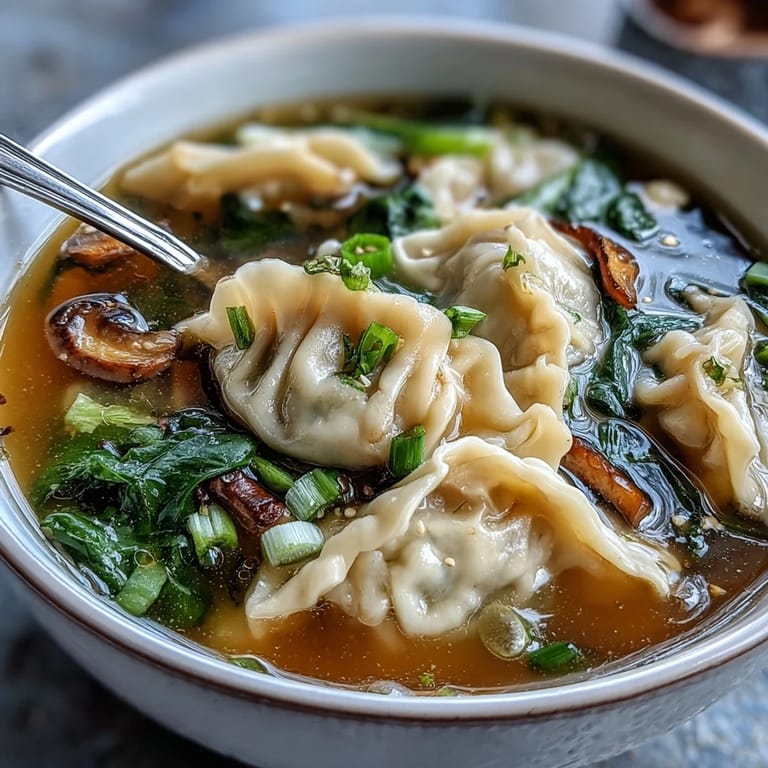
- Asian dumplings (16–20, frozen or fresh): Choose whatever filling calls to you, but always check the package instructions for your specific brand.
Tired of Takeout? 🥡
Get 10 meals you can make faster than delivery arrives. Seriously.
One email. No spam. Unsubscribe anytime.
Instructions
- Lay your flavor foundation:
- Combine broth, ginger, garlic, soy sauce, sesame oil, rice vinegar, and green onions in a large pot, then bring to a gentle boil over medium-high heat. You'll see wisps of steam carrying the scent of ginger, and that's exactly what you're after.
- Let everything whisper together:
- Reduce heat to medium and let it simmer for 5 minutes—this is when the ginger softens and the garlic's raw edge mellows into something that belongs here. Resist the urge to rush; these 5 minutes matter.
- Add the supporting vegetables:
- Toss in carrots and mushrooms and give them another 3 minutes in the gentle heat. They'll soften just enough to add sweetness without disappearing entirely.
- Welcome the dumplings:
- Gently lower dumplings into the simmering broth, then simmer for 5–7 minutes if frozen or 3–5 minutes if fresh until they float and feel tender when you nudge one with a spoon. Floating dumplings are ready dumplings.
- Finish with bright greens:
- Add bok choy and cook for 2–3 minutes until the stems are just tender but the leaves still have that fresh green brightness. Overcook them and they'll turn to mush; undercook them and they'll feel raw.
- Taste and adjust:
- This is the moment of truth—does it need more soy sauce for depth, more vinegar for brightness, more sesame oil for richness? Trust your palate over the recipe.
- Serve with intention:
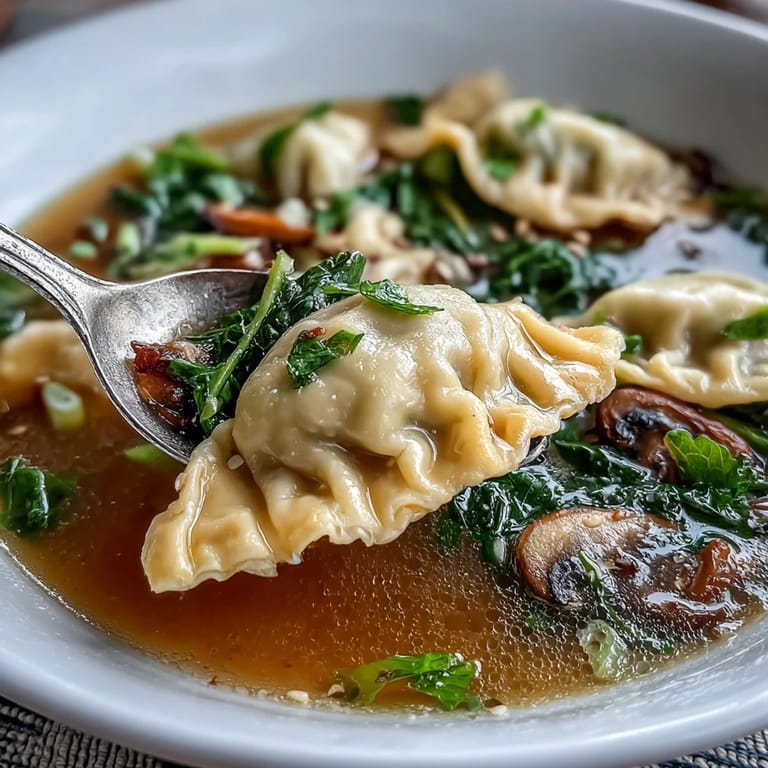
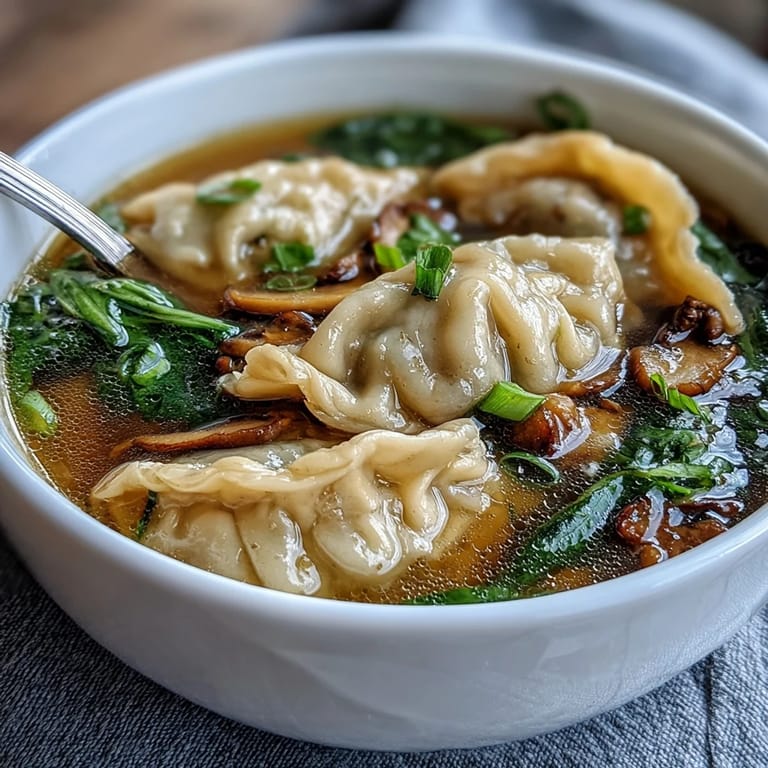
- Ladle into bowls and scatter green onions, cilantro, a small drizzle of chili oil, and sesame seeds across the top. The garnishes aren't decoration—they're the final flavor notes that make each spoonful feel complete.
 Save to Pinterest
 There was an afternoon when my neighbor's daughter came home from school completely worn down, and I had a pot of this simmering because I'd had a feeling. She sat at my kitchen counter, ate two bowls without speaking, and by the time she finished, her shoulders had dropped about three inches. That's when I understood that this soup isn't just about dumplings and broth—it's about showing up for someone with something warm.
Building Flavor Layers
What makes this soup feel more refined than it has any right to be on a weeknight is the way the ginger, garlic, and aromatics have time to infuse before anything else joins the party. I used to dump everything in at once and wonder why it tasted like separate ingredients that happened to be in the same pot. Now I understand that those first 5 minutes of simmering are where the magic actually happens—the broth transforms from something neutral into something with character and warmth.
Variations Worth Trying
Once you understand the basic structure, you can play with it endlessly without losing what makes it work. I've added spinach when bok choy wasn't available, thrown in some thinly sliced chicken or tofu for extra protein, swapped shiitakes for cremini mushrooms when that's what the market had, and even added a splash of fish sauce when I was feeling bold. The formula is forgiving enough to bend, but solid enough that nothing breaks when you experiment.
The Little Details That Matter
There's a difference between throwing soup together and making soup with attention, and that difference lives in moments you might think are small. It's in slicing the ginger instead of mincing it, keeping the bok choy stems attached so they don't fall apart, tasting before adding more soy sauce, and garnishing generously enough that people feel cared for. These aren't complicated techniques—they're just decisions that say you thought about the person eating the bowl.
- Keep a small bowl of extra sesame oil, chili oil, and soy sauce on the table so people can adjust their own soup to their taste.
- Make this in advance and reheat gently—the flavors actually improve as they sit overnight, though add the bok choy fresh when reheating to keep it bright.
- If you're feeding vegetarians, just swap in vegetable broth and vegetarian dumplings, and nobody will feel like they're eating a compromise version.
 Save to Pinterest
 This soup has become one of those dishes I make without thinking, the way some people make coffee or toast. It shows up when someone needs comfort, when I need to feed myself something that tastes like it was made with thought, or when the season turns and warmth becomes a necessity instead of a luxury.