 Save to Pinterest
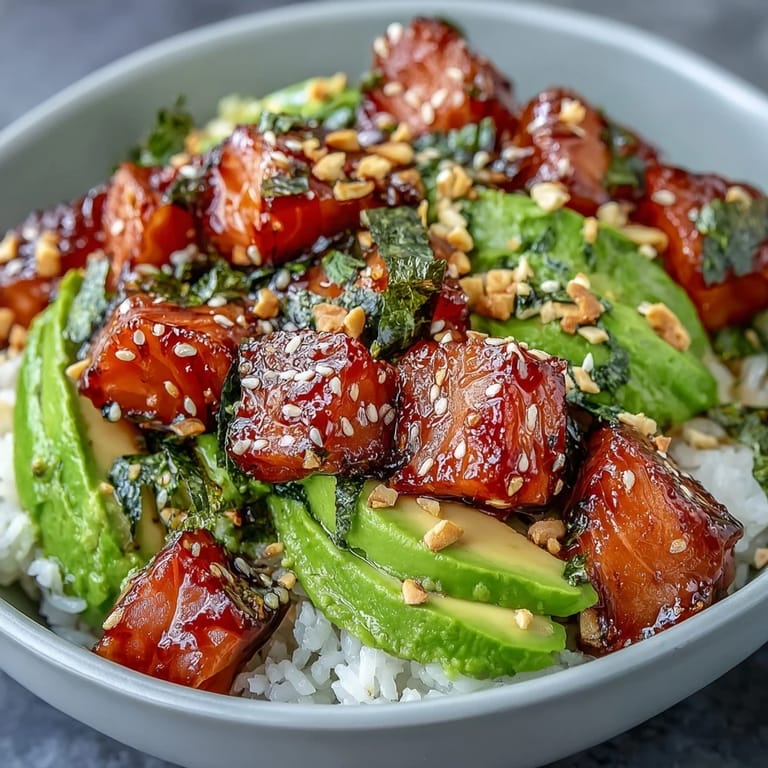
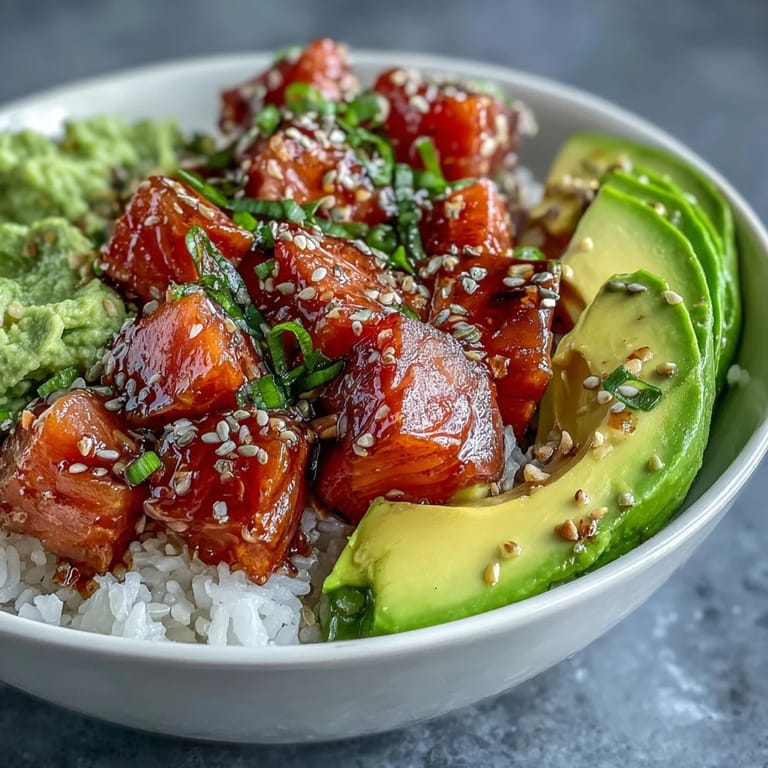
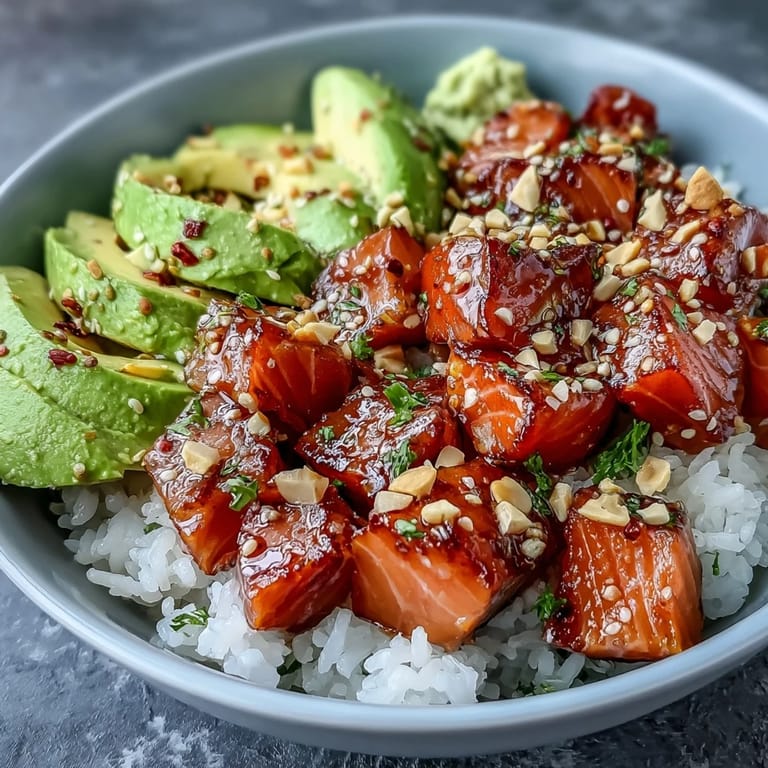
 There's something about assembling a salmon bowl that feels less like cooking and more like building something you actually want to eat right now. I stumbled onto this combination on a Tuesday when I had leftover sushi rice, a beautiful salmon fillet that needed rescuing from the back of my fridge, and an avocado that was perfectly ripe for exactly that moment. The first bite hit all the notes at once—creamy, spicy, savory, crunchy—and I realized I'd accidentally created something I'd be making constantly.
I made this for my friend who kept saying she didn't like fish, and watching her go back for thirds while insisting the salmon was 'different' was honestly the best compliment. There's something about the combination of textures and that umami hit that disarms skeptics, and now it's become our go-to when we want something that feels fancy but doesn't require me to stress in the kitchen.
Ingredients
- Fresh salmon fillet: 250 g, skinless and cut into bite-sized cubes—use the freshest you can find or good quality frozen-then-thawed, as the gentle marinade won't mask any off flavors.
- Tamari sauce: 2 tbsp, the base of your marinade and the reason everything tastes intentional instead of muddled.
- Toasted sesame oil: 1 tsp, a small amount goes a long way—this is the secret that makes people ask what that amazing smell is.
- Rice vinegar: 1 tsp for the marinade plus 1 tbsp for the rice, because acid brightens everything it touches.
- Honey or agave syrup: 1 tsp, just enough to balance the salt and add a whisper of sweetness that rounds out the marinade.
- Cooked sushi rice: about 1 cup uncooked which yields roughly 200 g cooked, the warm foundation that soaks up all the flavors pooling around it.
- Sugar: 1/2 tsp, mixed into the rice to mimic that subtle sweetness of proper sushi rice seasoning.
- Ripe avocado: 1 large, chosen when it yields just slightly to thumb pressure—not mushy, not hard.
- Roasted peanuts: 2 tbsp roughly chopped, the textural anchor that keeps every bite interesting.
- Chili oil: 1 tbsp, adjustable based on your courage level and how much heat your dinner guests can handle.
- Wasabi paste: 1 tsp, best used sparingly unless you enjoy the sinus-clearing moment and want to lean into it.
- Nori sheets: 1 sheet cut into strips, optional but worth it for the subtle ocean flavor and visual drama.
- Cucumber: 1 small one thinly sliced, the cool crispness that cuts through richness.
- Spring onions: 2, sliced, adding a mild allium sharpness that ties the whole thing together.
- Toasted sesame seeds: 1 tbsp, the finishing touch that makes people think you spent way more effort than you actually did.
- Fresh cilantro or microgreens: optional but transforms the bowl from good to intentional.
- Lime wedges: essential for that last-second brightness and because squeezing lime over food is honestly therapeutic.
Tired of Takeout? 🥡
Get 10 meals you can make faster than delivery arrives. Seriously.
One email. No spam. Unsubscribe anytime.
Instructions
- Build your marinade with intention:
- In a medium bowl, whisk together tamari, sesame oil, rice vinegar, and honey until the honey dissolves and everything turns glossy and fragrant. Add your salmon cubes and toss gently to coat every piece, then cover and slide it into the refrigerator for 10 to 15 minutes—this isn't a long marinade, but it's long enough for the salmon to taste intentional.
- Season your rice while it's warm:
- In a separate bowl, mix your cooked sushi rice with rice vinegar, sugar, and salt, stirring gently so you don't crush the grains into mush. The warmth helps the seasonings distribute evenly, creating that subtle sweet-salty background that makes everything else shine.
- Prep everything at once:
- Slice your avocado, chop the peanuts, cut the nori into strips, slice the cucumber and spring onions—mise en place is your friend here because the actual assembly moves fast and you want everything ready.
- Divide and build:
- Split the seasoned rice between two serving bowls, creating a warm bed for everything else. Arrange the marinated salmon, avocado slices, cucumber, and spring onions over the rice in whatever pattern feels right, knowing that perfect presentation matters less than making sure you get all the flavors in each bite.
- Layer heat and texture:
- Drizzle with chili oil and dot with wasabi paste directly onto the bowl, rather than mixing them in—this way each spoonful is customizable and surprises keep coming. Finish with peanuts, sesame seeds, and nori strips, then add cilantro or microgreens if you have them and squeeze lime over the whole thing just before eating.
 Save to Pinterest
 There was this moment when my mom tried this bowl and suddenly understood why I keep talking about how food doesn't need to be complicated to be memorable. She went quiet for a second, which never happens, and then asked if I could teach her because she wanted to make it for her book club.
The Salmon Selection Secret
Quality salmon makes everything easier, but understanding which salmon to buy changed how I approach this bowl. If you're buying fresh, look for flesh that's bright coral or deep pink, never dull or brown-tinged, and press gently—it should spring back, not leave a fingerprint. Frozen salmon works beautifully too, especially sushi-grade varieties, just thaw it slowly in the refrigerator overnight so the texture stays delicate and the cells don't rupture.
The marinade is gentle enough that it won't mask inferior salmon, but it also won't fix truly bad fish. I learned this the hard way after buying the cheapest option and wondering why everything tasted fishy and off—now I invest a bit more knowing it's the foundation of the whole bowl.
Rice Temperature Matters More Than You Think
Warm rice soaks up the tamari and sesame oil from the salmon, creating this subtle flavor foundation that cold rice just won't do. If your rice has been sitting around, gently reheat it with a splash of water and a lid, or spread it on a plate and microwave it for 30 seconds—that moment of warmth makes a noticeable difference in how the whole bowl comes together.
I've made this with room temperature rice when I was rushing, and it was fine but felt flat in comparison. Now I treat the rice warmth as non-negotiable, and it genuinely elevates the entire experience from casual lunch into something that feels a bit special.
Customization Without Losing the Plot
This bowl is genuinely forgiving and begs for personalization, but some swaps land better than others. For protein, marinated tofu or tempeh work beautifully for vegetarian versions, while shrimp or white fish can substitute for salmon if that's what you have or prefer. For nuts, cashews are a direct swap for peanuts, seeds like sunflower or pumpkin work if allergies are a concern, and honestly the bowl is still delicious without the crunch if you simply leave them out.
The wasabi and chili oil are where people's bravery shows up—some guests want double, some want just a whisper. Leave them on the side so everyone can control their own heat level, and watch how the same bowl becomes three completely different experiences around the table.
- Edamame, pickled ginger, or sliced radish all add interesting texture and flavor without disrupting the core identity of the bowl.
- If you don't have nori, skip it or replace it with extra sesame seeds or a drizzle of additional sesame oil.
- The lime wedges aren't optional in my opinion—that final squeeze of brightness is the difference between good and memorable.
 Save to Pinterest
 This bowl has become my answer to so many situations—when I want something healthy that feels indulgent, when I need to impress someone without fussing, when I'm cooking for myself but want it to feel like an occasion. It's proof that food doesn't need to be complicated to be genuinely delicious.
Recipe FAQs
- → Can I make this bowl ahead of time?
Prepare components separately in advance. Season the rice and marinate salmon up to 4 hours before serving. Keep toppings refrigerated and assemble just before eating to maintain optimal texture and freshness.
- → What can I substitute for salmon?
Marinated tofu or tempeh work beautifully for a vegetarian version. Alternatively, try cooked shrimp, seared tuna, or even grilled chicken for different protein variations while maintaining the bowl's character.
- → Is this bowl spicy?
The spice level is easily adjustable. Start with less chili oil and wasabi, then add more according to your preference. The base flavors remain delicious even with minimal heat.
- → Can I use brown rice instead of sushi rice?
Absolutely. Brown rice adds nutty flavor and extra fiber. Cook according to package directions and season with the same vinegar mixture for consistent flavor throughout.
- → How do I store leftovers?
Store components separately in airtight containers. Keep rice refrigerated up to 2 days, salmon up to 1 day, and vegetables up to 3 days. Reheat rice gently and assemble fresh for best results.
- → What other toppings work well?
Pickled ginger, edamame, shredded carrots, radishes, or microgreens add variety. Consider soft-boiled eggs or spicy mayo for extra richness and flavor dimensions.