 Save to Pinterest
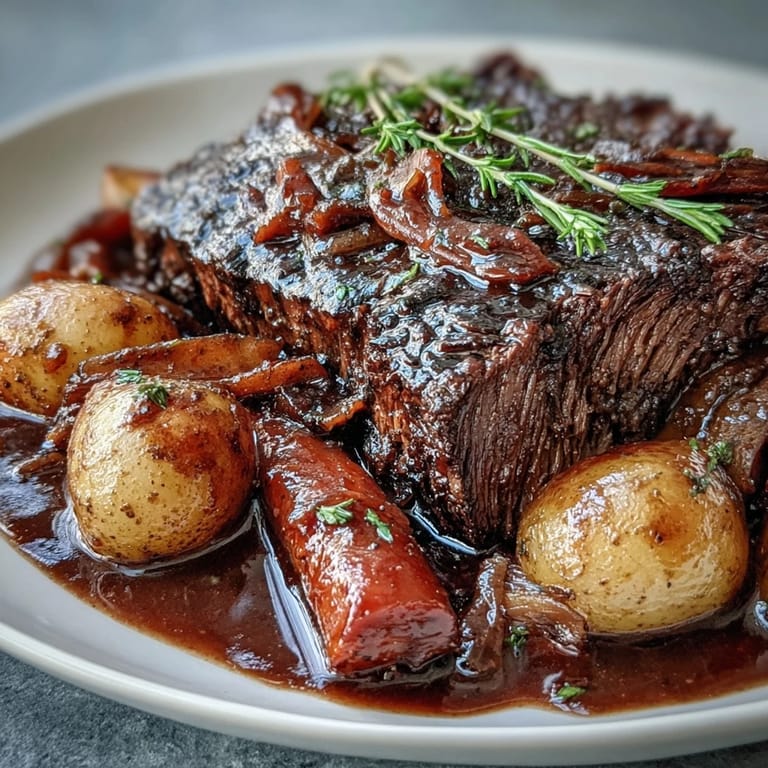
 The smell of beef browning in butter is one of those kitchen anchors that pulls me right back into the moment. I was wearing an old apron, standing over a too-hot burner, and the edges of that chuck roast were crackling louder than I expected. My partner walked in, sniffed the air, and said, "Whatever that is, double it." I hadn't even added the wine yet.
I made this on a Sunday when friends were supposed to come over at five but showed up at seven instead. The roast didn't care. It just sat there in the oven, getting more tender, while I poured wine and pretended I wasn't annoyed. By the time we sat down, nobody remembered being late.
Ingredients
- Beef chuck roast or blade roast (3 to 3.5 lb): This cut has enough marbling to stay juicy through hours of slow cooking, and it shreds beautifully without drying out.
- Kosher salt (1.5 tsp plus more): Season generously before searing so the crust has flavor, not just color.
- Freshly ground black pepper (1 tsp): Freshly cracked pepper tastes sharper and more alive than the pre-ground stuff that's been sitting in your cabinet since last year.
- All-purpose flour (2 tbsp): A light dusting helps the sear stick and later thickens the braising liquid just enough.
- Olive oil or vegetable oil (3 tbsp divided): You need enough fat to get a deep brown crust without burning the fond.
- Unsalted butter (1 tbsp): Adds richness to the sear and a subtle sweetness that rounds out the savory notes.
- Yellow onion (1 large, in wedges): Thick wedges hold their shape and turn sweet and soft as they braise.
- Garlic (4 cloves, smashed): Smashing releases more flavor than mincing, and the cloves melt into the sauce.
- Carrots (4 medium, in 2-inch chunks): They soak up the braising liquid and add a slight sweetness that balances the savory beef.
- Celery (3 ribs, in 2-inch chunks): Adds a vegetal backbone and a little bitterness that keeps the dish from feeling one-note.
- Baby potatoes (1.5 lb): Small waxy potatoes hold together better than russets and taste like little sponges for gravy.
- Tomato paste (2 tbsp): Cooking it down in the pot caramelizes the sugars and deepens the color of the sauce.
- Dry red wine (1 cup): Use something you'd actually drink, nothing fancy, but nothing you'd pour down the drain either.
- Low-sodium beef broth (2.5 cups): Low-sodium gives you control over the salt level, especially after hours of reduction.
- Worcestershire sauce (1 tsp): A little umami kick that makes everything taste more like itself.
- Fresh rosemary (2 sprigs): Piney and assertive, rosemary loves long braises and doesn't get bitter.
- Fresh thyme (3 sprigs): Earthy and subtle, thyme ties the vegetables and beef together.
- Bay leaves (2): They add a background note you't name but would miss if it weren't there.
- Cornstarch slurry (optional, 1.5 tbsp cornstarch with 2 tbsp water): If you want a thicker gravy, this is the easiest way to get there without adding more fat.
- Fresh parsley (optional, for garnish): A handful of chopped parsley at the end brightens the whole plate.
Tired of Takeout? 🥡
Get 10 meals you can make faster than delivery arrives. Seriously.
One email. No spam. Unsubscribe anytime.
Instructions
- Preheat and prep the beef:
- Set your oven to 300°F if you're using it. Pat the roast completely dry with paper towels, then season every side with salt and pepper before dusting lightly with flour.
- Sear the roast:
- Heat 2 tablespoons of oil and the butter in a heavy pot over medium-high heat until shimmering. Lay the roast in and let it sit undisturbed for 4 to 5 minutes per side until it's dark brown and crusty, turning to sear the edges too, then move it to a plate.
- Cook the aromatics:
- Lower the heat to medium, add another tablespoon of oil if the pot looks dry, then toss in the onion wedges and cook for 3 to 4 minutes until they soften and start to color. Add the garlic and stir for 30 seconds until it smells toasty.
- Build the base:
- Stir in the tomato paste and cook it for a minute or two until it darkens and sticks to the bottom a little. Pour in the red wine and scrape up all the browned bits, letting it simmer for 2 to 3 minutes.
- Add the liquid and herbs:
- Pour in the beef broth and Worcestershire sauce, then drop in the rosemary, thyme, and bay leaves. Nestle the roast back into the pot so the liquid comes about halfway up the sides.
- Braise low and slow:
- Bring everything to a gentle simmer, cover tightly, then either reduce the heat to low or slide the pot into the oven. Let it cook undisturbed for 1.5 hours.
- Add the vegetables:
- Flip the roast over, then tuck the carrots, celery, and potatoes around it, pushing them under the liquid. Cover again and cook for another 1.5 to 2 hours until the beef is fork-tender and the vegetables are soft but not falling apart.
- Rest and skim:
- Transfer the roast and vegetables to a platter and tent loosely with foil. Skim any excess fat off the top of the braising liquid with a spoon.
- Thicken the gravy (optional):
- Bring the liquid to a simmer, whisk in the cornstarch slurry, and cook for 2 to 3 minutes until it thickens to your liking. Thin it with a splash of broth if it gets too thick.
- Finish and serve:
- Pull out the herb stems and bay leaves. Shred or slice the beef, return it to the pot or arrange it over the vegetables, then spoon the gravy over everything and scatter parsley on top if you like.
 Save to Pinterest
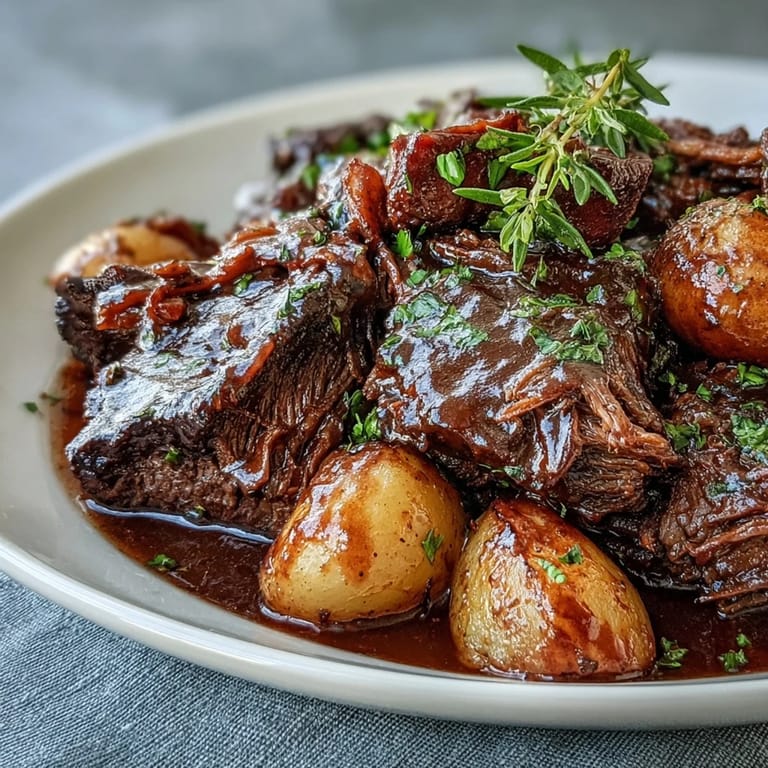
 The first time I pulled this out of the oven and set it on the table, my brother looked at me like I'd just performed magic. He'd only ever seen me make pasta and scrambled eggs. I didn't tell him how easy it actually was.
How to Store and Reheat
Let the pot roast cool completely, then store it in an airtight container with the gravy spooned over the top so the beef doesn't dry out. It keeps in the fridge for up to four days and tastes even better the next day after the flavors have had time to settle. Reheat gently on the stovetop over low heat or in the oven at 300°F, adding a splash of broth if it looks dry.
What to Serve It With
I usually set out a basket of crusty bread for soaking up the gravy, but buttered egg noodles or creamy mashed potatoes work just as well. A simple green salad with a sharp vinaigrette cuts through the richness, and if you want to go all in, roasted Brussels sprouts or steamed green beans round out the plate. Leftovers are perfect piled onto soft rolls with a little horseradish or stirred into scrambled eggs the next morning.
Helpful Notes and Swaps
If you're using a slow cooker, sear the beef and cook the aromatics in a skillet first, then transfer everything to the slow cooker and cook on low for 8 to 10 hours or high for 5 to 6 hours. Add the vegetables halfway through if you want them to hold their shape. You can swap the red wine for extra beef broth if you prefer, but the wine adds a depth that's hard to replicate.
- Trim visible fat before cooking if you want a lighter finished dish.
- Use half homemade stock and half store-bought broth for richer flavor.
- Leftovers are excellent in tacos, over rice, or stirred into polenta.
 Save to Pinterest
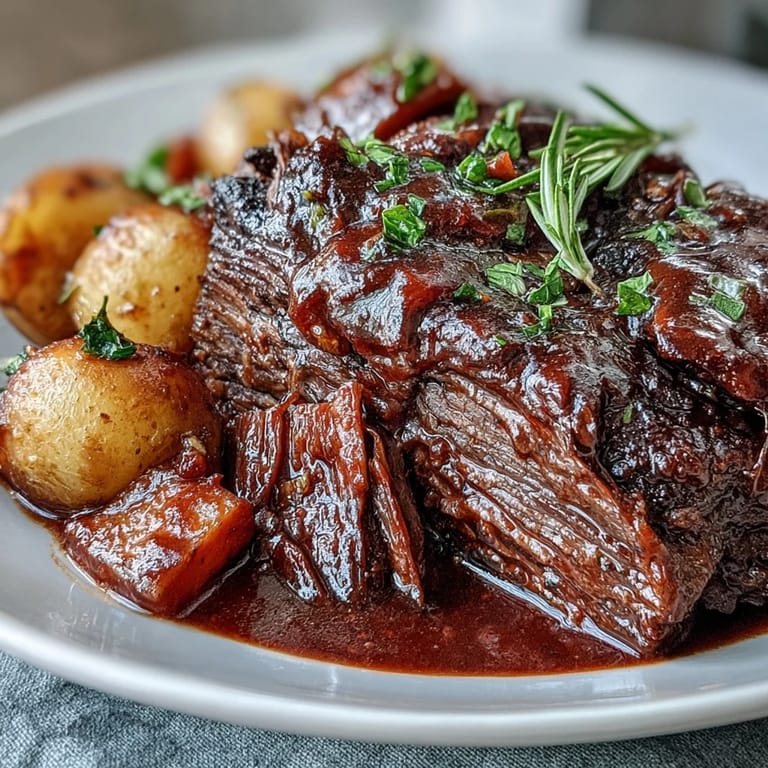
 This is the kind of meal that makes people linger at the table longer than they planned. Serve it on a night when you have nowhere to be.
Recipe FAQs
- → What cut of beef works best for pot roast?
Chuck roast or blade roast are ideal choices because they contain generous marbling and connective tissue. As the meat slow-cooks, these tissues break down and infuse the beef with incredible tenderness and flavor while keeping it moist throughout the long cooking process.
- → Can I make this in a slow cooker?
Absolutely. After searing the beef and sautéing the aromatics, transfer everything to your slow cooker. Cook on low for 8-10 hours or high for 5-6 hours. Add carrots, celery, and potatoes halfway through cooking to maintain their texture without becoming mushy.
- → How do I get thicker gravy?
After removing the beef and vegetables, bring the cooking liquid to a simmer. Stir in a cornstarch slurry (cornstarch mixed with cold water) and cook for 2-3 minutes until the sauce reaches your desired consistency. You can also reduce the liquid further on the stovetop for natural thickening.
- → What can I substitute for red wine?
Additional beef broth works beautifully as a non-alcoholic alternative. For similar acidity and depth, you can use balsamic vinegar mixed with broth or grape juice with a tablespoon of vinegar. The key is maintaining enough liquid for proper braising.
- → Why is my pot roast tough?
Pot roast needs sufficient cooking time to break down connective tissues. If the meat feels tough, it likely needs more time. Continue cooking covered until the beef easily pulls apart with a fork. Remember that this cut transforms with patience—undercooking results in toughness, while proper cooking yields tenderness.
- → How should I store and reheat leftovers?
Refrigerate leftovers in an airtight container for up to 4 days. The flavors actually improve overnight. Reheat gently on the stovetop with a splash of broth to maintain moisture. Leftovers also work wonderfully shredded for sandwiches, tacos, or served over rice and polenta.