 Save to Pinterest
 My neighbor handed me a steaming casserole dish one Christmas Eve with a knowing smile, and I spent the next hour wondering what made hers so impossibly creamy while mine always turned watery. That night, watching the golden bubbling top emerge from her oven, I finally understood—it wasn't just about combining ingredients, it was about respecting the layers and letting the cream do its patient work. She shared her formula that evening, and I've been making it ever since, each time discovering something new in those sliced potatoes and their silky blanket of cheese.
I once brought this to a potluck thinking it might be overshadowed by fancier sides, only to watch it disappear before half the main course was eaten. One guest asked for the recipe with such urgency that I scribbled it on the back of a napkin, and I still wonder if she's been making it as often as I do now.
Ingredients
- 2 lbs Yukon Gold or Russet potatoes, peeled and thinly sliced: Yukon Golds have a naturally buttery flavor and waxy texture that holds up beautifully during baking, but Russets work too if that's what you have on hand—just slice them consistently so everything cooks evenly.
- 2 cups heavy cream: This is where the magic lives, so don't skimp on quality or try to substitute with half-and-half unless you enjoy a less luxurious texture.
- 1 cup whole milk: The cream would be too heavy alone, so the milk lightens it slightly while keeping everything rich.
- 2 garlic cloves, minced: Mince them finely so they distribute throughout the sauce rather than clumping up in one bite.
- 1/2 teaspoon salt: Taste as you heat the cream and adjust—the cheese will add more saltiness once it melts in.
- 1/4 teaspoon freshly ground black pepper: Freshly cracked pepper tastes so much brighter than pre-ground, especially in something this creamy.
- 1/4 teaspoon grated nutmeg: This subtle warmth is what separates a good au gratin from an extraordinary one, so don't leave it out or increase it.
- 1 1/2 cups Gruyère cheese, grated: Gruyère melts smoothly and adds a slight nuttiness that pairs perfectly with the cream.
- 1/2 cup Parmesan cheese, grated: This sharpness cuts through the richness and helps the top brown to that gorgeous golden color.
- 2 tablespoons chopped fresh chives or parsley (optional): A handful of fresh herbs at the end brings everything back to life, especially if you want to serve it later rather than straight from the oven.
Tired of Takeout? 🥡
Get 10 meals you can make faster than delivery arrives. Seriously.
One email. No spam. Unsubscribe anytime.
Instructions
- Prepare your stage:
- Preheat the oven to 375°F and butter your 9x13-inch baking dish generously—this prevents sticking and adds subtle flavor. If you're feeling fancy, rub the inside with a cut garlic clove before buttering, which infuses the whole dish with a whisper of garlic.
- Make the cream sauce:
- Combine the heavy cream, milk, minced garlic, salt, pepper, and nutmeg in a saucepan over medium-low heat. Watch for the surface to steam and just barely shimmer, then remove it from heat—this gentle heating infuses the garlic flavor without curdling anything or cooking off the cream's delicate richness.
- Layer the first potatoes:
- Arrange half your thinly sliced potatoes in an even layer across the prepared dish, slightly overlapping them like roof tiles if you want them to look intentional. Don't worry if there are gaps; the cream will find its way through.
- Add the first cheese layer:
- Sprinkle half of your mixed Gruyère and Parmesan over those potatoes, distributing it so every slice gets a little cheese. This creates pockets of melted richness between layers.
- Layer the remaining potatoes:
- Arrange the rest of your potato slices on top, again trying to keep them fairly even so everything cooks at the same pace. It doesn't need to be perfect—rustic is part of the charm.
- Pour the cream and top with cheese:
- Gently pour the warm cream mixture evenly over all the potatoes, watching it settle into the spaces, then scatter the remaining cheese over the top. The warm cream helps everything come together, and that top layer of cheese is what gets gloriously golden.
- Bake covered:
- Loosely cover the dish with foil and bake for 40 minutes—the foil traps steam and helps the potatoes become completely tender. You should hear a gentle bubbling around the edges when you peek in near the end.
- Finish golden:
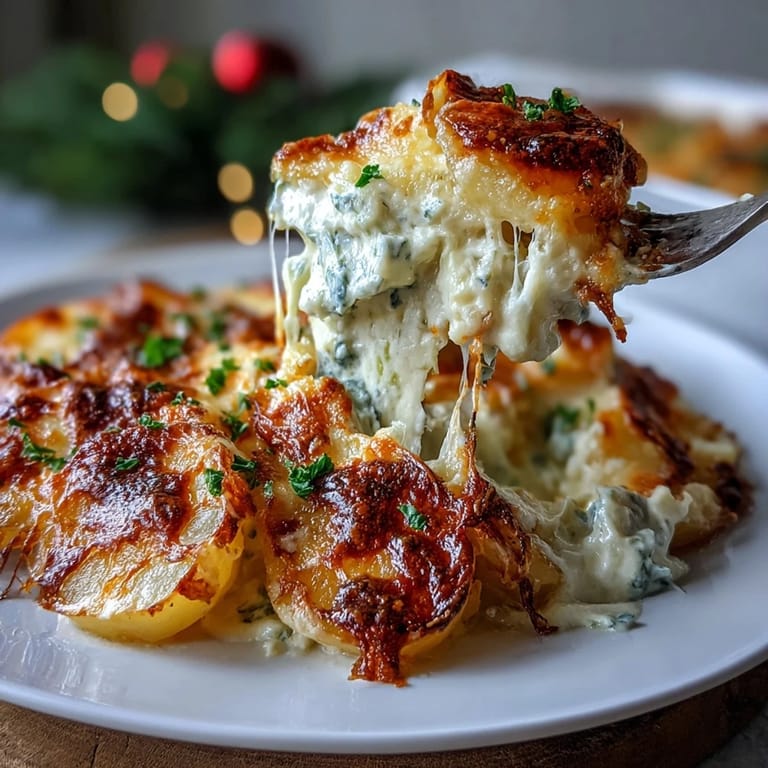
- Remove the foil and bake for another 20 to 25 minutes until the top is deeply golden brown and a sharp knife slides through the potatoes without resistance. This uncovered time is when all that cheese toasts and the cream reduces slightly, concentrating its flavor.
- Rest and serve:
- Let it sit for 10 minutes before serving—this allows the cream to set just enough so it doesn't run all over the plate, and it gives you time to grab the chives or parsley for a final flourish.
 Save to Pinterest
 There's something about watching someone's face when they take that first bite—the way their eyes close and they pause before reaching for another spoonful. That moment reminds me why this dish, simple as it is, deserves a place at every table where comfort matters.
The Secret to Silky Sauce
The difference between creamy and curdled comes down to temperature and patience, which I learned the hard way by rushing my sauce one harried Tuesday evening. Heating cream slowly allows the garlic to infuse gently, and keeping the temperature just below boiling preserves that luxurious texture that makes this dish so special.
Timing and Temperature Matter
I used to check on this constantly, worried it would burn or cook unevenly, until I realized that checking too often lets heat escape and throws off the cooking time. Now I set a timer, trust the process, and use those 40 minutes under foil to prep a salad or set the table.
Beyond the Basic Recipe
While this version is perfection as-is, I've experimented with variations that sometimes feel even better depending on what I'm serving it alongside. Sweet onions thinly sliced and layered in add a gentle sweetness that plays beautifully with ham, and a sharp white cheddar works wonderfully if Gruyère isn't available.
- For a Dijon twist, whisk a teaspoon of smooth Dijon mustard into the cream sauce for subtle depth.
- Crispy bacon bits sprinkled on top before serving add texture and a salty note that transforms the whole dish.
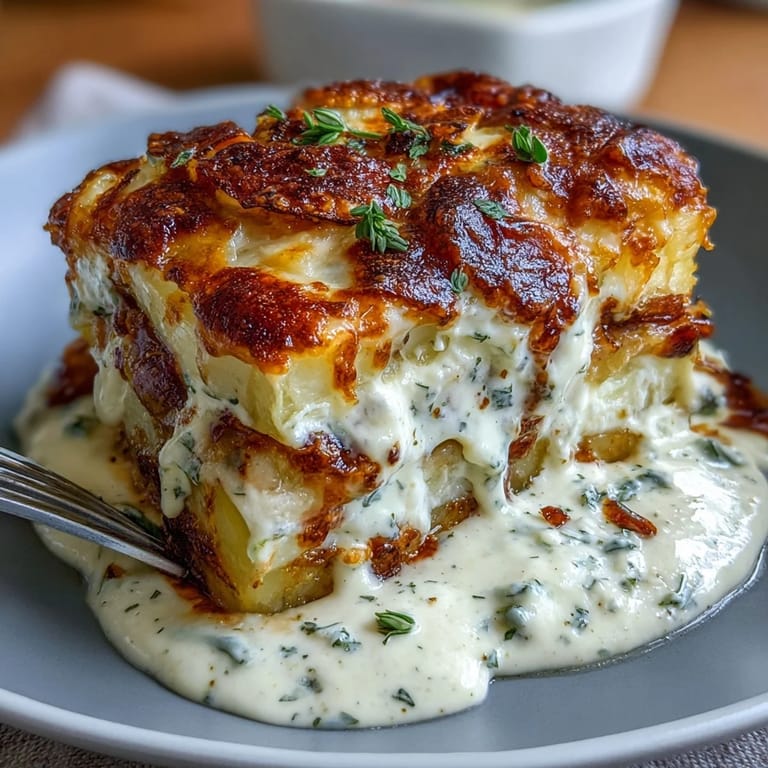
- Fresh thyme mixed with the chives at the end brings an herbal brightness that cuts through the richness.
 Save to Pinterest
 Every time I make this, I'm reminded that the most impressive dishes are often the simplest ones made with real care. It's the kind of recipe that gets better each time you make it, not because the ingredients change, but because you do.
Recipe FAQs
- → What type of potatoes work best for this dish?
Yukon Gold or Russet potatoes are ideal due to their texture and ability to hold shape when baked thinly sliced.
- → Can I substitute the cheeses used?
Yes, Gruyère can be replaced with sharp white cheddar for a different flavor profile without compromising creaminess.
- → How should the cream sauce be prepared?
Heat heavy cream, milk, garlic, salt, pepper, and a touch of nutmeg gently until steaming but not boiling, to meld flavors before pouring over potatoes.
- → What baking dish size is recommended?
A 9x13-inch (23x33 cm) baking dish provides enough space for even layering and proper cooking.
- → Can additional ingredients be added for flavor?
Thinly sliced sweet onions between layers add sweetness, and rubbing garlic on the dish before layering enhances aroma and flavor.