 Save to Pinterest
 There's something about split pea soup that stops time on a cold afternoon. My grandmother used to make it on Sundays, the kitchen filling with that unmistakable earthy aroma while she stirred the pot, lost in thought. Years later, I realized she wasn't just cooking—she was creating a moment of warmth and care that lingered long after we'd finished eating. This soup became my own way of doing the same thing, filling a room with comfort before anyone even sits down at the table.
I made this soup for the first time in my new kitchen, still unpacking boxes, and my neighbor stopped by just as it was finishing. The smell pouring out of my open door pulled her in before she even knocked. We ended up sitting on the counter with bowls, talking about winters past and future plans, and I understood then why my grandmother always seemed to have a pot of this simmering.
Ingredients
- Dried split green peas (2 cups, rinsed): These are the foundation—they'll break down into the soup itself, creating that creamy texture without any cream. Rinsing them matters more than you'd think; it removes dust and helps them cook more evenly.
- Onion, carrots, and celery (1 large onion, 2 carrots, 2 celery stalks, all diced): This is your aromatic base, the holy trinity that makes everything taste like home. Dicing them roughly the same size ensures they soften at the same pace.
- Garlic cloves (2, minced): Don't skip this step—minced garlic stirs into the warmth and blooms into something deeper than you started with.
- Potato (1 medium, peeled and diced): It adds body and substance, breaking down slightly to thicken the soup naturally without any extra work on your part.
- Bay leaf and dried thyme (1 bay leaf, 1 teaspoon thyme): These dried herbs are actually perfect here because they'll sit in the long simmer and whisper their flavor throughout without overwhelming anything.
- Vegetable or chicken broth (6 cups): This is your liquid foundation—taste it before you use it because good broth makes a difference you'll actually notice in the final bowl.
- Olive oil (1 tablespoon): Just enough to get things moving in the pot without weighing the soup down.
- Smoked ham or ham bone (1 cup diced or 1 bone, optional): This is tradition speaking—if you use it, the soup becomes something smoky and deeply savory that vegetarians will still understand.
- Black pepper and salt (1/2 teaspoon pepper, salt to taste): Season at the end rather than the beginning; the soup will concentrate as it cooks and you'll know better what it needs.
Tired of Takeout? 🥡
Get 10 meals you can make faster than delivery arrives. Seriously.
One email. No spam. Unsubscribe anytime.
Instructions
- Sauté the base:
- Pour olive oil into your pot over medium heat and let it warm for a moment. Add the onion, carrots, and celery, stirring them around until they soften and lose their raw edge—this takes about 5 minutes and you'll smell when it's right.
- Wake up the garlic:
- Stir in the minced garlic and let it cook for just 1 minute; you're looking for it to become fragrant but not brown, which would make it bitter.
- Build the soup:
- Add your rinsed split peas, diced potato, bay leaf, thyme, and broth to the pot. If you're using ham or a ham bone, add it now—it'll infuse everything as the soup simmers.
- The long simmer:
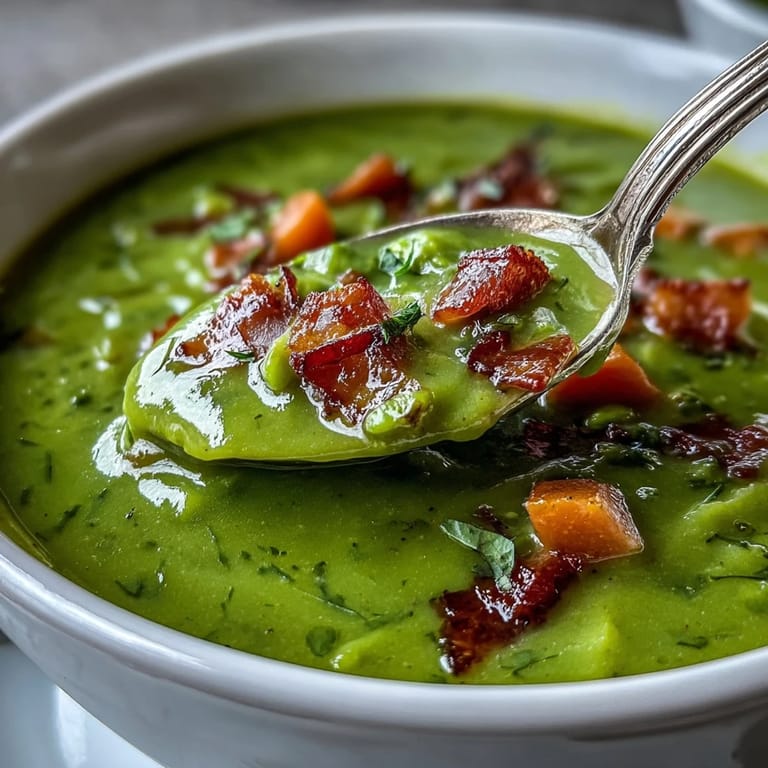
- Bring everything to a boil, then lower the heat and cover the pot. Let it bubble gently for about 1 hour, stirring occasionally so nothing sticks to the bottom. The peas will soften into the broth, and the whole thing will start looking creamy and thick.
- Clean and blend:
- Remove the bay leaf and any ham bone. If you used ham, fish out the pieces and stir them back in after blending. For the texture, you can either use an immersion blender right in the pot for a textured-creamy result, or blend half the soup in a regular blender and pour it back in—this keeps some chunks and makes it feel more rustic.
- Season and serve:
- Taste it now and add salt and pepper until it feels right. Serve it hot, and if you have bread, now's the time to bring it to the table.
 Save to Pinterest
 A friend once told me she'd been intimidated by soup-making until she realized this one couldn't really be messed up. We laughed because it's true—split pea soup is forgiving and honest, it shows up as itself, and somehow that makes it feel brave to cook.
On Texture and Creaminess
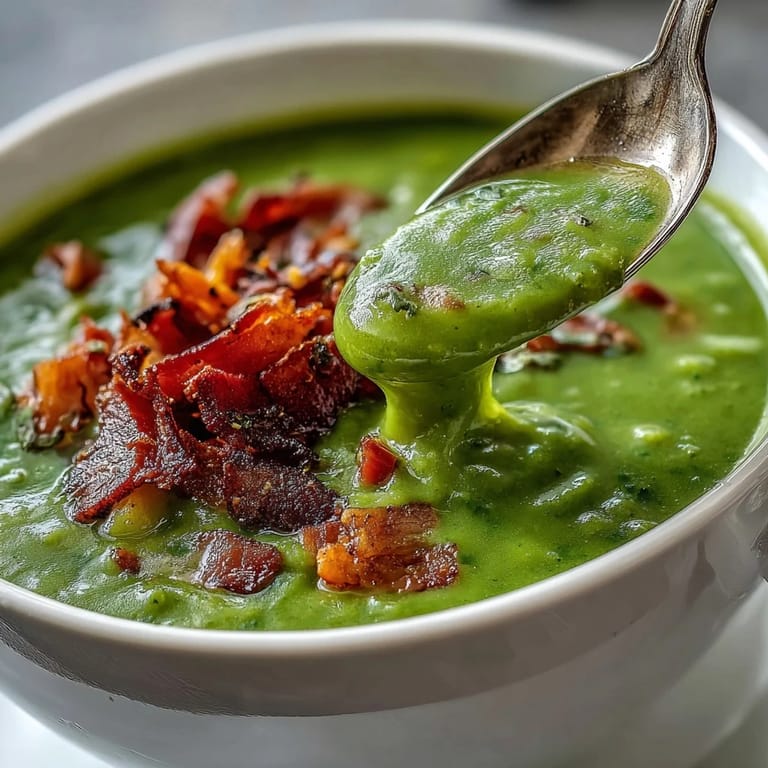
The magic of this soup happens in how the peas themselves break down and thicken everything without any cream. Some people like it completely smooth, others prefer it chunky—there's no wrong answer. The immersion blender method takes about a minute, and you can do it right at the end while the pot's still on the stove, which feels more elegant than transferring things to a blender.
Vegetarian and Vegan Variations
Leave out the ham and you still have a full, satisfying soup; the peas themselves have enough substance that you won't feel like something's missing. If you want that smoky flavor vegetarians often miss, add half a teaspoon of smoked paprika near the end of cooking—it'll give you that depth without animal products. The soup is naturally gluten-free as long as you're using broth that hasn't been thickened with flour, so check your label if that matters to you.
Serving and Storage
This soup is the kind that tastes even better the next day, after the flavors have had time to settle and mingle. It keeps well in the refrigerator for about 4 days, and it also freezes beautifully—just leave a little room at the top of your container since it expands slightly. When you reheat it, you'll almost certainly need to add water or broth because everything thickens as it sits, and that's actually a good thing because it means you can adjust it to exactly the consistency you're in the mood for.
- Serve with crusty bread or a sandwich for a complete meal that feels intentional.
- A dollop of sour cream or Greek yogurt on top is lovely if you want richness without cream in the actual soup.
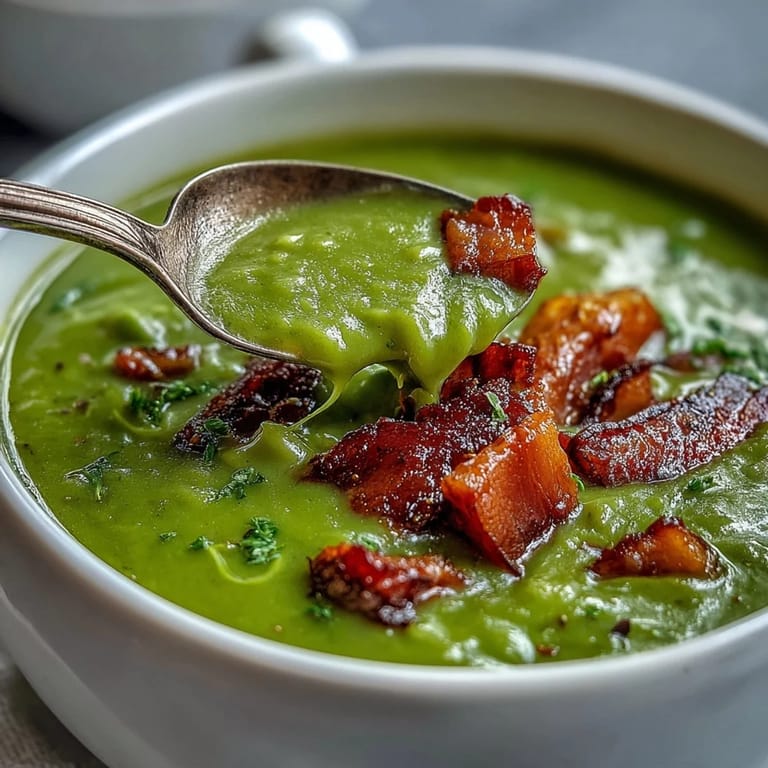
- If you're serving vegetarian and non-vegetarian eaters at the same table, make it without ham and let people add crispy bacon bits if they want, which respects everyone's preferences.
 Save to Pinterest
 This soup is proof that the simplest recipes often become the ones we return to again and again. Make it once and you'll understand why.
Recipe FAQs
- → Do I need to soak split peas before cooking?
No soaking required. Split peas naturally break down during cooking, creating that signature creamy texture without any prep work beyond rinsing.
- → How long does this soup keep in the refrigerator?
Store in an airtight container for up to 5 days. The soup continues to thicken as it sits—simply add broth or water when reheating to reach desired consistency.
- → Can I freeze this soup?
Absolutely. Portion into freezer-safe containers, leaving room for expansion. Thaw overnight in the refrigerator and reheat gently on the stove, adding liquid if needed.
- → What gives the soup its smoky flavor without meat?
Add 1-2 teaspoons of smoked paprika when sautéing the vegetables. This mimics the depth that ham traditionally provides while keeping the dish plant-based.
- → Why is my soup too thick?
Split peas continue absorbing liquid as they cool. Simply warm with additional broth or water, stirring until you reach the perfect consistency. This natural thickening is actually a sign of well-cooked peas.
- → Can I use yellow split peas instead?
Yes, yellow split peas work beautifully and create a slightly milder, sweeter flavor profile. The cooking time and technique remain exactly the same.