 Save to Pinterest
 I discovered tapioca pudding on a gray afternoon when my grandmother pulled a dusty cookbook from her shelf and asked if I wanted to learn something easy but impressive. She described it as the kind of dessert that tastes like comfort wrapped in cream, and I was skeptical until the first spoonful melted on my tongue. That day taught me that the simplest ingredients, treated with patience, become something unexpectedly elegant. Now whenever I make it, I think of her kitchen and how she could transform ten minutes of prep into an hour of pure satisfaction.
I made this for a dinner party once and watched my friend, who claimed to hate tapioca, eat two bowls. She couldn't quite explain why, just kept saying it tasted like vanilla and possibility. That moment shifted how I thought about cooking—sometimes a dish's real magic is in how it makes people feel when they taste something they didn't know they'd been missing.
Ingredients
- Small pearl tapioca: The pearls should be small, not the huge boba-sized ones, because they cook evenly and absorb the milk without becoming rubbery.
- Whole milk: Full-fat milk creates that silky mouthfeel the pudding is known for, though coconut milk works beautifully if you want richness with a subtle flavor shift.
- Salt: Just a quarter teaspoon awakens all the other flavors without making the pudding taste savory.
- Granulated sugar: This dissolves cleanly into the milk and won't create grittiness like some alternatives might.
- Pure vanilla extract: Added at the end so the heat doesn't cook away its delicate flavor.
- Egg yolks: Optional, but they transform the texture into something silkier and richer if you're comfortable with them.
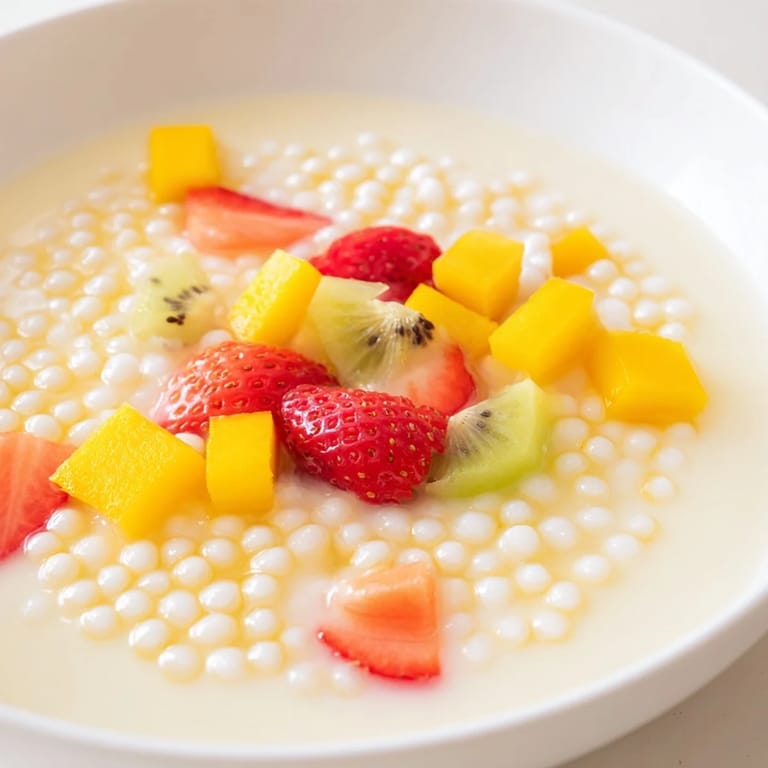
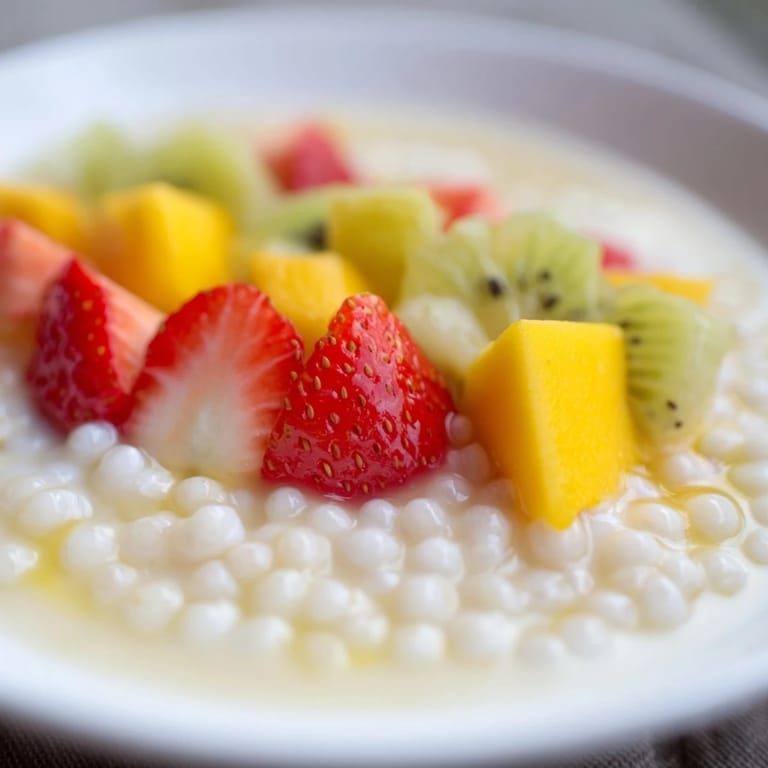
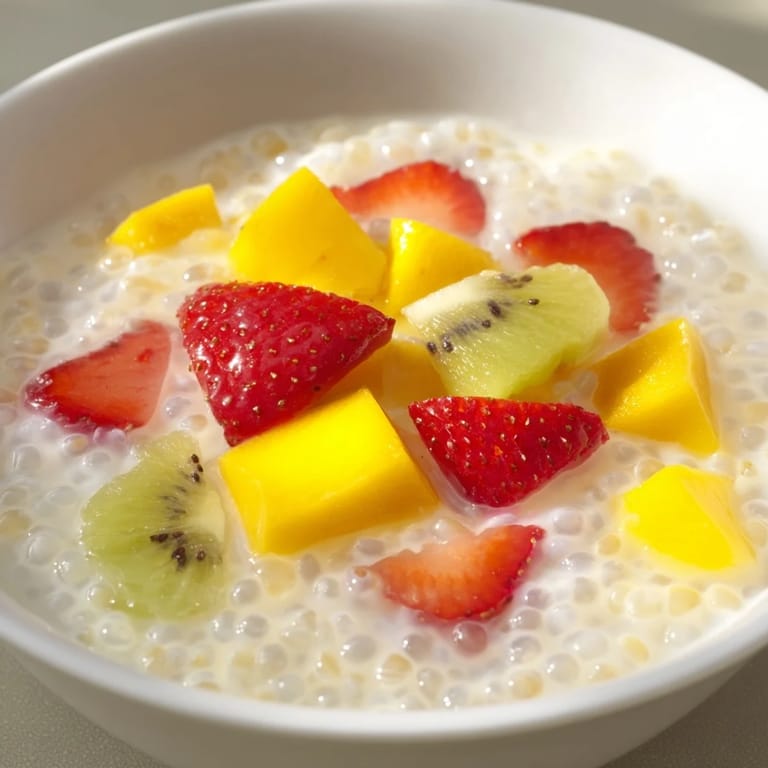
- Fresh mixed berries or sliced fruit: The bright tartness of berries cuts through the sweetness perfectly and adds visual appeal.
Tired of Takeout? 🥡
Get 10 meals you can make faster than delivery arrives. Seriously.
One email. No spam. Unsubscribe anytime.
Instructions
- Soak the pearls:
- Pour the tapioca into a saucepan with milk and salt, then walk away for 30 minutes. This gives the pearls time to absorb moisture so they cook evenly instead of staying hard in the center.
- Bring to a gentle simmer:
- Set the heat to medium and stir frequently—this prevents the pearls from clumping to the bottom. You'll notice the mixture will start to thicken almost immediately once it hits a simmer.
- Cook until translucent:
- Add sugar and keep stirring for 15–20 minutes. The magic moment is when the tapioca pearls go from cloudy to crystal clear and the whole pudding transforms into something creamy and cohesive.
- Temper and enrich (if using eggs):
- Whisk yolks in a bowl, then slowly add hot pudding to them while whisking constantly. This prevents the eggs from scrambling and creates a luxurious custard texture.
- Finish and cool:
- Stir in vanilla, pour into serving dishes, and let it cool to room temperature before refrigerating. The pudding thickens more as it chills, so don't worry if it seems a little loose warm.
- Top and serve:
- Fresh fruit goes on just before eating so it stays bright and doesn't get soggy. The contrast between cold pudding and whatever fruit you choose is where the real pleasure lives.
 Save to Pinterest
 I remember my neighbor tasting this pudding and closing her eyes like she'd traveled somewhere. She said it reminded her of her childhood, even though we'd never met before that moment. That's when I realized certain flavors and textures have a quiet power—they slip past our defenses and connect us to people and places we didn't know we were missing.
The Secret of Patience
The 30-minute soak is not a suggestion—it's the difference between tapioca that cooks unevenly and tapioca that becomes tender and uniform. I learned this the hard way by skipping it once, thinking I could save time by heating everything immediately. The result was a pudding with some pearls still slightly firm and others beginning to fall apart. Now I treat that soak time as a gift, a moment to tidy the kitchen, steep my tea, or simply breathe before the real cooking begins.
Choosing Your Milk and Adapting
Whole milk is the classic choice because of how it coats your mouth with richness, but I've had equally lovely results with oat milk, which adds a subtle sweetness, and coconut milk, which brings a tropical undertone. The texture shifts slightly with each choice—coconut milk makes the pudding airier, while cream makes it almost custard-like. If you're cooking for guests with dietary restrictions, don't apologize for the substitution; just acknowledge that you're creating something intentionally different, not making do with less.
Fruit Pairings and Finishing Touches
Fresh berries are the obvious choice, but I've discovered that passion fruit adds a sophisticated tartness, caramelized bananas bring warmth, and even a drizzle of honey or a scatter of candied lemon zest transforms the whole dish. The pudding itself is so neutral and creamy that it becomes a canvas for whatever you're in the mood for. Try these when the moment strikes.
- Passion fruit and fresh mint create an almost tropical elegance.
- Stewed rhubarb with a touch of sugar brings a beautiful tartness that cuts through the sweetness.
- A sprinkle of toasted coconut or crushed amaretti adds texture and a hint of almond flavor.
 Save to Pinterest
 Tapioca pudding has taught me that not every dessert needs to be complicated to feel special. It's the kind of dish that earns its place at your table through gentleness and care rather than technical difficulty.
Recipe FAQs
- → How long should tapioca pearls soak before cooking?
Soaking tapioca pearls for about 30 minutes allows them to soften and cook evenly, resulting in a tender texture.
- → Can I use dairy-free milk alternatives?
Yes, almond, coconut, or oat milk can be used instead of whole milk for a dairy-free version without compromising creaminess.
- → What is the purpose of adding egg yolks?
Egg yolks add richness and contribute to a silkier, thicker texture when gently tempered into the cooked mixture.
- → How can the tapioca pudding be served?
It can be enjoyed warm or chilled, topped with fresh fruits like berries or mango for added flavor and brightness.
- → How do I know when the tapioca pearls are cooked?
The pearls turn translucent and the mixture thickens when fully cooked, typically after 15 to 20 minutes of simmering.