 Save to Pinterest
 My neighbor showed up one Saturday morning with a bag of doughnut holes still warm from her kitchen, and I was instantly transported back to childhood bakery visits. There's something about those little puffs of fried dough that makes time stop—they're impossibly easy to eat one after another, yet somehow feel indulgent. I begged her for the recipe, and what she handed me was simpler than I expected, which made the magic even better. Now I make them whenever I want that moment of pure comfort food bliss without the fuss of shaping traditional doughnuts.
I once made these for my daughter's book club, and the whole room went quiet for about thirty seconds after the first bite—that's when I knew I had a keeper. She still asks for them before school trips, tucked into her lunchbox in a paper bag so they stay slightly warm during the drive.
Ingredients
- All-purpose flour: The foundation of tender dough, and measuring it by weight ensures your batch turns out fluffy every time.
- Granulated sugar: Sweetens the dough subtly so the coating takes center stage.
- Baking powder: This is what gives doughnut holes their characteristic light, airy crumb—don't skip it or substitute.
- Salt: A small pinch awakens all the other flavors and prevents the dough from tasting flat.
- Ground nutmeg: The secret warmth that makes people ask what that amazing spice is.
- Whole milk: Creates a tender crumb better than water, and the fat content matters.
- Eggs: Bind everything together and add structure to the dough.
- Unsalted butter, melted: Keeps the dough moist and adds a subtle richness that deepens the flavor.
- Vanilla extract: A touch of sophistication that rounds out the spiced warmth.
- Vegetable oil for frying: Choose a neutral oil that can handle high heat without smoking.
- Powdered sugar or cinnamon-sugar coating: The finish that makes them irresistible—pick your preference or offer both.
Tired of Takeout? 🥡
Get 10 meals you can make faster than delivery arrives. Seriously.
One email. No spam. Unsubscribe anytime.
Instructions
- Mix the dry ingredients:
- In a large bowl, whisk together flour, granulated sugar, baking powder, salt, and nutmeg so the leavening is evenly distributed. This step ensures no dense pockets in your finished doughnut holes.
- Combine the wet mixture:
- In another bowl, whisk milk, eggs, melted butter, and vanilla until smooth and well blended. The butter should be slightly cooled so it doesn't cook the eggs.
- Bring it together gently:
- Pour the wet ingredients into the dry ingredients and stir with a few quick strokes until just combined—small flour streaks are okay. Overmixing develops gluten and makes them tough instead of tender.
- Heat your oil:
- In a deep pot or Dutch oven, slowly heat vegetable oil to 350°F (175°C), using a thermometer to be sure. Too cool and they'll be greasy; too hot and they'll brown before cooking through.
- Fry in batches:
- Drop tablespoon-sized balls of dough into the hot oil using a small cookie scoop or spoon, working in batches of 6–8 so they have room to puff and turn. Crowding the pot drops the temperature and ruins the texture.
- Turn and watch:
- Let them fry for about a minute, then gently turn with a slotted spoon and fry another 1–2 minutes until they're golden brown all over. The color is your guide to doneness.
- Drain and cool:
- Lift them out with a slotted spoon and set them on paper towels to shed excess oil. A minute of draining makes a huge difference.
- Coat while warm:
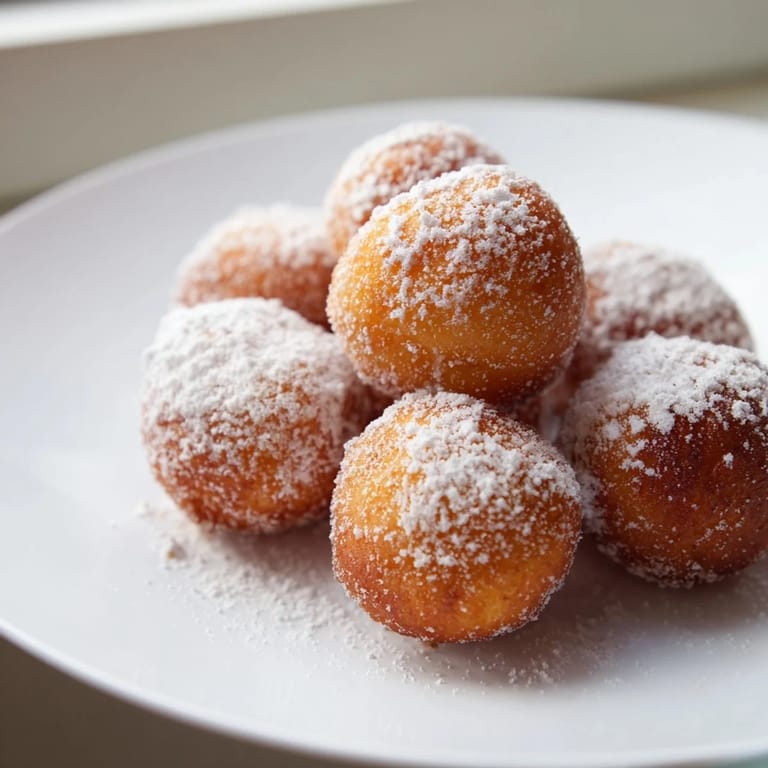
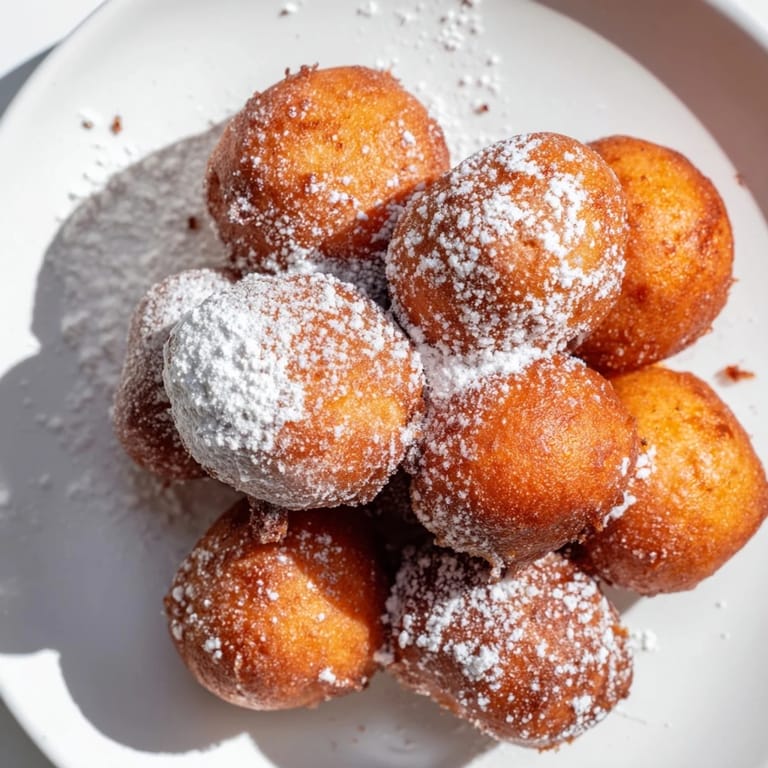
- While they're still warm, roll each doughnut hole in powdered sugar, or in a cinnamon-sugar mixture if you prefer. The warmth helps the coating stick.
 Save to Pinterest
 There was a moment when my partner bit into one straight from the oil, burned his tongue, and then immediately went back for another without hesitation—that's the moment I realized these little rounds had earned their place in our regular rotation. They're the kind of simple food that connects us to something honest and joyful.
Coating Variations to Explore
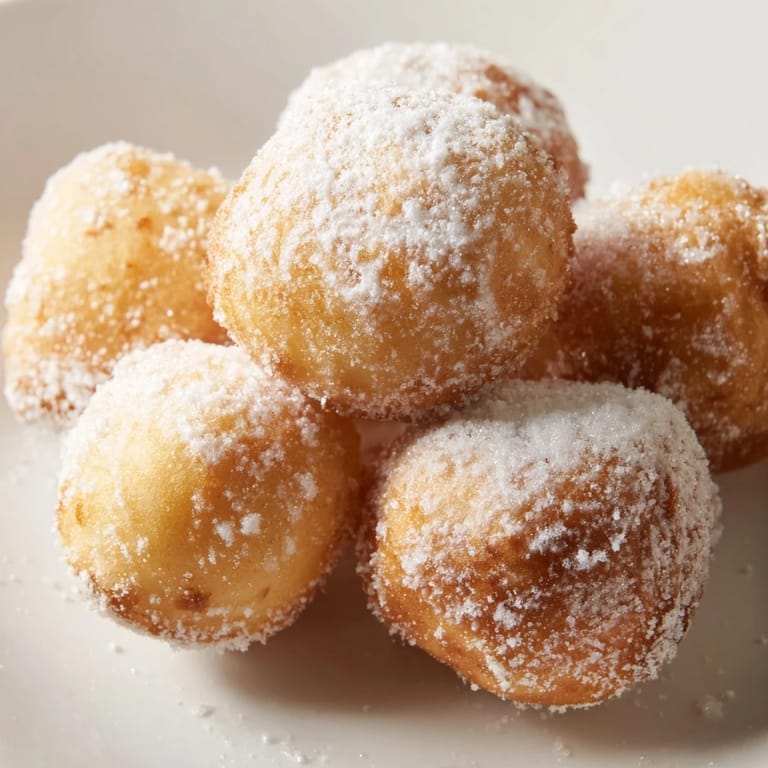
Powdered sugar is the classic, but don't stop there. A cinnamon-sugar mixture brings warmth and depth, while a maple-sugar blend tastes like fall in a single bite. I've even tossed warm doughnut holes in melted chocolate mixed with a touch of coconut oil, then let them set on parchment—they become little gems that way.
Storing and Reheating
Fresh doughnut holes are best within the first few hours, but they keep in an airtight container for up to a day. To revive them, warm them gently in a low oven for a few minutes so they regain some of their initial texture without drying out. They'll never be quite as good as fresh, but they're still worth eating.
Creative Fillings and Next Steps
Once you master the basic doughnut hole, the world opens up. Poke a small hole in each one while it's still warm and inject jam, Nutella, or pastry cream inside using a small squeeze bottle. Some people dip half of each doughnut hole in melted chocolate for a sophisticated touch, while others dust them with matcha powder or cocoa powder for a flavor twist.
- Try filling them with raspberry jam or salted caramel for an elegant dessert your guests will remember.
- Double-coat variations by rolling in sugar first, then drizzling with melted chocolate and letting it harden.
- Make them ahead through the dough stage and refrigerate up to 2 hours—just let them come to room temperature before frying.
 Save to Pinterest
 These doughnut holes remind me that the best recipes aren't about complexity—they're about joy in simplicity, and the pleasure of sharing something warm and golden with the people you love.
Recipe FAQs
- → What oil is best for frying dough balls?
Use a neutral oil with a high smoke point, such as vegetable or canola oil, to achieve crisp, golden results without overpowering flavors.
- → How can I tell when the dough balls are fully cooked?
They should be golden brown all over and float to the surface, cooking about 2–3 minutes evenly when turned occasionally.
- → What coatings work well on these fried dough bites?
Powdered sugar or a mix of granulated sugar and ground cinnamon both complement the warm, tender dough beautifully.
- → Can I prepare the dough in advance?
For best texture, prepare and fry the dough fresh. Though dough can rest briefly, frying immediately ensures optimal crispness.
- → How can I add extra flavor to the dough?
Incorporate spices like a pinch of cardamom into the dough or add vanilla extract to enhance aromatic depth.
- → Is it possible to fill these dough bites?
Yes, after frying, carefully puncture and fill them with jam or melted chocolate for a delightful surprise inside.