 Save to Pinterest
 I used to watch my neighbor toss every leftover vegetable into a bubbling pot on Sunday afternoons. She never used a timer, just the scent of garlic and rosemary wafting through the window. That messy, intuitive way of cooking turned a pile of scraps into something deeply soul warming. This minestrone captures that same spirit of kitchen generosity. It is the kind of meal that feels like a hug from the inside out.
One rainy Tuesday, I accidentally added twice the amount of garlic because the cloves were massive. The kitchen smelled like an Italian trattoria for three days straight. My friends still talk about that batch as the best soup they ever had. Now, I always lean into the garlic more than the recipe suggests. It taught me that sometimes a heavy hand leads to the best discoveries.
Ingredients
- Olive Oil: A good quality oil creates the base for sautéing those aromatic base vegetables.
- Onion, Carrots, and Celery: This trio forms the sofrito that provides the backbone of savory flavor.
- Garlic: Freshly minced cloves offer a punch that pre chopped jars simply cannot match.
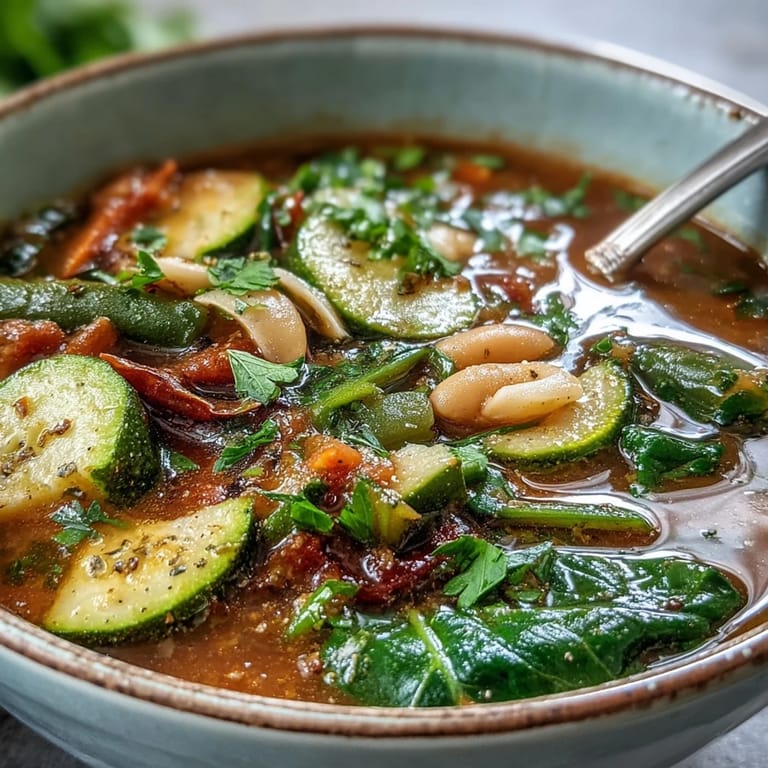
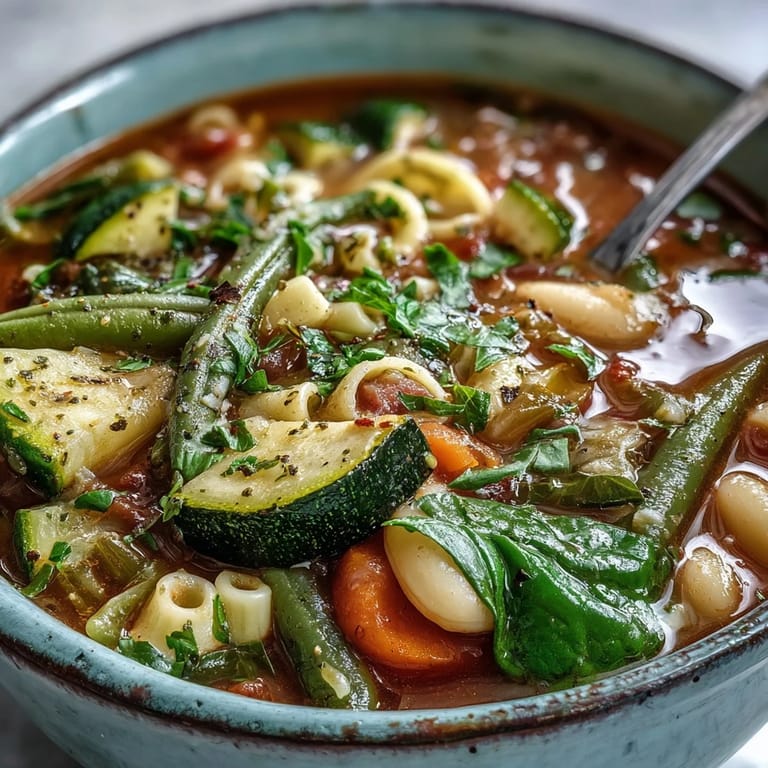
- Zucchini and Green Beans: These add a lovely texture and vibrant color to every spoonful.
- Potato: Diced small, it releases starches that naturally thicken the broth without flour.
- Diced Tomatoes: These provide the necessary acidity to balance the earthy beans and herbs.
- Cannellini Beans: Their creamy texture makes the soup feel substantial and protein rich.
- Small Pasta: Ditalini or macaroni catch the broth perfectly in their hollow centers.
- Vegetable Broth: A low sodium version allows you to control the final seasoning levels yourself.
- Dried Italian Herbs: A blend of oregano and thyme brings that classic Mediterranean aroma.
- Bay Leaf: This humble leaf adds a subtle layer of complexity that deepens during simmering.
- Baby Spinach: Stirring this in at the end keeps the greens bright and tender.
- Parmesan Cheese: A sprinkle of salty cheese adds a savory finish that ties everything together.
Tired of Takeout? 🥡
Get 10 meals you can make faster than delivery arrives. Seriously.
One email. No spam. Unsubscribe anytime.
Instructions
- Sauté the aromatics:
- Warm the oil in your pot and let the onions, carrots, and celery soften until the onion is translucent. Listen for that gentle sizzle as the base flavors begin to meld and sweeten.
- Waken the vegetables:
- Stir in the garlic, zucchini, potato, and green beans to let them toast slightly in the oil. This quick step helps the vegetables hold their shape during the longer simmer.
- Build the broth:
- Pour in the tomatoes, beans, broth, and herbs before tossing in the bay leaf for extra depth. Bring the pot to a lively boil then reduce the heat to a steady simmer.
- Cook the pasta:
- Add your pasta shapes directly into the bubbling liquid and let them soften until they reach a perfect bite. Keep an eye on the pot as the pasta will soak up some of that delicious broth.
- Finish with greens:
- Remove the bay leaf and fold in the spinach until it just begins to wilt into the soup. The heat from the pot is enough to cook the leaves without losing their color.
- Season and serve:
- Taste your creation and add salt or pepper until the flavors pop. Ladle the hot soup into bowls and garnish with fresh parsley and a dusting of cheese.
 Save to Pinterest
 Last winter, I served this soup during a power outage by the light of three flickering candles. We ate it with thick slices of toasted sourdough and laughed about how the darkness made the flavors seem even more intense. It was a reminder that the simplest meals often create the most vivid memories.
Seasonal Adaptations
This soup is a chameleon that changes its colors based on what the local market offers each month. In the spring, I love swapping the potatoes for tender asparagus tips and sweet peas. Winter calls for heartier additions like chopped kale or even some chunks of butternut squash.
The Art of the Simmer
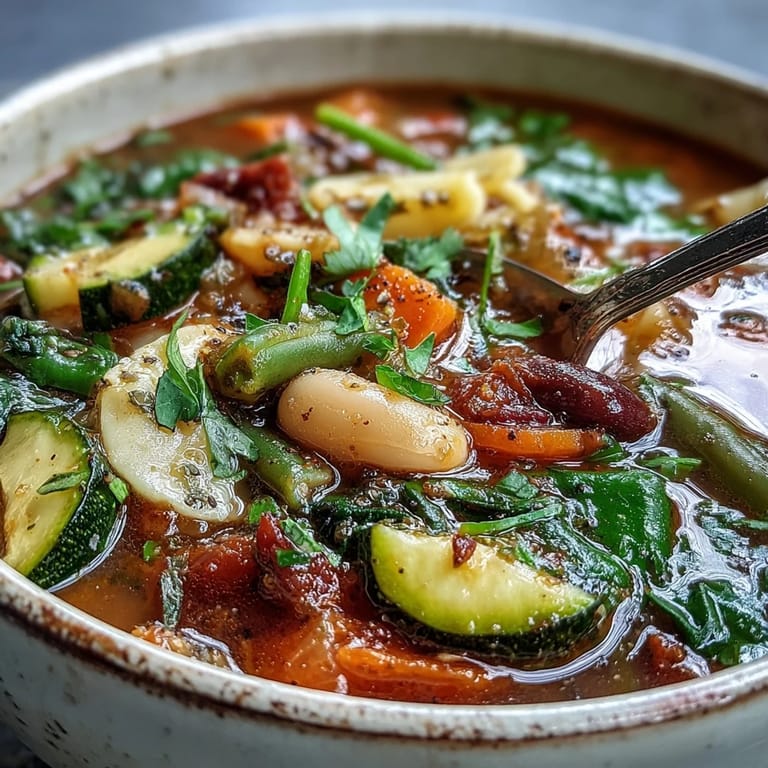
Patience is truly the secret ingredient when it comes to a soup like this. While forty minutes is the standard, letting it sit on a very low flame allows the herbs to fully infuse the liquid. You will notice the color of the broth deepens from a pale orange to a rich, sunset red.
Storage and Reheating
If you plan on making a massive batch for the week, consider cooking the pasta separately. This prevents the noodles from getting mushy when they sit in the liquid overnight. Here are a few things to keep in mind for leftovers.
- Store the soup in airtight glass containers to keep the flavors fresh for up to four days.
- Add a splash of water or extra broth when reheating to bring back the original consistency.
- Freeze the base without the pasta if you want a quick meal ready in the freezer for months.
 Save to Pinterest
 This minestrone is more than a recipe, it is a living bowl of comfort that grows with you. I hope it brings as much warmth to your kitchen table as it has to mine.
Recipe FAQs
- → What vegetables work best in minestrone?
Traditional minestrone includes onions, carrots, celery, zucchini, potatoes, and green beans. You can adapt based on season—add cabbage in winter, fresh peas in spring, or bell peppers in summer.
- → Can I make this gluten-free?
Absolutely. Substitute regular pasta with gluten-free varieties like rice pasta, corn-based shapes, or chickpea pasta. Always verify all ingredients, including broth and seasonings, are certified gluten-free.
- → How do I store and reheat leftovers?
Cool completely and refrigerate in airtight containers for up to 4 days. The pasta will absorb broth, so add extra liquid when reheating. Freeze for 3 months without pasta—cook fresh when serving.
- → What pasta shape should I use?
Small shapes work best—ditalini, elbow macaroni, small shells, or tubetti catch beautifully in spoonfuls. Larger shapes can overwhelm the delicate balance of vegetables and broth.
- → Can I make minestrone in a slow cooker?
Sauté aromatics first, then transfer all ingredients except pasta and greens to your slow cooker. Cook on low 6-7 hours or high 3-4 hours. Add pasta during the last 30 minutes and spinach just before serving.
- → What's the secret to deeper flavor?
Simmer a Parmesan rind in the broth for umami richness. Tomato paste caramelized with the aromatics adds depth. Finish with a splash of balsamic vinegar or quality olive oil before serving.