 Save to Pinterest
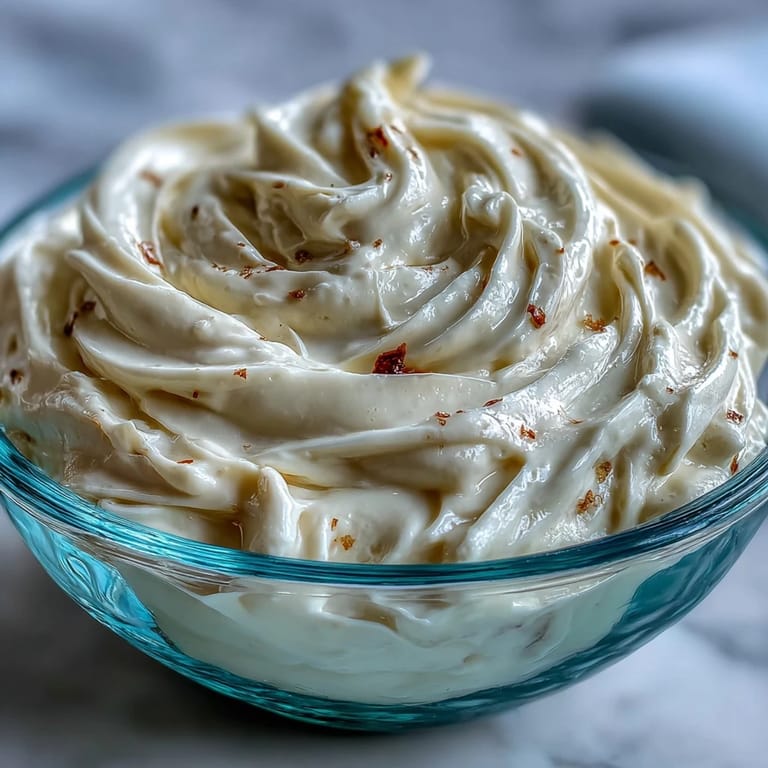
 There is something inexplicably satisfying about seeing a glossy ribbon of homemade mayonnaise come together in seconds right in your own kitchen. I remember being almost startled the first time I heard the cheerful whir of my immersion blender turning a few simple pantry staples into a thick, luxurious spread. It doesn't matter if it's a gloomy Tuesday or a celebratory weekend, that transformation never fails to delight me. Sometimes, the aroma of mustard as it hits the egg, sharp and a little peppery, is enough to make me grin. It's a recipe that always delivers, no matter how hectic or calm the kitchen feels.
Just last month, my friend stopped by unexpectedly around lunch, and I threw together this mayonnaise in five minutes flat. I cracked jokes about being a "home condiment artisan" as we scooped it onto our sandwiches, but underneath I was quietly impressed at how easy it had become. Watching someone’s eyes widen after tasting homemade mayo for the first time is almost as fun as making it. The sound of a spoon scraping the last bit from the jar still makes me laugh, because it always disappears faster than I expect. It’s these little surprises that make cooking for people genuinely joyful.
Ingredients
- Large egg (room temperature): Using a room temperature egg helps the mayonnaise come together smoothly, and I’ve learned cold eggs just don’t emulsify as well.
- Dijon mustard: This bit of tang and spice is my secret weapon for balancing the richness; don’t swap it for yellow mustard if you can avoid it.
- White wine vinegar or lemon juice: Either one adds a bright, clean acidity—lemon juice brings freshness while vinegar lends a classic flavor.
- Neutral oil (sunflower, canola, or light olive oil): The oil forms the silky base, and I prefer sunflower for its light taste, though olive oil gives a bolder kick if you like that.
- Fine sea salt: Just enough to make the flavors pop, but not so much that it overshadows the other ingredients.
- Freshly ground black pepper (optional): Adds a bit of subtle heat right at the end; I only skip it for ultra-smooth sandwich mayo.
Tired of Takeout? 🥡
Get 10 meals you can make faster than delivery arrives. Seriously.
One email. No spam. Unsubscribe anytime.
Instructions
- Set up your blending station:
- Grab a tall, narrow container—this keeps all the ingredients snug and helps the emulsion form fast.
- Add the base ingredients:
- Crack the egg into your container, then add the Dijon, vinegar (or lemon), salt, and pepper if you like a little spice.
- Layer on the oil:
- Pour the oil gently on top, watching it float above the other ingredients and readying itself to blend into creamy magic.
- Start blending from the bottom:
- Plunge your immersion blender straight down, then pulse while keeping it at the base; you’ll see the bottom change from transparent to thick and pale so quickly it feels like a kitchen trick.
- Pull and blend:
- Slowly lift the blender as you keep it running, swirling the creamy mayonnaise up through the oil until it’s glossy and unified.
- Season to taste:
- Stop and dip a spoon in—add a bit more salt, vinegar, or lemon if you want it zippier, giving it one last blend if needed.
- Store and chill:
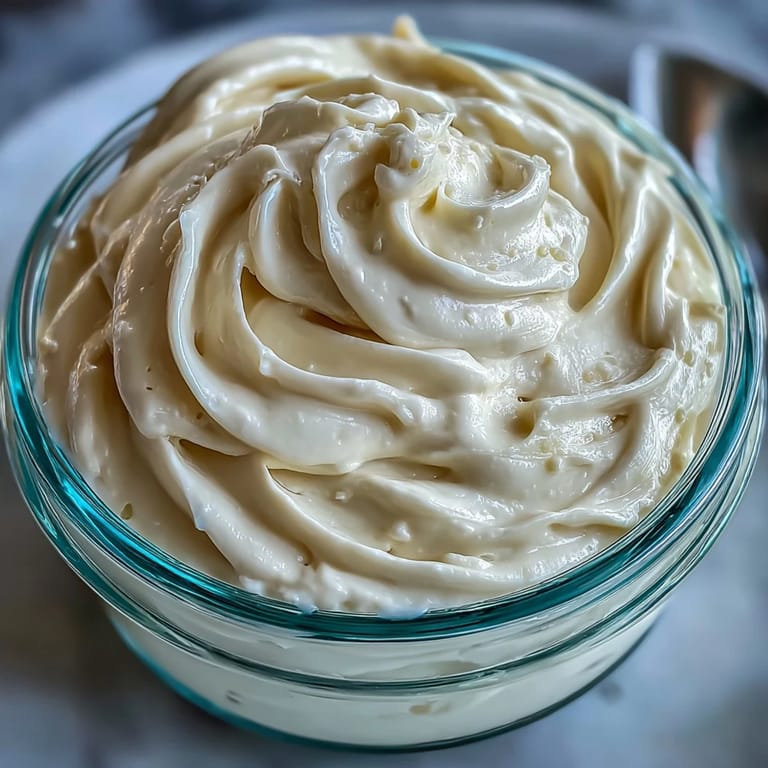
- Spoon into a clean jar (expect lots of finger licking), seal tightly, and stash in the fridge to thicken even more as it chills.
 Save to Pinterest
 My niece once watched me make this at a family picnic, wide-eyed at the ‘science experiment’ happening in the glass jar. When she stuck her finger in for a taste, she immediately declared it ‘magic sandwich sauce.’ Right then, mayonnaise stopped being just a condiment and became a conversation starter at every family gathering. Even my brother, a devout store-bought mayo fan, conceded that fresh is best if you’ve got five minutes and an immersion blender. Suddenly, everyone wanted the recipe and the little science lesson that went with it.
The Joys of Small Batch Condiments
When you only make what you need, you avoid the disappointment of jars languishing forgotten at the back of the fridge. Small batch mayonnaise stays fresh and, honestly, there’s rarely any to waste because it gets used up in everything from salads to quick aioli dips. It's a lesson I've learned the fun way: a small effort for big payoff. The real delight comes from adjusting the acidity or seasoning every batch to fit your mood. It never gets old to taste how much brighter and bolder homemade can be.
Get Creative with Flavors
Now and then, I like to mash a little roasted garlic, a dash of smoked paprika, or even a spoonful of sriracha into the base to create new variations. Turning plain mayonnaise into lively spreads or dips is a little adventure that costs almost nothing. On burger night or as a quick veggie dip, those subtle tweaks earn way more compliments than expected. It’s proof that even a classic has infinite room for play. There’s satisfaction in knowing every mayonnaise is uniquely yours.
Kitchen Clean-Up and Shelf Life Wisdom
Cleaning up after making mayonnaise is barely a chore: a quick rinse of the blender and the container, and you’re done well before your sandwiches are finished. Homemade mayo doesn’t have the preservatives of store-bought, so I always label the jar and make a note to use it within a week. It keeps perfectly for that stretch if stored in a clean, sealed jar in the coldest part of the fridge.
- Use pasteurized eggs if you have safety concerns.
- Resist the urge to use extra-virgin olive oil unless you love bold flavors—it can overwhelm everything else.
- If the mayo thickens up too much in the fridge, just stir in a teaspoon of water to loosen it again.
 Save to Pinterest
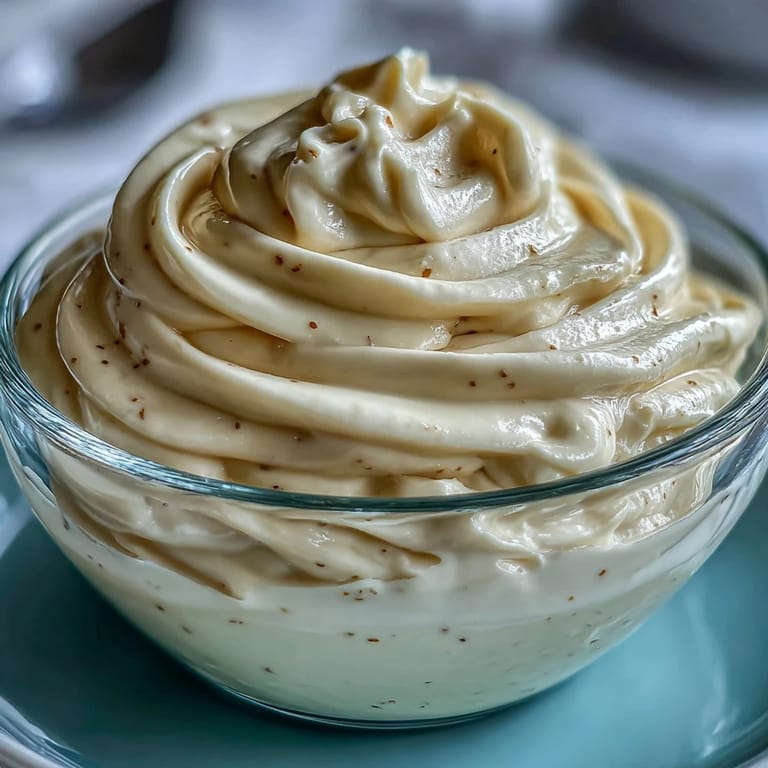
 Homemade mayonnaise always feels like a kitchen win. Here’s to five minutes, a little whirring, and the best sandwich spread you’ve ever tasted.
Recipe FAQs
- → Can I use extra virgin olive oil instead of neutral oil?
Yes, but extra virgin olive oil will add a stronger, sometimes bitter flavor compared to a neutral oil. Use light olive oil for a milder taste.
- → Is it safe to use raw eggs?
Using pasteurized eggs is recommended if you have concerns about raw eggs. Store the mayonnaise in the fridge and consume within a week.
- → How do I make the mayonnaise tangier?
Add more vinegar or lemon juice, up to 2 teaspoons extra, to achieve a tangier flavor tailored to your preference.
- → Can I add garlic to make aioli?
Yes, blend in a small garlic clove during the emulsification process for a homemade aioli variation.
- → Why won't my mayonnaise emulsify?
Ensure all ingredients are at room temperature and blend from the bottom up without moving the blender at first for proper emulsification.
- → How should I store homemade mayonnaise?
Transfer to a clean jar with a tight lid and refrigerate. Use within one week for best freshness and safety.