 Save to Pinterest
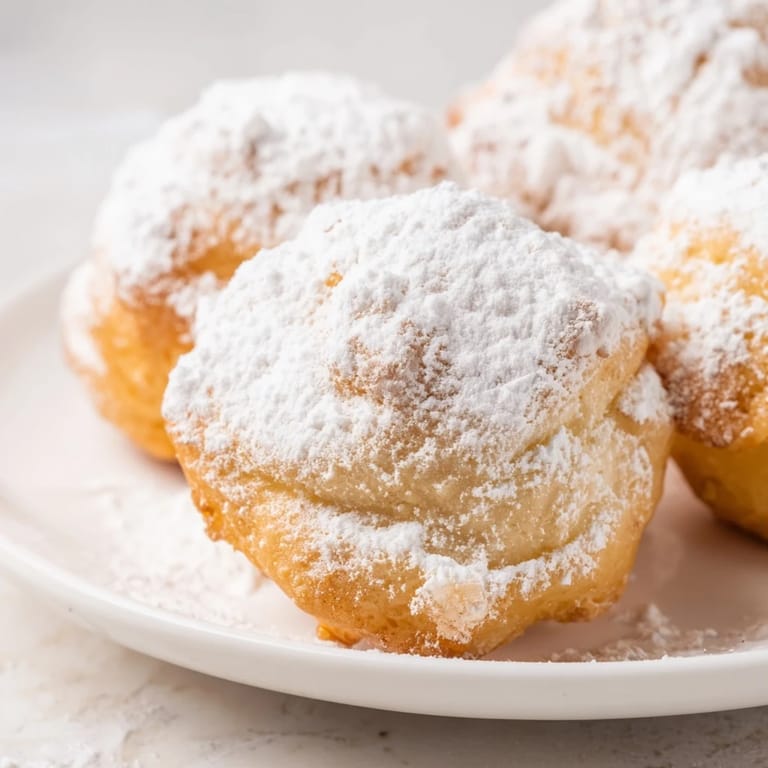
 There's something about the smell of zeppole frying that pulls everyone into the kitchen, even people who claim they don't like sweets. My neighbor once made them on a random Tuesday afternoon, and within minutes, three kids and two adults had gathered at her counter, drawn by that nutty, golden aroma alone. She handed me one still warm from the oil, the powdered sugar coating my fingers as I bit through the crispy exterior into the soft, pillowy inside, and I understood why Italian-American families keep coming back to this recipe across generations. It's the kind of dessert that feels both humble and indulgent at the same time.
I learned to make zeppole at a church basement fundraiser where an older woman named Rosa was running the fry station with the precision of someone who'd made thousands of them. She showed me how to listen for the oil's quiet sizzle and watch for that exact moment when the batter puffs up, rather than obsessing over the timer. When we finished that evening and she let me dust the final batch with powdered sugar, she said, "Now you know the secret, and you have to teach someone else." It stuck with me.
Ingredients
- All-purpose flour (2 cups): The foundation that creates that tender crumb; don't sift unless your flour is really clumpy, since over-working the batter makes them tough.
- Baking powder (2 teaspoons): The unsung MVP that gives zeppole their signature airy lift without needing yeast or long rising time.
- Granulated sugar (2 tablespoons): Just enough sweetness in the dough itself to balance the powdered sugar coating.
- Salt (1/2 teaspoon): Cuts through the richness and makes every bite feel more complex than it is.
- Eggs (2 large): They bind everything together and contribute to that tender, custardy interior.
- Whole milk (1 cup): Creates a thinner batter than water would, which means a more delicate crumb structure.
- Vanilla extract (2 teaspoons): A small amount adds warmth without making them taste like vanilla cake.
- Unsalted butter, melted (2 tablespoons): Gives richness and helps the exterior fry up extra crispy.
- Vegetable oil for frying (3 cups): Neutral oil stays at temperature better than olive oil and won't compete with the powdered sugar.
- Powdered sugar for dusting (1 cup): Apply it while they're still warm so it clings to the oil and becomes part of the texture.
Tired of Takeout? 🥡
Get 10 meals you can make faster than delivery arrives. Seriously.
One email. No spam. Unsubscribe anytime.
Instructions
- Combine your dry ingredients:
- Whisk the flour, baking powder, sugar, and salt in a large bowl, making sure the baking powder is distributed evenly throughout so you don't get dense pockets in your finished zeppole.
- Mix the wet base:
- Beat the eggs until they're pale, then add the milk, vanilla, and melted butter, stirring until everything looks smooth and combined. This mixture should feel thinner than cake batter but thicker than pancake batter.
- Bring it together:
- Pour the wet ingredients into the dry ingredients and stir gently until a thick, sticky batter forms—it should look lumpy and shaggy, not perfectly smooth. Don't overmix or your zeppole will be dense instead of airy.
- Heat your oil properly:
- Pour the vegetable oil into a heavy pot and let it come to exactly 350°F (175°C), checking with a thermometer because this temperature is everything. If the oil is too cool, they'll absorb oil and become heavy; if it's too hot, the outside burns before the inside cooks through.
- Fry in batches:
- Using two spoons dipped in water, gently drop heaping tablespoons of batter into the hot oil, working in small batches so the temperature doesn't drop and the zeppole have room to puff. Listen for the sizzle and watch them bob and turn golden.
- Cook until perfect:
- Fry for 3 to 4 minutes, turning them occasionally with a slotted spoon until they're deep golden brown all over and puffed like tiny pillows. They'll continue to firm up slightly as they cool.
- Drain and dust:
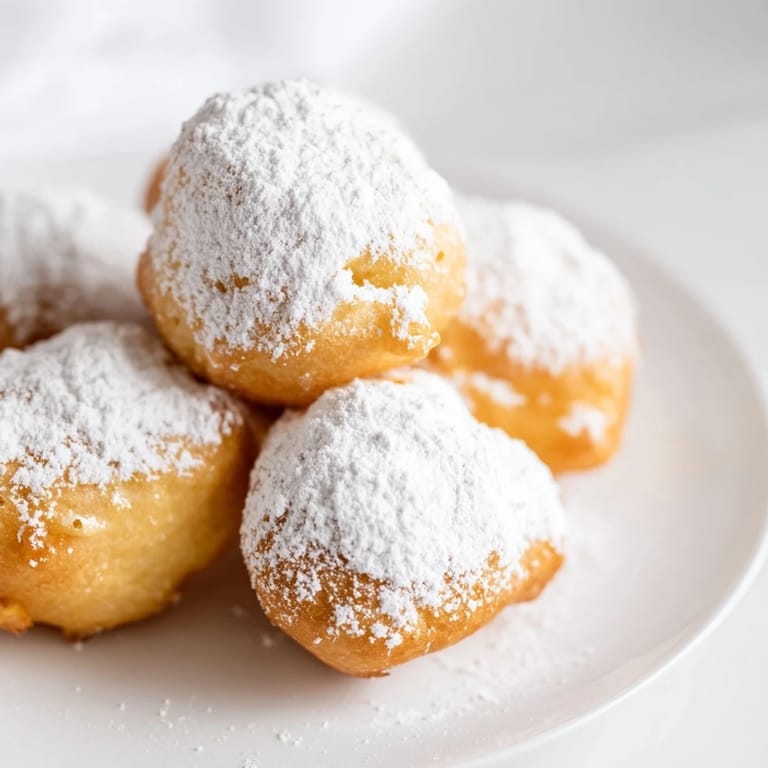
- Lift them out with a slotted spoon and let them rest on paper towels for just a minute, then transfer to a plate and dust generously with powdered sugar while they're still warm. Serve immediately while the contrast between warm and sweet is at its peak.
 Save to Pinterest
 The first time a friend asked me to bring something homemade to a potluck, I made zeppole, and they disappeared in under five minutes while people were still putting on coats. Since then, they've become my go-to contribution for celebrations, from holiday parties to just because someone needed cheering up. There's something about offering someone a warm, sugar-dusted fried dough ball that says "I care" in a way words can't quite match.
The Secret to Perfect Puffing
The magic moment is when you drop that batter into the hot oil and it immediately starts to expand, that visible puff that happens in the first 30 seconds. If it doesn't puff, your oil isn't hot enough or your baking powder is old and losing its lift. The batter will eventually cook, but you'll get dense little nuggets instead of the airy clouds you're after. Trust your eyes more than the clock—every oven and stovetop behaves differently, so watch for that gorgeous golden-brown color and let the zeppole tell you when they're ready.
Making Them Your Own
Once you nail the basic recipe, the variations become endless and genuinely fun to experiment with. A tiny pinch of lemon zest in the batter adds brightness without announcing itself, or a light sprinkle of cinnamon mixed into your powdered sugar creates a cozy, barely-there warmth. Some people pipe chocolate sauce into the center before serving, others pair them with warm raspberry sauce for dipping, and I've even seen them rolled in crushed pistachios for a nod to Mediterranean flavors. The beauty is that the batter is sturdy enough to handle these additions without losing its character.
Why This Recipe Works Every Time
What makes zeppole so reliable is the simplicity of the ingredient list and the forgiving nature of deep frying—unlike baking, where precision is everything, frying gives you visual feedback in real time. You can watch the color deepen, listen for the sound shift as moisture leaves the dough, and adjust your timing on the spot. This recipe has been made hundreds of thousands of times, so the proportions are rock solid, and even if you're new to frying dough, the odds are entirely in your favor.
- Make sure your oil stays at temperature by keeping the batches small and waiting 30 seconds between batches for the oil to recover heat.
- Don't skip the baking powder—it's not a typo and it's what makes these light, not dense.
- Powdered sugar applied while warm becomes part of the texture, not just a coating, so timing matters here too.
 Save to Pinterest
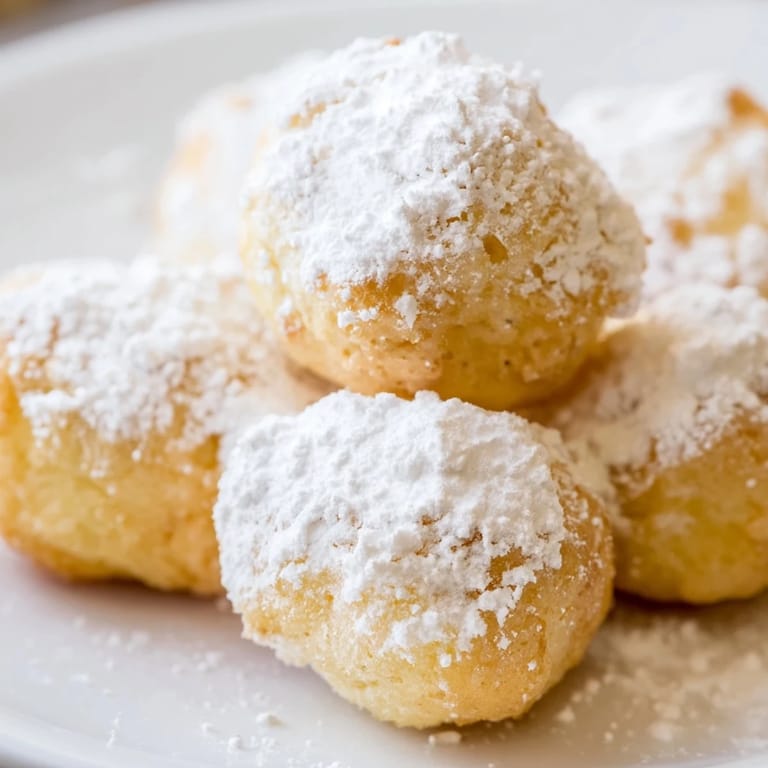
 These little fried dough balls carry so much warmth and history, and the best part is how quickly they bring people together. Make them once and they become part of your repertoire forever.
Recipe FAQs
- → What is the best oil temperature for frying?
Maintain the oil at 350°F (175°C) to ensure the dough cooks evenly and achieves a golden, crisp exterior without absorbing excess oil.
- → Can I add extra flavors to the dough?
Yes, adding a pinch of lemon zest brightens the flavor, and vanilla extract in the batter brings a warm, aromatic note.
- → How do I know when the dough balls are cooked?
Fry until golden brown and puffed, usually about 3-4 minutes per batch, turning occasionally for even cooking.
- → What is the texture of the finished dough balls?
The exterior is crisp and golden, while the inside remains soft and airy, creating a light and satisfying bite.
- → Are there suggested accompaniments?
These treats pair well with dipping sauces like chocolate or raspberry, enhancing their sweet, delicate flavor.