 Save to Pinterest
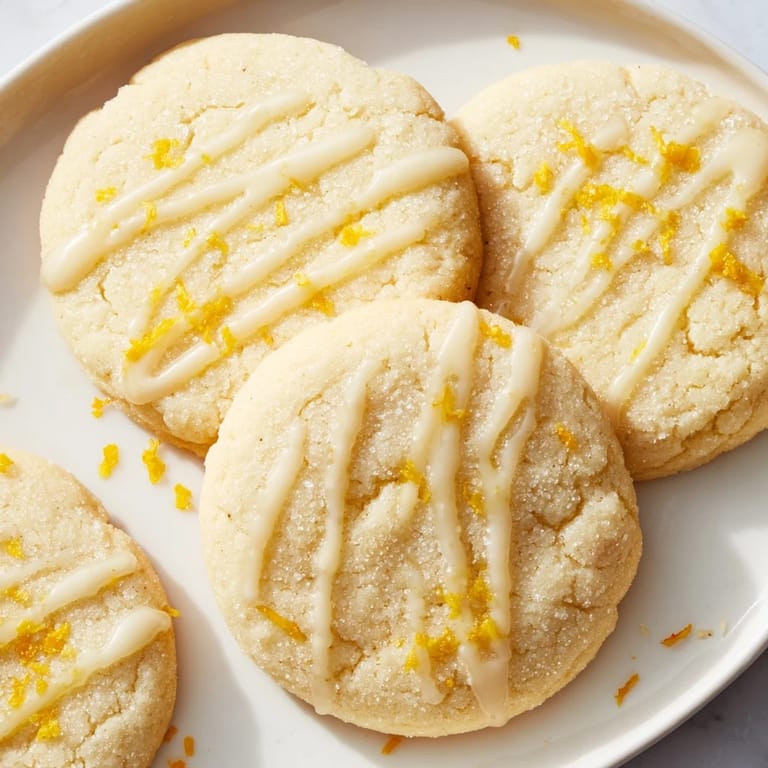
 My neighbor knocked on the door one afternoon with a plate of these lemon cookies, still warm, and I've been chasing that exact moment ever since. There's something about the way the butter melts into the dough and the brightness of fresh lemon cuts through the sweetness that just stops you mid-bite. The first time I tried making them myself, I was nervous about the glaze—would it be too glossy, too runny, too much? But that first drizzle over the cooled cookies, watching it settle into these delicate threads, felt like unlocking a secret. Now they're the first thing I reach for when I need to bring something to a gathering or just want the kitchen to smell like sunshine.
I brought a batch of these to a book club once, and three people asked for the recipe before we'd even opened the wine—that's when I knew they were worth perfecting. There was this moment where someone bit into one and their eyes actually widened, and they said, 'This tastes like happiness.' That sounds silly now, but I think about that compliment every time I bake them.
Ingredients
- All-purpose flour (2 1/4 cups): This is your structure; make sure it's measured by the spoon-and-level method, not scooped straight from the bag, or you'll end up with cookies that spread too thin.
- Unsalted butter (1 cup, room temperature): Cold butter won't cream properly, and that creaming step is what makes these cookies tender and light—let it sit on the counter for about an hour if you're in a hurry, or grab it the night before.
- Granulated sugar (1 cup, plus 1/4 cup for rolling): The extra sugar for rolling isn't just decoration; it dissolves slightly during baking and creates these jewel-like edges that catch on your teeth.
- Fresh lemon juice and zest (2 tablespoons juice, 2 teaspoons zest): Fresh is non-negotiable here—bottled juice will taste flat and sharp, while real lemons give you this complex, almost floral brightness.
- Large egg: This binds everything together and adds richness; use a room-temperature egg so it incorporates smoothly without curdling the butter.
- Vanilla extract (1 teaspoon): A small amount that shouldn't be skipped; it deepens the lemon flavor rather than competing with it.
- Baking soda and salt: The baking soda helps the cookies spread just slightly and rise gently, while salt amplifies the lemon and balances the sweetness.
- Powdered sugar for glaze (1 cup, sifted): Sifting removes lumps and ensures a smooth, drizzle-able glaze without grit.
- Lemon zest for glaze (1 teaspoon): This final hit of lemon is what makes the glaze sing—don't skip it even if you think you've added enough lemon already.
Tired of Takeout? 🥡
Get 10 meals you can make faster than delivery arrives. Seriously.
One email. No spam. Unsubscribe anytime.
Instructions
- Prep your workspace:
- Preheat your oven to 350°F and line two baking sheets with parchment paper—this prevents sticking and ensures even heat circulation underneath. Having everything ready before you start mixing means you won't be fumbling around once the dough comes together.
- Combine your dry ingredients:
- Whisk together flour, baking soda, and salt in a medium bowl, breaking up any lumps in the flour. This distributes the leavening evenly so every cookie rises the same way.
- Cream the butter and sugar:
- Beat the softened butter and sugar together with an electric mixer for 2–3 minutes until the mixture is pale, fluffy, and almost mousse-like. This is where air gets incorporated, making the cookies tender rather than dense—don't rush this step.
- Add the wet flavors:
- Beat in the egg first, then the lemon juice, zest, and vanilla, scraping down the bowl as you go. You'll notice the mixture might look slightly curdled at first—keep beating and it will come back together into a smooth, fragrant batter.
- Fold in the dry ingredients:
- Switch to a spatula and gently fold in the flour mixture until just combined; overmixing develops gluten and makes the cookies tough. Stop as soon as you don't see streaks of flour anymore.
- Roll and sugar the dough:
- Scoop tablespoon-sized portions of dough and roll them into balls with your hands, then immediately roll each ball in the extra granulated sugar to coat. The sugar should stick slightly to the dough; if it's not sticking, your dough might be too warm—chill it for 10 minutes and try again.
- Space them on the sheets:
- Place the sugar-coated balls 2 inches apart on your prepared baking sheets. They'll spread slightly during baking, so don't crowd them or they'll merge together.
- Bake until just set:
- Bake for 10–12 minutes—your oven temperature might vary, so start checking at 10 minutes. The edges should look set and slightly golden, but the centers should still look just barely underbaked; they'll continue cooking on the hot pan as they cool.
- Cool with intention:
- Let the cookies sit on the baking sheet for 5 minutes (this firms them up enough to transfer without breaking), then move them to a wire rack to cool completely. This cooling time is crucial for the texture—rushing it will leave them too soft inside.
- Make and apply the glaze:
- Whisk together sifted powdered sugar, 2–3 tablespoons fresh lemon juice, and the lemon zest until you have a smooth, pourable glaze. Drizzle it over the cooled cookies with a fork or whisk, then let it set for 15 minutes before serving.
 Save to Pinterest
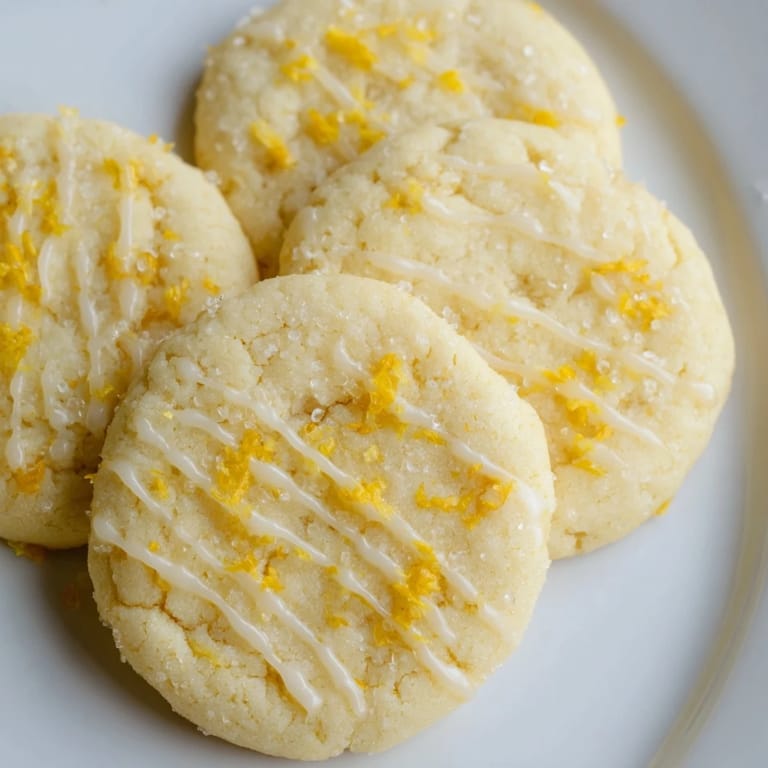
 There's a kitchen memory I hold onto: my daughter was maybe six years old, and she'd watched me make these cookies dozens of times, just sitting on the counter with her feet swinging. One day she asked if she could help frost them, and I let her drizzle the glaze while I held the cookie steady. Her hands were tiny and uncertain, but every cookie she glazed had this wobbly, imperfect line of lemon glaze, and somehow they looked more beautiful that way. Now whenever I make a batch, I remember her concentration, her small tongue poking out just slightly, completely absorbed in the task.
Why Fresh Lemons Change Everything
The first time I grabbed a bottle of lemon juice thinking it would save time, I regretted it immediately. Bottled juice is acidic and one-note, with a slight metallic undertone that lingers. Fresh lemon juice, especially from lemons that are heavy and fragrant, brings this complex floral quality that makes the cookies taste elegant and alive. I now keep lemons in my kitchen at all times, not just for this recipe, but because once you taste the difference, you can't unknow it.
The Sugar Coating Technique
Rolling the dough balls in sugar before baking seems simple, but it's actually doing several things at once. The granulated sugar creates a textured exterior that's visually stunning, but more importantly, it partially caramelizes in the oven, creating this subtle crunch that contrasts beautifully with the soft interior. I've noticed that if the dough is too warm, the sugar doesn't adhere well, so sometimes I'll pop the rolled balls into the freezer for a few minutes before baking, which also seems to help them hold their shape better.
Pairing and Storage
These cookies taste incredible with hot Earl Grey tea, where the citrus in the cookies mirrors the bergamot in the tea, or with a cold glass of white wine if you're serving them as a dessert. They'll keep in an airtight container for up to four days, though honestly, they rarely last that long in my house.
- If you want extra lemon intensity, add a few drops of lemon extract to the dough, though taste carefully because it's potent.
- The glaze sets firm enough to stack cookies within 15 minutes, which is helpful if you're storing them or shipping them to someone.
- If you wake up and find they've softened slightly, a few minutes back in a 300°F oven will crisp them up without drying them out.
 Save to Pinterest
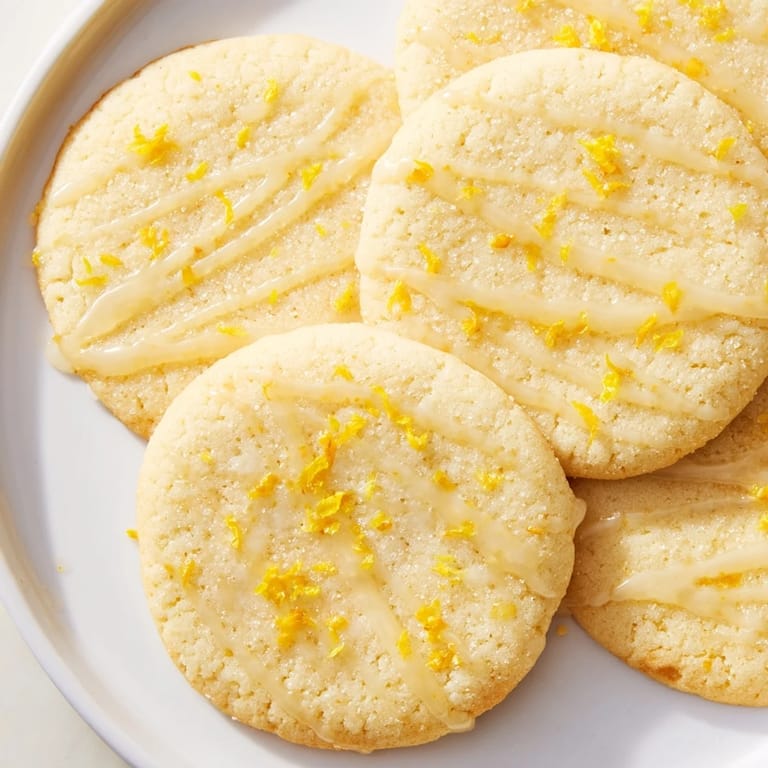
 These cookies have become my answer to 'what should I bring?' because they're reliable, bright, and genuinely make people happy. There's something about a homemade cookie that tastes this good that feels like an honest gift.
Recipe FAQs
- → How do I prevent cookies from spreading too much?
Chilling the dough for 30 minutes before baking helps maintain their shape and prevents excessive spreading.
- → Can I substitute lemon zest with other citrus flavors?
Yes, lime or orange zest can be used to give a different citrus twist to the cookies.
- → What causes cookies to become chewy rather than crisp?
Using more butter and slightly underbaking can result in a softer, chewier texture.
- → How should I store these cookies to keep them fresh?
Store in an airtight container at room temperature for up to one week to maintain freshness and softness.
- → What is the purpose of rolling dough balls in sugar before baking?
Rolling the dough in sugar creates a sweet, slightly crunchy outer coating that enhances texture and appearance.
- → Can these cookies be made dairy-free?
Yes, substituting butter with a plant-based alternative can make the cookies dairy-free, though texture may vary slightly.