 Save to Pinterest
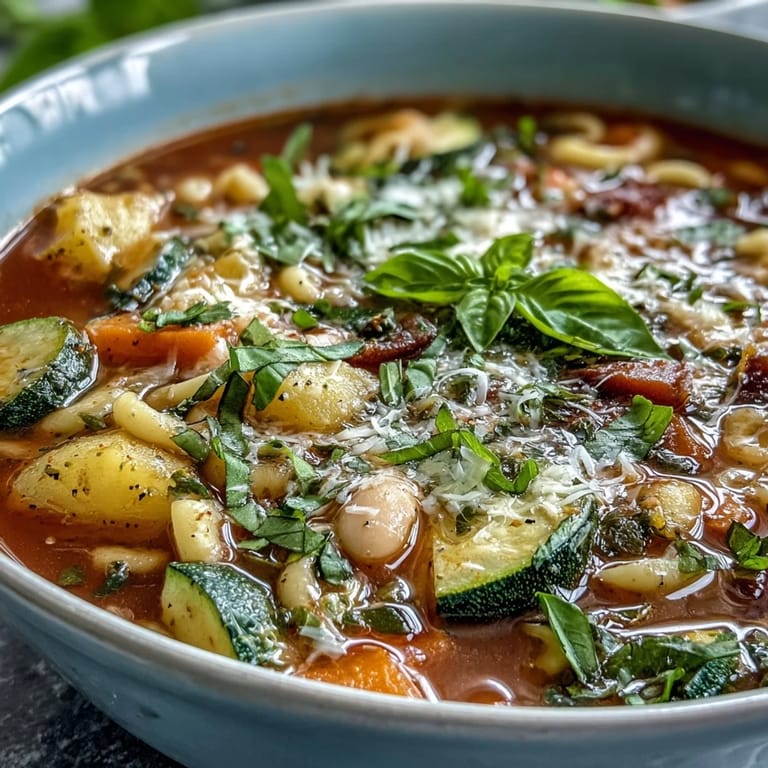
 My neighbor Marco taught me minestrone wasn't about following rules—it was about what was in your garden that week. We'd stand in his kitchen while he'd gesture at whatever vegetables were on the counter, and somehow they'd transform into this soup that tasted like comfort itself. The first time I made it alone, I was nervous I'd get it wrong, but the moment that smell hit me—garlic and tomatoes and fresh basil all at once—I realized minestrone is forgiving by nature, almost inviting you to make it your own.
I made this for my sister's book club once, and people actually asked for the recipe instead of just complimenting it politely—that doesn't happen often. The soup had been simmering all afternoon, filling the apartment with this warm, herbaceous hum that made everyone linger in the kitchen longer than planned. That's when minestrone stopped being a recipe for me and became proof that simple, honest cooking can mean more than anything fancy ever could.
Ingredients
- Olive oil: Use good olive oil here—it's one of the few ingredients you taste directly in those first moments when you're building flavor with the aromatics.
- Onion and garlic: These are your foundation, and taking 2–3 minutes to let them become fragrant is worth every second.
- Carrots, celery, and zucchini: The holy trinity of Italian cooking gets a zucchini sidekick; they should be diced small enough to cook through but large enough to still taste like themselves.
- Potato: This adds body and substance without being obvious about it.
- Green beans: Cut them into 1-inch pieces so they cook evenly with everything else.
- Diced tomatoes: Canned is perfectly fine—sometimes it's more reliable than fresh, honestly.
- Vegetable broth and water: The combination matters because broth alone can be overpowering; water balances it out.
- Cannellini beans: They're creamy and mild, absorbing the soup's flavors without fighting for attention.
- Small pasta: Ditalini or elbow macaroni work because they don't overwhelm the vegetables.
- Dried oregano and basil: These go in early so they meld with everything; fresh herbs come at the very end for brightness.
- Bay leaf: It whispers in the background, then you fish it out before serving.
- Fresh parsley and basil: These are your last-minute gift to yourself, adding life that dried herbs can't.
- Parmesan cheese: Optional, but it transforms an ordinary bowl into something people actually want to eat.
Tired of Takeout? 🥡
Get 10 meals you can make faster than delivery arrives. Seriously.
One email. No spam. Unsubscribe anytime.
Instructions
- Build your flavor base:
- Heat olive oil in a large pot over medium heat, then add your onion and garlic. You want to hear them sizzle gently and watch them turn translucent and golden—this takes about 2–3 minutes and is not a step to rush.
- Add the vegetables:
- Toss in your carrots, celery, zucchini, potato, and green beans, stirring so they all get coated with that garlicky oil. Let them cook for 5–6 minutes until they start to soften slightly but still have some resistance when you bite into them.
- Create the liquid base:
- Stir in the diced tomatoes with their juices, then pour in your vegetable broth and water. Add the bay leaf, dried oregano, dried basil, salt, and pepper—this is the moment when the pot gets serious.
- Bring it to a boil:
- Let the whole thing come to a rolling boil, which usually takes 3–5 minutes, then immediately lower the heat.
- Simmer and soften:
- Reduce heat to a simmer, cover the pot, and let it bubble gently for 15 minutes while you do something else—maybe chop your fresh herbs or make some toast for dunking.
- Add the beans and pasta:
- Uncover the pot, stir in your cannellini beans and pasta, and let everything simmer uncovered for 10–12 minutes until the pasta is tender and the vegetables are fully cooked through. You'll smell when it's almost ready.
- Finish with fresh herbs:
- Fish out that bay leaf, stir in your fresh parsley and basil, and taste it—adjust salt and pepper until it tastes like you want it to. This last-minute freshness is what makes minestrone sing.
- Serve with generosity:
- Ladle it into bowls and top with grated Parmesan if that's your move, then serve immediately while it's steaming.
 Save to Pinterest
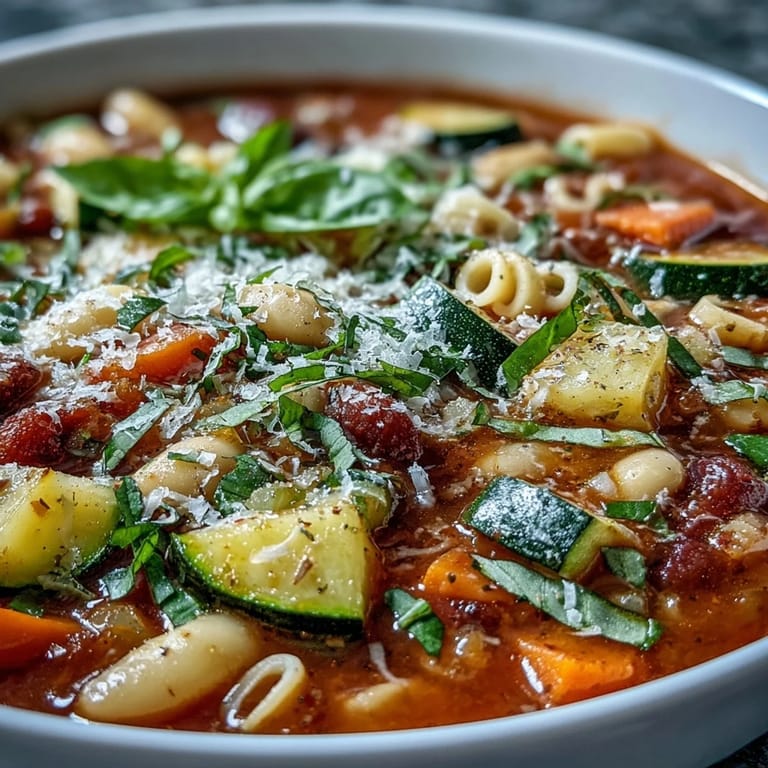
 Last winter, I made this for a friend who'd just gotten bad news, and she ate three bowls while we sat at my kitchen table without saying much. That's the power of minestrone—it doesn't need to be complicated to mean something.
Why Minestrone Feels Like Home Cooking
This soup works because it respects vegetables without making them perform. Each one keeps its own character while still being part of something larger—there's probably a metaphor in there somewhere. The beauty is that you're not dependent on one perfect ingredient; you're creating harmony from variety, and that's what Italian cooking is really about.
Making It Your Own
The vegetables Marco's grandmother used probably weren't the same ones I use, and that's the whole point. Spring minestrone with spinach and fresh peas tastes completely different from autumn minestrone with kale and root vegetables, and both are absolutely right. This recipe is more of a roadmap than a rule book—follow the technique, but let your kitchen tell you what should go in the pot.
Storage and Serving Suggestions
Minestrone actually improves after a day or two in the refrigerator, as the flavors deepen and the pasta absorbs the broth more fully. It keeps beautifully for about four days, and it also freezes well if you want to have bowls of it waiting for you on harder days.
- Serve it with crusty bread for dunking and a simple green salad on the side.
- A glass of Chianti or any light red wine pairs perfectly with this soup.
- If you're making it vegan, use a plant-based Parmesan alternative or just skip the cheese entirely—it stands on its own.
 Save to Pinterest
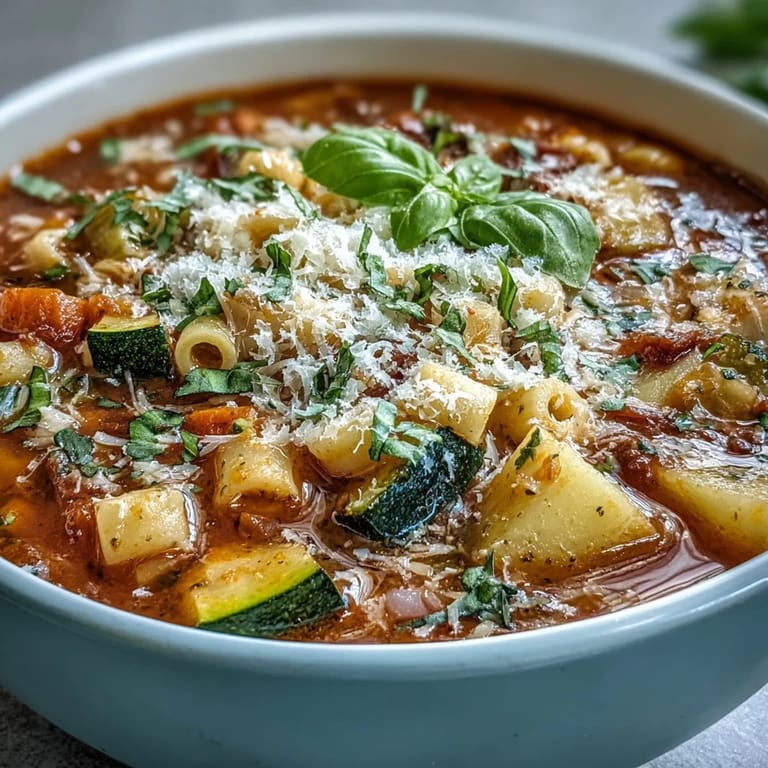
 Make this soup when you want to feel like you've done something good—for yourself or for someone else. It's proof that the best meals don't require complicated techniques or hard-to-find ingredients, just a little time and attention.
Recipe FAQs
- → What vegetables work best in minestrone?
Traditional minestrone includes carrots, celery, onions, zucchini, potatoes, and green beans. You can easily adapt based on seasonality—try spinach, kale, cabbage, or swiss chard in cooler months, or fresh peas and green beans in spring.
- → Can I make minestrone vegan?
Absolutely. Simply omit the Parmesan cheese garnish or use a plant-based alternative. The soup itself is naturally vegan, using olive oil for sautéing and vegetable broth as the base.
- → What pasta is traditionally used?
Small pasta shapes like ditalini, elbow macaroni, shells, or small tubetti work best. These shapes hold up well during simmering and are easy to scoop up with every spoonful.
- → How long does minestrone keep?
Stored in an airtight container in the refrigerator, minestrone keeps for 4-5 days. The pasta will continue to absorb liquid, so you may need to add more broth or water when reheating. It also freezes well for up to 3 months.
- → Can I use dried beans instead of canned?
Yes, soak about 1 cup dried cannellini beans overnight, then cook them separately until tender before adding to the soup. This will extend your total time but adds wonderful texture and flavor.
- → What's the difference between minestrone and other vegetable soups?
Minestrone specifically includes pasta and beans, making it a hearty, meal-in-one soup. The tomato-based broth, fresh herbs, and combination of vegetables create its signature Italian flavor profile.