 Save to Pinterest
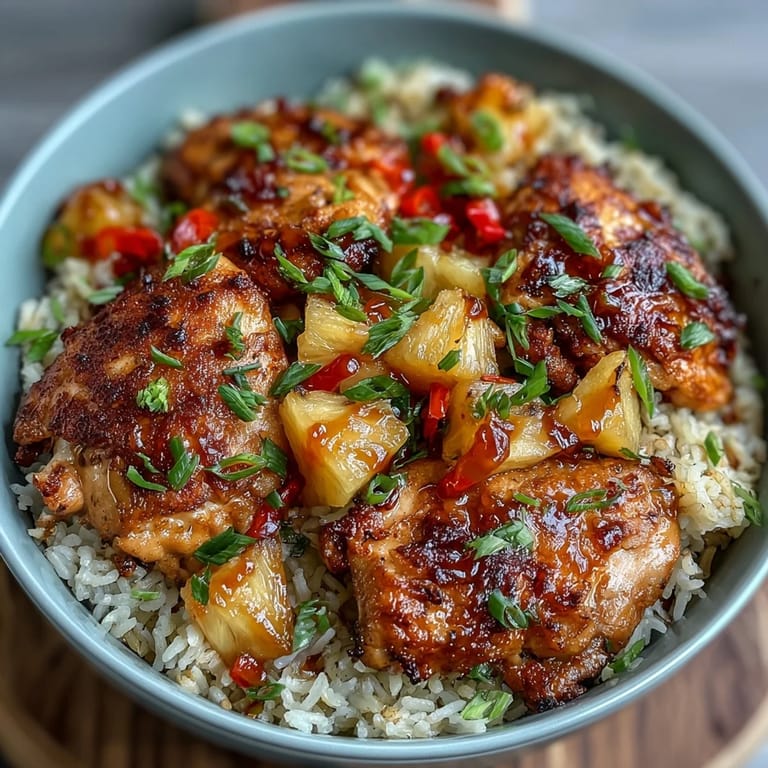
 My kitchen was chaos that Tuesday evening—I'd promised dinner to friends but had barely an hour to spare. Rummaging through the fridge, I found chicken, a sad-looking container of pineapple chunks, and those bright bell peppers that had been sitting there too long. On a whim, I threw everything into one skillet with rice, and what emerged was this golden, aromatic dish that tasted like I'd spent all afternoon cooking. My guests asked for the recipe before dessert even arrived, which is when I realized I'd stumbled onto something special.
There's a moment halfway through cooking when the aroma hits you—that perfect blend of caramelizing chicken, garlic, and the tropical sweetness of pineapple meeting soy sauce. My neighbor actually knocked on my door asking what smelled so incredible. That's when I knew this wasn't just weeknight cooking; it was the kind of meal that brings people together without pretense.
Ingredients
- Boneless, skinless chicken breast or thighs: Thighs stay juicier if you're not watching the clock closely, though breasts work fine if you don't overcook them past that initial sear.
- Long-grain white rice: Rinsing it first prevents that gummy texture, and it absorbs the sauce beautifully as it cooks.
- Red and yellow bell peppers: Both colors matter—they cook at the same rate and add visual pop that makes the dish feel intentional rather than thrown together.
- Fresh pineapple chunks: If you use canned, drain them well or the dish becomes watery; fresh chunks add a subtle brightness that survives the cooking process.
- Yellow onion and garlic: The onion mellows into something sweet during cooking, while the garlic becomes almost creamy—both are essential foundations.
- Low-sodium soy sauce: This isn't a place to skimp; quality soy sauce deepens the entire flavor profile.
- Pineapple juice, honey, and rice vinegar: Together these three create the sauce's soul—the acid cuts through richness, honey adds subtle depth, and pineapple juice ties everything to the fruit.
- Sesame oil: Just a teaspoon adds an earthy richness that keeps the dish from feeling one-dimensional.
- Vegetable oil: Use it to get that initial sear on the chicken, which locks in flavor.
- Chicken broth: Low-sodium gives you control over the final salt level, which matters when soy sauce is already in the mix.
Tired of Takeout? 🥡
Get 10 meals you can make faster than delivery arrives. Seriously.
One email. No spam. Unsubscribe anytime.
Instructions
- Sear the chicken properly:
- Heat your skillet until you hear a gentle sizzle when the first piece touches oil—that sound means you're ready. Let each side develop that golden-brown crust before moving pieces around, which takes about five minutes total and is what transforms plain chicken into something with actual flavor.
- Build your flavor foundation:
- Once the chicken is resting, that same skillet still holds all its browned bits. Sauté onion and garlic until the kitchen smells alive, then add peppers—they should soften slightly but still have some snap to them.
- Toast the rice briefly:
- A minute of toasting in the hot skillet with all those flavors coating each grain makes a real difference in how the rice absorbs the sauce. You'll notice the color deepen slightly and the scent become nutty.
- Mix your sauce with intention:
- Whisk the soy sauce, pineapple juice, honey, vinegar, and sesame oil together in a bowl before adding it to the pan—this ensures even distribution rather than having one side taste overly salty. The honey dissolves better this way too.
- Bring everything together:
- Pour the sauce over the chicken and vegetables, then add broth and pineapple chunks. Let it come to a boil—you'll see the rice starting to absorb liquid almost immediately—then cover and drop the heat low.
- Trust the simmer:
- This is where patience matters more than technique; eighteen to twenty minutes on low heat allows the rice to become fluffy and the chicken to stay tender rather than drying out. Resist the urge to stir constantly.
- Finish with care:
- Fluff the rice with a fork rather than stirring aggressively, which breaks grains and makes texture mushy. A scatter of green onions at the end adds freshness and a subtle onion bite that brightens everything.
 Save to Pinterest
 What struck me most was watching my friend's seven-year-old ask for seconds of the rice, then thirds—this isn't just food that tastes good, it's something that makes people feel genuinely nourished. That's a feeling worth chasing in the kitchen.
When Simplicity Becomes Elegance
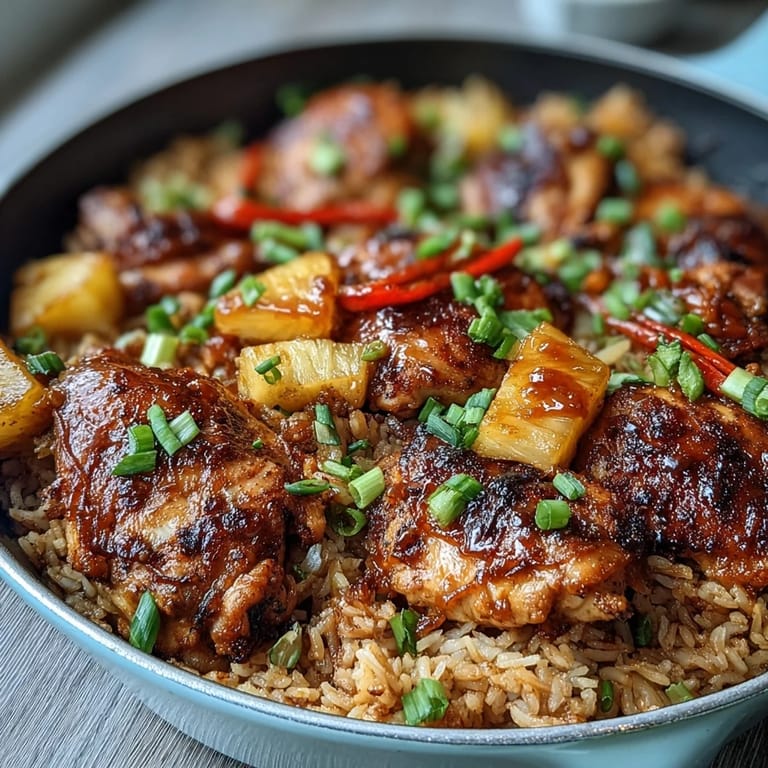
There's something quietly powerful about a one-skillet meal that looks intentional and tastes like you've been thinking about it all day. The color contrast of those red and yellow peppers against the golden rice creates a visual appeal that makes plating feel effortless. Even on nights when you're exhausted, this dish arrives at the table looking like you cared, which somehow makes the meal taste better.
Variations That Keep It Interesting
The beauty of this skillet is how it welcomes adaptation without losing its character. I've made it with snap peas instead of peppers, added a handful of cashews for texture, and once experimented with coconut aminos instead of soy sauce for a slightly different sweetness. Brown rice works perfectly if you have more time; just increase the broth and give it a few extra minutes.
Pairing and Serving Thoughts
This dish sings alongside something light and crisp—a Riesling or Sauvignon Blanc lets the tropical notes shine without competing. If you want to stretch it further, serve it alongside a simple cucumber salad or steamed bok choy. The meal feels complete as is, but sometimes the simplest additions turn dinner into something memorable.
- For heat, add crushed red pepper flakes or a sliced chili with the garlic to wake up your palate without overwhelming the dish.
- Double-check your soy sauce is gluten-free if that matters for your table, as regular versions contain wheat.
- Leftover rice actually improves overnight as flavors meld, so don't hesitate to make extra.
 Save to Pinterest
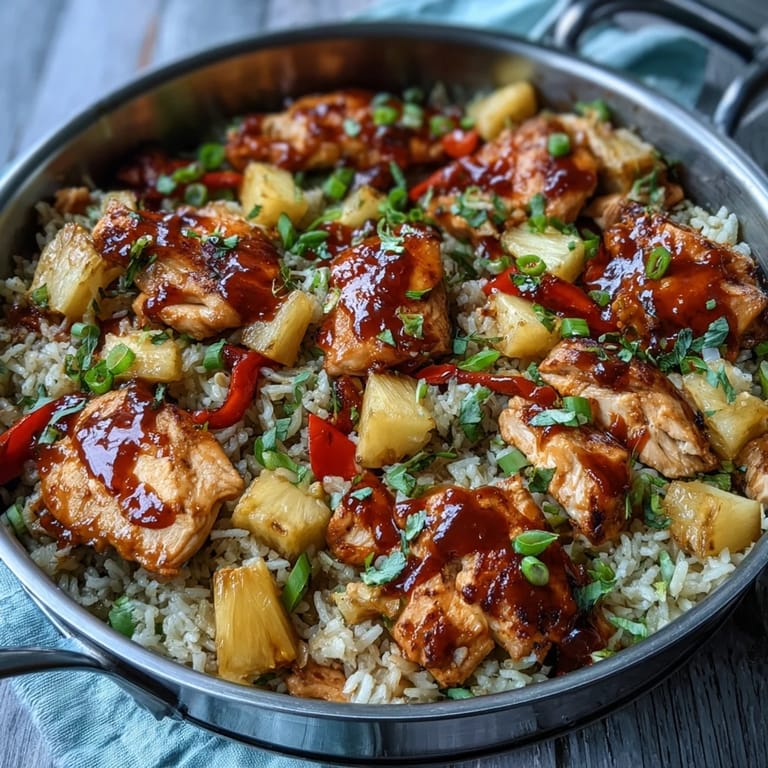
 This skillet has become my go-to when I want to prove that home cooking doesn't require hours of prep or a long ingredient list—just honest flavors and a little attention while things cook. Make it once, and I suspect you'll find yourself returning to it whenever you need something that feels both comforting and alive.
Recipe FAQs
- → Can I use brown rice instead of white rice?
Yes, brown rice can be used, but it requires more broth and a longer simmering time to become tender.
- → How can I make the sauce thicker?
Mix cornstarch with water to create a slurry, then stir it in during the last minutes of cooking to thicken the sauce.
- → What protein cuts work best for this dish?
Boneless, skinless chicken breasts or thighs cut into bite-size pieces both work well and cook evenly in the skillet.
- → Can I add other vegetables?
Yes, snap peas, carrots, or broccoli are great additions to increase texture and nutrition.
- → Is it possible to make this dish spicier?
Adding crushed red pepper flakes or sliced chili with the garlic will give the dish a gentle spicy kick.