 Save to Pinterest
 My kitchen smelled like caramelized tomatoes for three days straight after that farmers market haul in late August, and I wasn't complaining one bit. I'd bought way more tomatoes than I could eat fresh, so roasting them felt like the obvious move—turning summer's abundance into something warm enough to carry me into fall. The moment that first spoonful hit my tongue, I understood why this soup had become such a quiet staple in so many home kitchens.
I made this for my neighbor last Tuesday when she was recovering from the flu, and watching her face light up when she tasted it reminded me that the best meals are often the simplest ones. She asked for the recipe before she'd even finished the bowl, and suddenly I was explaining the whole process while she sat there in her kitchen slippers, taking notes like I'd just shared a family secret.
Ingredients
- Ripe tomatoes (1.5 kg or 3.3 lbs, halved): This is where everything starts—look for tomatoes that smell fragrant and feel heavy for their size, because that's where the flavor lives.
- Onion (1 large, quartered): The roasting transforms it from sharp to deeply sweet, almost disappearing into the background in the best possible way.
- Garlic cloves (4, peeled): Roasted garlic becomes gentle and almost nutty; don't skip this because it's what gives the soup its rounded, sophisticated taste.
- Olive oil (2 tbsp for roasting, plus 2 tbsp for croutons): Good oil matters here since it's doing the heavy lifting—it carries flavors and creates that caramelization magic.
- Salt and freshly ground black pepper: Taste as you go; the roasting concentrates everything, so you might need less salt than you'd expect.
- Dried thyme or fresh thyme leaves (1 tsp dried or 1 tbsp fresh): This herb keeps things bright without overwhelming the tomato flavor.
- Vegetable broth (500 ml or 2 cups): The quality of your broth matters; homemade or low-sodium varieties let the tomato shine instead of fighting for attention.
- Tomato paste (1 tbsp): A small spoonful deepens the tomato flavor without making things taste overly concentrated.
- Sugar (1 tsp, optional): Just a whisper if your tomatoes taste slightly acidic—it doesn't sweeten so much as balance.
- Heavy cream or coconut cream (60 ml or 1/4 cup, optional): This is your choice for velvety richness; either works beautifully, and you can skip it entirely if you prefer brightness.
- Day-old bread (4 thick slices, cut into 2 cm cubes): Slightly stale bread holds its texture better during roasting than fresh bread, which would turn soft.
- Garlic powder (1/2 tsp for croutons): Don't use fresh garlic here—powder is what creates that even, golden seasoning.
Tired of Takeout? 🥡
Get 10 meals you can make faster than delivery arrives. Seriously.
One email. No spam. Unsubscribe anytime.
Instructions
- Heat your oven and prep the vegetables:
- Get your oven to 200°C (400°F) and arrange those tomato halves cut-side up on a large baking tray alongside the onion quarters and whole garlic cloves. The cut side of the tomato facing up is what creates that beautiful caramelized edge.
- Season and roast:
- Drizzle everything with olive oil and scatter salt, pepper, and thyme over top, then toss gently so everything gets coated but the tomato halves stay mostly in that cut-side-up position. Roast for 30-35 minutes until the edges of the tomatoes are dark and blistered and the onions have collapsed into themselves.
- Make the croutons while everything roasts:
- Toss your bread cubes with olive oil, garlic powder, salt, and pepper in a bowl, then spread them on a separate baking sheet. You can actually pop this into the same oven as the tomatoes once they've had about 5 minutes—the croutons need 10-15 minutes to turn golden and crispy, and stirring them once halfway through helps them brown evenly.
- Build the soup base:
- Once the roasted vegetables are done, scrape everything (including all those caramelized bits stuck to the pan) into a large saucepan and pour in your vegetable broth. Add the tomato paste and a pinch of sugar if your tomatoes tasted too acidic, then let it all simmer together for about 10 minutes so the flavors meld.
- Blend until silky:
- This is where an immersion blender becomes your best friend—you can purée right in the pot without transferring anything, and the heat keeps the soup at the perfect temperature. If you're using a regular blender, work in batches and be careful with hot liquid; blend until you've got that smooth, velvety texture.
- Finish and serve:
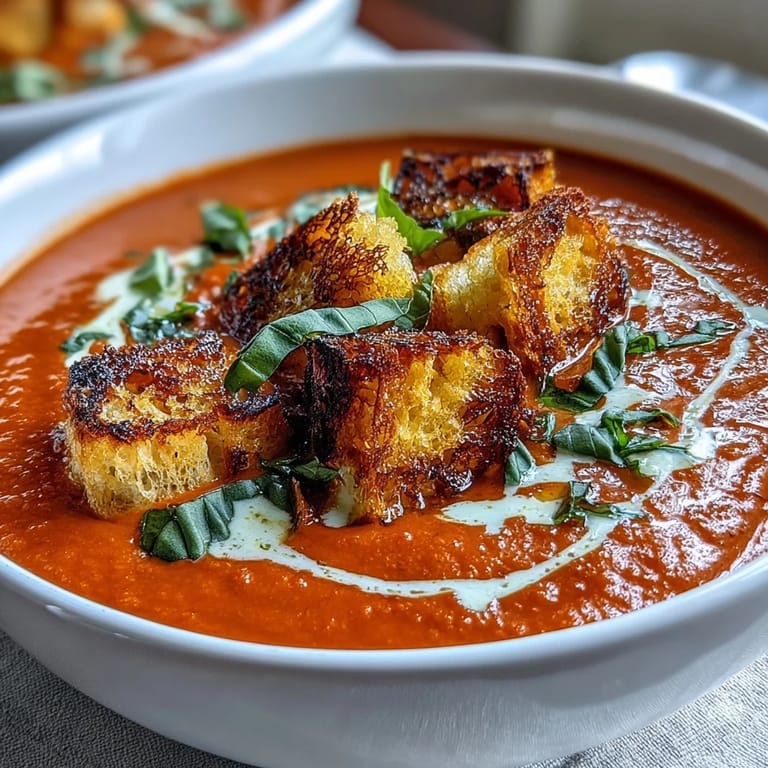
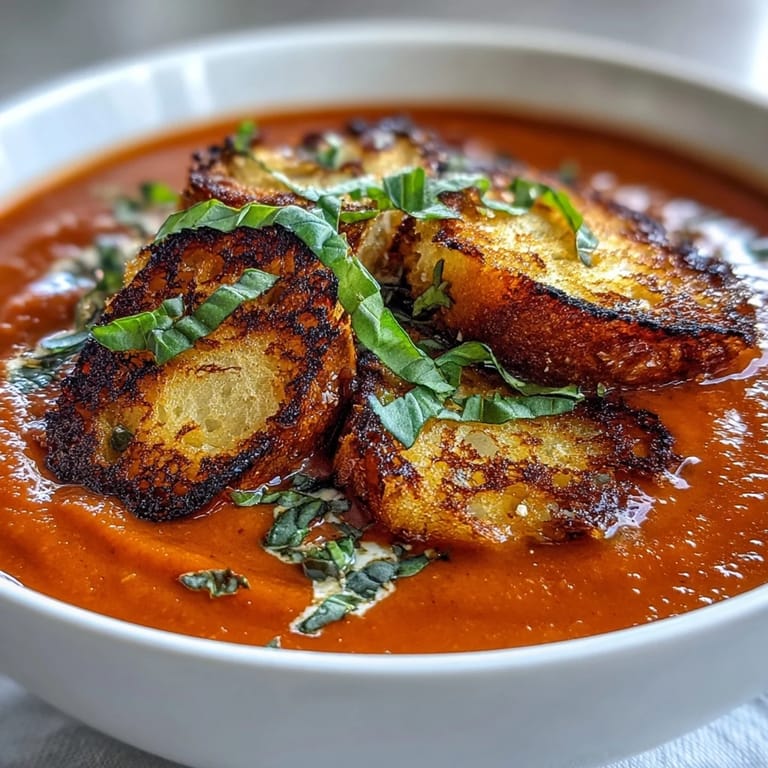
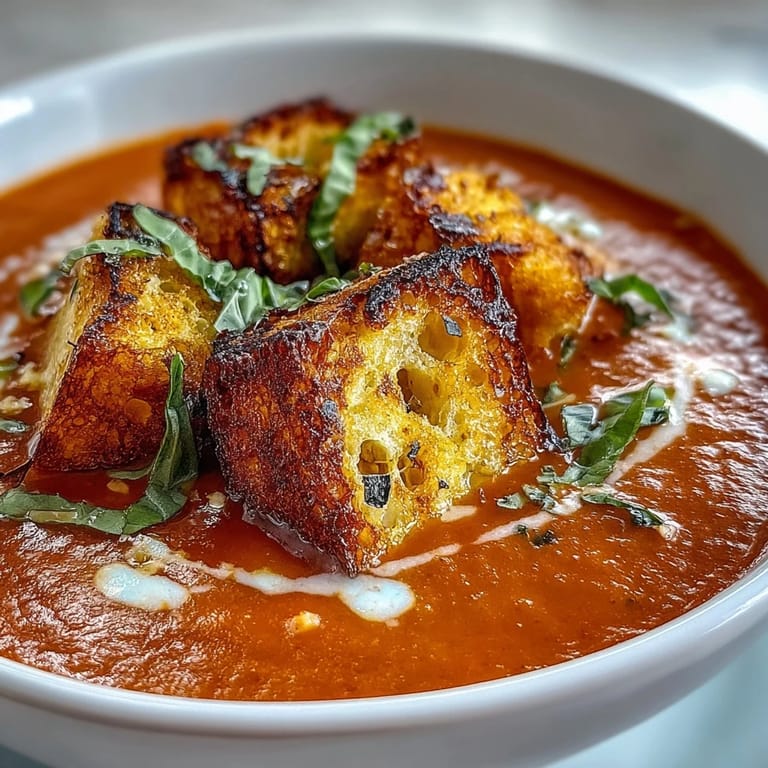
- Stir in your cream if you're using it, taste for seasoning, and adjust salt and pepper as needed. Ladle into bowls and crown each one with a generous handful of those crispy croutons right before serving.
 Save to Pinterest
 There's something almost meditative about watching the transformation happen—those bright red tomatoes slowly becoming darker, deeper, more themselves through heat. My daughter walked through the kitchen at one point and said it smelled like someone had bottled autumn, and she was exactly right.
Why Roasting Changes Everything
Roasting isn't just a cooking method here; it's actually a flavor-building strategy. When tomatoes roast, their water content evaporates and their natural sugars concentrate and caramelize against the heat. The acidity mellows out, and you end up with something that tastes almost jammy in the best way—more tomato-flavored than any tomato has a right to be. The garlic and onion transform too, losing their rawness and becoming something sweet and almost creamy on their own. This is why people who've tried roasted tomato soup suddenly understand what they've been missing.
The Crouton Moment
Don't underestimate what croutons do here; they're not just a topping but part of the whole experience. They provide texture contrast against the silky soup, and as they sit in the bowl, they slowly absorb heat and flavor without completely falling apart. I've tried everything from store-bought croutons to fancy artisanal ones, and honestly, homemade from day-old bread will always win because you control the crispness and seasoning. There's also something satisfying about using bread you'd otherwise throw out.
Customization Without Losing the Soul
This recipe has a beautiful simplicity, but it also welcomes small changes that make it yours. Some people swear by a splash of balsamic vinegar added at the end, which gives a subtle depth without making it taste like vinegar. Others add smoked paprika for earthiness, fresh basil at the very end for brightness, or a drizzle of really good olive oil for richness. The cream is optional too—leave it out if you want the soup to taste more purely tomato-forward, or use coconut cream if dairy isn't your thing. The foundation is strong enough that it can handle these little pivots.
- A touch of smoked paprika or balsamic stirred in during the final simmer adds complexity without being obvious.
- Fresh basil scattered on top just before serving tastes like summer even in the middle of winter.
- If you want extra velvety texture without dairy cream, a splash of oat cream works beautifully and stays true to the vegetarian promise.
 Save to Pinterest
 This soup has become my answer to almost any occasion that calls for something warming, nourishing, and undeniably homemade. It's proof that the most impressive dishes often come from the simplest intentions.
Recipe FAQs
- → Can I make this soup ahead of time?
Absolutely. The soup actually develops deeper flavors when made 1-2 days ahead. Store in an airtight container in the refrigerator and reheat gently on the stove. Keep croutons separate in a sealed bag to maintain their crunch.
- → What tomatoes work best for roasting?
Roma, vine-ripened, or beefsteak tomatoes all work beautifully. The key is using fully ripe, in-season tomatoes for the best flavor. Even slightly overripe tomatoes work wonderfully since roasting concentrates their natural sweetness.
- → Can I freeze this soup?
Yes, the soup freezes beautifully for up to 3 months. Cool completely before transferring to freezer-safe containers. Thaw overnight in the refrigerator and reheat on the stove. Make fresh croutons when serving.
- → How do I make this vegan?
Simply omit the heavy cream or use full-fat coconut cream instead. The soup remains deliciously creamy without dairy. For the croutons, ensure your bread is vegan-friendly.
- → What can I serve alongside this soup?
A simple green salad with vinaigrette complements the richness beautifully. Grilled cheese sandwiches, roasted vegetables, or a crusty baguette also make excellent accompaniments for a more substantial meal.
- → Why roast the vegetables first?
Roasting caramelizes the natural sugars in tomatoes and onions, creating depth and sweetness that you cannot achieve through simmering alone. This technique concentrates flavors and gives the soup its characteristic rich, robust taste.