 Save to Pinterest
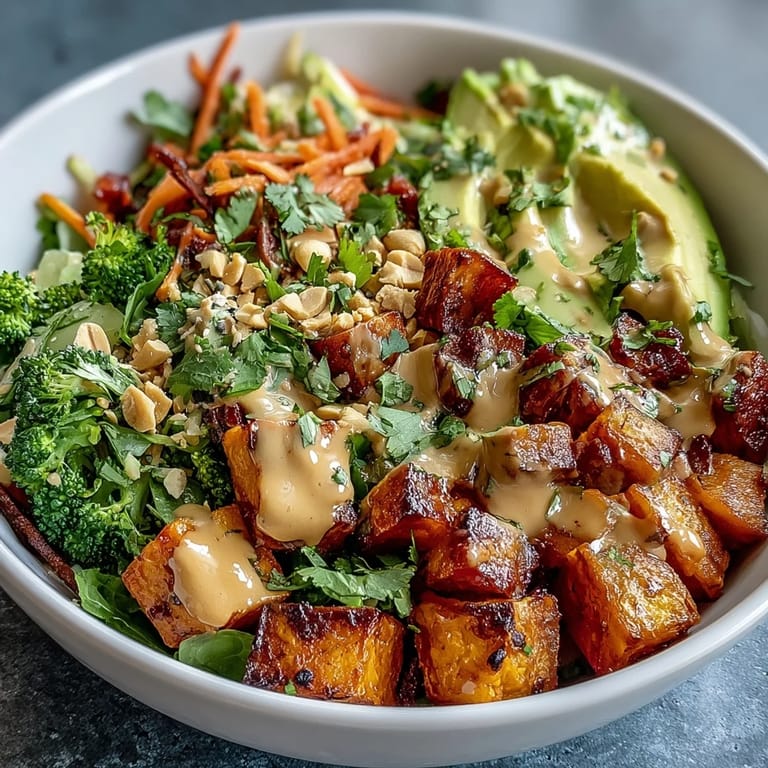
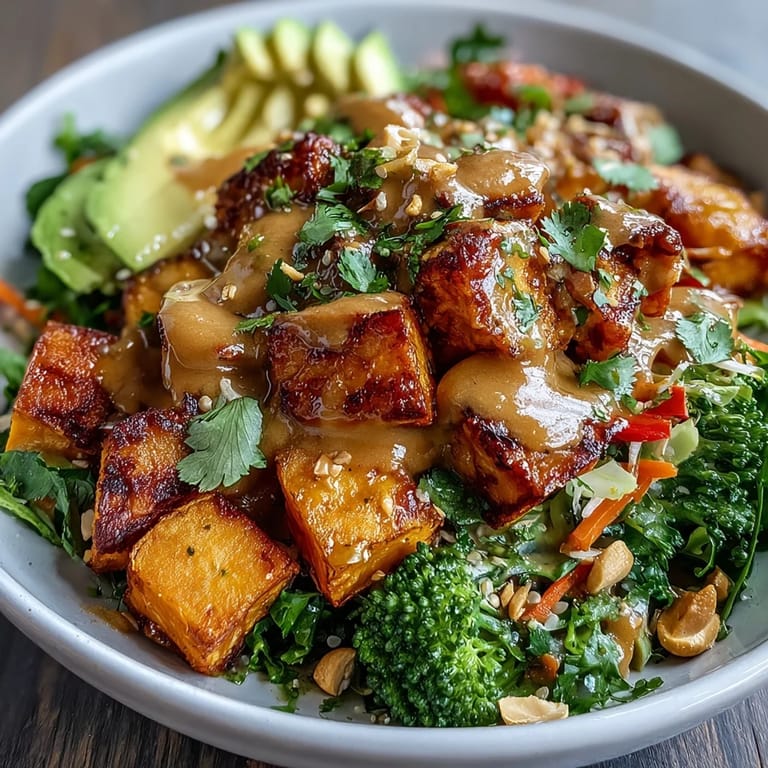
 My coworker Sarah came back from a trip to Bangkok absolutely glowing, talking nonstop about the food markets and street vendors. When she mentioned a particular sauce—this creamy, tangy, slightly spicy peanut situation—I could practically taste it through her description. I spent a weekend experimenting in my kitchen, and this Thai peanut sweet potato bowl was born from that craving, a dish that somehow tastes like both comfort and adventure in one beautiful, colorful bowl.
I made these bowls for my sister when she was going through a rough health phase, looking for something nourishing but interesting. Watching her take that first bite, close her eyes, and actually smile—that's when I realized this wasn't just food, it was a small act of care on a plate. She asked for the recipe immediately and still makes it weekly.
Ingredients
- Sweet potatoes (4 medium, diced): These are your foundation, and dicing them into roughly uniform pieces ensures they caramelize evenly in the oven, turning golden and crispy on the edges while staying creamy inside.
- Olive oil (2 tablespoons): Just enough to coat the potatoes and help them brown without becoming greasy.
- Salt and pepper: Season generously—these little things make the difference between bland and genuinely tasty roasted vegetables.
- Broccoli florets (2 cups) or cauliflower: Use whichever you have or prefer; both bring a satisfying crunch and earthy sweetness to the bowl.
- Shredded cabbage (2 cups, red or green): Red cabbage gives you more visual pop and a slightly sweeter flavor, but green works perfectly fine too.
- Grated carrots (1 cup) or radishes: Carrots add natural sweetness and bright color; radishes bring a peppery bite if you want more complexity.
- Avocado (1 medium, sliced): This adds creaminess and richness—slice it just before assembly so it doesn't brown or get mushy.
- Peanut butter (1/2 cup): Use the natural kind without added sugar if possible; it makes a cleaner sauce and lets the other flavors shine.
- Soy sauce or tamari (2 tablespoons): This brings umami depth and saltiness that makes the whole sauce sing.
- Maple syrup or agave (2 tablespoons): A touch of sweetness balances the salty and tangy elements perfectly.
- Lime juice (2 tablespoons): Fresh lime is crucial here—bottled just won't have the same brightness and zing.
- Sesame oil (1 tablespoon): This nutty, toasted flavor is what makes people stop and ask what's in the sauce.
- Fresh cilantro (1/4 cup, chopped): Use parsley if cilantro isn't your thing, but that herbal freshness really lifts everything.
- Chopped peanuts (1/4 cup) for garnish: A final sprinkle adds texture and reminds you why this sauce is called peanut sauce in the first place.
Tired of Takeout? 🥡
Get 10 meals you can make faster than delivery arrives. Seriously.
One email. No spam. Unsubscribe anytime.
Instructions
- Heat your oven and prep the sweet potatoes:
- Preheat to 400°F and toss your diced sweet potatoes with olive oil, salt, and pepper until they're evenly coated. Spread them on a baking sheet in a single layer—don't crowd them or they'll steam instead of roast.
- Get the potatoes golden:
- Roast for 25 to 30 minutes, stirring halfway through, until the edges are caramelized and crispy and the centers are tender. You'll know they're done when a fork slides through easily.
- Prep your vegetables while everything roasts:
- Chop your broccoli into bite-sized pieces, shred the cabbage, grate the carrots, and slice the avocado. Keep everything in separate piles so you can control what goes into each bowl.
- Make the peanut sauce:
- In a bowl, whisk together peanut butter, soy sauce, maple syrup, lime juice, and sesame oil until it's smooth and creamy. If it seems too thick, add warm water a tablespoon at a time until it reaches a drizzly consistency.
- Bring everything together:
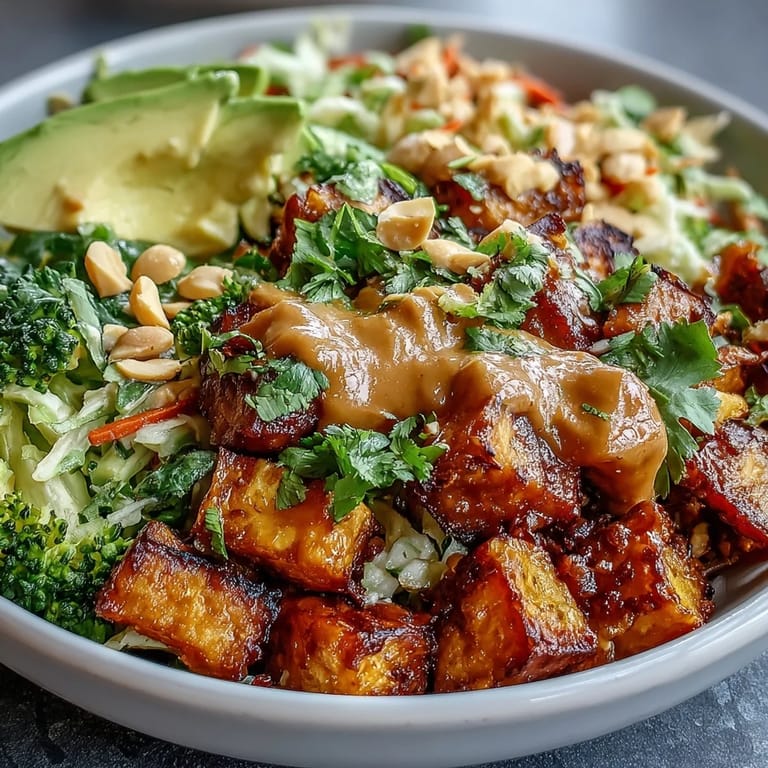
- Divide the roasted sweet potatoes and raw vegetables among four bowls, arranging them however looks prettiest to you. Drizzle each bowl generously with peanut sauce.
- Finish and serve:
- Top with fresh cilantro and chopped peanuts, then eat right away while the warm potatoes and cool vegetables still feel like they're in conversation with each other.
 Save to Pinterest
 There's something about a bowl like this—colorful, warm and cool at the same time, packed with different textures and flavors—that makes eating feel intentional rather than rushed. It's the kind of meal that leaves you satisfied but not heavy, energized instead of sluggish, which is exactly why it became my go-to when I needed to feel like I was actually taking care of myself.
Why the Peanut Sauce Is the Secret
I used to think Thai food required some exotic ingredient I couldn't find, but this sauce proved me wrong. The magic is in the balance—peanut butter provides richness, soy sauce adds savory depth, lime juice brings brightness, and maple syrup smooths everything into harmony. It's five minutes of whisking, and suddenly you have something that tastes restaurant-quality. Once you nail this ratio, you'll find yourself drizzling it on everything from grilled vegetables to rice to leftovers that need a second life.
Making It Work for Your Needs
The beauty of this bowl is how flexible it is without losing its soul. Vegetarian? Already there. Vegan? Use maple syrup and tamari instead of regular soy sauce, and skip the honey if it was ever mentioned. Gluten-free? Tamari is your friend. Nut-free? Swap the peanut butter for sunflower seed butter, skip the sesame oil, and use sunflower seeds instead of peanuts for garnish. Want more protein? A handful of baked tofu, some chickpeas, or a scoop of quinoa transforms this from a side into a complete meal. I've made it probably thirty different ways depending on what was in my fridge, and it's never disappointed.
Storage and Meal Prep Strategy
The real trick to getting through a busy week with these bowls is treating each component like it's its own thing. Roasted sweet potatoes keep beautifully for four or five days in the fridge and can be eaten cold or reheated gently. Raw vegetables stay crisp in separate containers and won't wilt if you keep them away from moisture. The peanut sauce also stores well, though it might thicken up, so just add a splash of warm water to loosen it before serving. Assemble everything fresh right before eating, and you've got a lunch that tastes like you just made it, even if you prepped it days ago.
- Roast your sweet potatoes in bulk on a Sunday and portion them into containers for the week.
- Make a double batch of the peanut sauce and store it in a jar—it lasts a week easy.
- Slice your avocado only as you need it so it doesn't brown and turn sad.
 Save to Pinterest
 This bowl represents something I've come to believe about cooking: the best meals are the ones that make you feel good before, during, and after eating them. Every time I make or eat one, I think of Sarah in Bangkok, my sister smiling through tough times, and the simple joy of turning vegetables into something that tastes like home.
Recipe FAQs
- → What vegetables are best for this bowl?
Broccoli, shredded cabbage, grated carrots, and sliced avocado work beautifully, adding color, crunch, and creaminess.
- → How is the peanut sauce prepared?
Mix peanut butter, soy sauce, maple syrup, lime juice, and sesame oil until smooth. Thin with warm water if needed.
- → Can this dish be made nut-free?
Yes, substitute peanut butter with sunflower seed butter and omit sesame oil and peanut garnish for a nut-free version.
- → What cooking method is used for sweet potatoes?
Sweet potatoes are diced, tossed with olive oil, salt, and pepper, then roasted until golden and crisp in the oven.
- → Is this suitable for gluten-free diets?
Using tamari instead of soy sauce ensures this bowl is gluten-free. Always verify ingredient labels.
- → Can I add protein to this bowl?
Yes, options include baked tofu or chickpeas to boost protein content while keeping the dish balanced.