 Save to Pinterest
 The first time I tried making this, my kitchen smelled like a sun drenched garden in Italy even though it was pouring rain outside. I remember the rhythmic sound of the knife hitting the board as I chopped those heavy, ripe tomatoes. It was one of those afternoons where I just needed something vibrant to cut through the gloom. By the time the basil hit the warm liquid, the whole house felt different. It turned a gray Tuesday into something that felt like a celebration.
I once served this to a group of friends who claimed they only liked canned soup because of the nostalgia. We sat on the floor around a coffee table, dunking thick slices of sourdough into the steaming bowls. Seeing their eyes widen when they tasted the actual sweetness of the fresh garlic and sugar was a highlight for me. There is something deeply satisfying about proving that simple ingredients can outshine processed shortcuts. It became our go to meal for every rainy gathering thereafter.
Ingredients
- Ripe Tomatoes: Use the heaviest ones you can find because their juice is what creates that signature silky texture.
- Medium Onion: This builds a sweet and savory foundation that supports the acidity of the fruit.
- Garlic Cloves: Mincing these finely ensures they melt into the oil without leaving any bitter chunks behind.
- Vegetable Stock: A high quality stock acts as the savory backbone that ties all the garden flavors together.
- Extra Virgin Olive Oil: This adds a peppery richness that binds the acidic tomato flavors together beautifully.
- Fresh Basil: Never chop these leaves beforehand because they bruise and lose their aromatic oils too quickly.
- Salt and Pepper: These simple seasonings are essential for waking up the natural brightness of the vegetables.
- Sugar: A tiny pinch is the best way to balance the sharp tang of the tomato skins.
Tired of Takeout? 🥡
Get 10 meals you can make faster than delivery arrives. Seriously.
One email. No spam. Unsubscribe anytime.
Instructions
- Softening the base:
- Sizzle the onions in warm oil until they turn that perfect shade of translucent gold. This gentle heat ensures the onions become sweet rather than fried.
- Waking up the garlic:
- Toss in the minced cloves and stir constantly for just a minute to release their pungent perfume. Watch them closely to ensure they do not turn brown and bitter.
- Simmering the harvest:
- Let the tomatoes tumble in and cook down until they become a thick and bubbly sauce. This stage is where the deep color of the soup begins to develop.
- Building the body:
- Pour in the stock and seasonings then let everything dance together on a gentle simmer. The slow heat allows the liquid to absorb all the concentrated vegetable goodness.
- The green infusion:
- Stir in the fresh basil leaves right at the end to keep their color bright and punchy. The residual heat is all you need to wilt them into the mixture.
- Achieving silkiness:
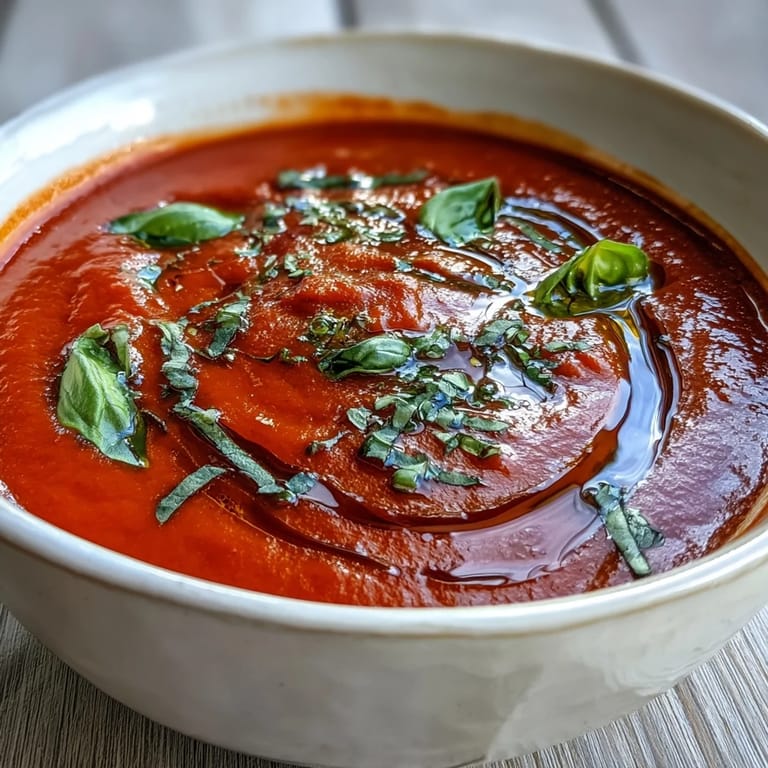
- Use your blender to transform the chunky mixture into a smooth and vibrant orange velvet. Work in batches to avoid any steam pressure building up in the container.
 Save to Pinterest
 Last summer, I brought a thermos of this soup to a picnic at the lake. We did not have spoons, so we just sipped it from mugs while watching the sunset. The way the basil scent mingled with the cooling evening air was unforgettable. It reminded me that food does not always need a formal table to be memorable.
Selecting the Best Produce
Not all tomatoes are created equal when it comes to a soup pot. I prefer using a mix of Roma and vine ripened varieties to get a balance of flesh and juice. If they feel a bit firm, leave them on the windowsill for a day or two to soften up. You want them to be almost bursting at the seams for the best flavor.
The Art of the Puree
Getting that professional texture requires a bit of patience during the blending phase. If you use a stand blender, work in small batches to ensure every single seed and skin fragment is pulverized. This creates a mouthfeel that is remarkably light and airy. Some people like a bit of texture, but I find the full puree to be much more luxurious.
Perfect Pairings and Garnishes
While this soup is incredible on its own, the right side dish makes it a complete experience. I often find myself reaching for the cheesiest bread I can manage to make. The contrast between the acidic tomato and the salty cheese is a classic for a reason. Here are a few ways I like to finish the dish before serving.
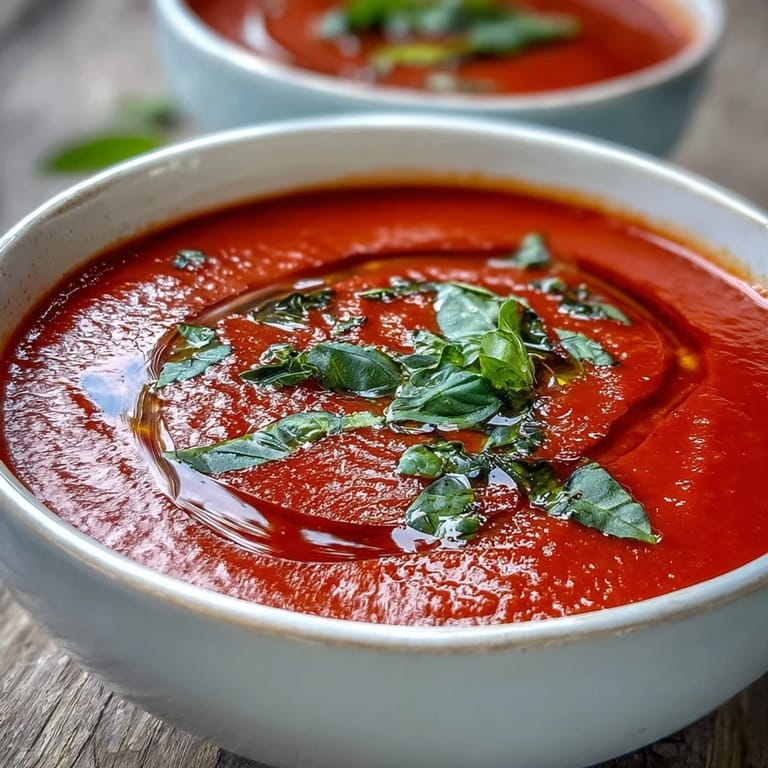
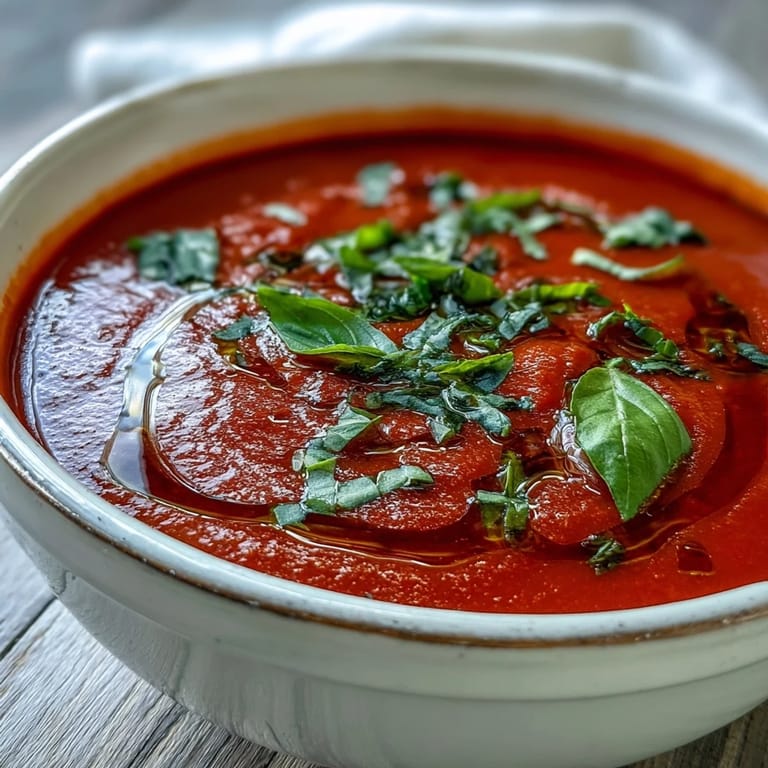
- Drizzle a little more oil in a circular motion for a beautiful finish.
- Add a dollop of Greek yogurt if you want a tangy creaminess without the heavy cream.
- Tear some extra basil leaves by hand right over the bowl for a fresh pop.
 Save to Pinterest
 This soup has a way of making any kitchen feel like the heart of a home. I hope it brings you as much warmth and comfort as it has brought to my table.
Recipe FAQs
- → Can I use canned tomatoes instead of fresh?
Yes, canned tomatoes work perfectly. Use two 14-ounce cans of whole peeled tomatoes or crushed tomatoes. The flavor remains excellent, and preparation becomes even faster.
- → How long does this soup keep in the refrigerator?
Store cooled soup in an airtight container for up to 4 days. Reheat gently on the stovetop, adding a splash of water or stock if needed to adjust consistency.
- → Can I freeze this soup?
Absolutely. Freeze in portion-sized containers for up to 3 months. Thaw overnight in the refrigerator before reheating. The texture remains smooth after freezing.
- → What can I serve with this soup?
Crusty bread, grilled cheese sandwiches, or garlic toast make perfect accompaniments. For a lighter option, serve with a simple green salad dressed with vinaigrette.
- → How can I make this soup creamy without dairy?
Add coconut milk for a subtle sweetness and creamy texture. Alternatively, blend in a half-cup of cooked white beans or cashews soaked overnight for richness without dairy.
- → My soup tastes too acidic—what should I do?
Add the sugar as recommended in the ingredients, starting with ½ teaspoon. Taste and add more if needed. A pinch of baking soda also neutralizes acidity without affecting flavor.