 Save to Pinterest
 My neighbor knocked on the door one snowy evening holding a Tupperware container of something steaming and golden. It was cauliflower chowder, and I ate it standing in my kitchen still wearing my coat. The warmth spread through me like a small miracle, and I asked for the recipe before she even made it back across the street. I've been making my version ever since, tweaking it each time until it became this: thick, creamy, and somehow both rich and light at once.
I made this for my sister when she came to visit during a cold snap last March. She had been skeptical about cauliflower as the star of a soup, but after her second bowl she admitted it might be better than the potato chowder we grew up eating. We sat at the table long after we finished, talking and dipping bread into the last creamy bits at the bottom of our bowls. That's when I knew this recipe had earned its place in my regular rotation.
Ingredients
- Cauliflower: The humble hero here, it breaks down just enough to thicken the soup naturally while some florets stay tender and whole for texture.
- Carrots: They add a touch of sweetness and a pop of color that makes each spoonful feel more vibrant.
- Potatoes: These give the chowder its hearty backbone and help create that classic thick, comforting consistency.
- Onion and Garlic: The aromatics that build the flavor foundation, softened in butter until they smell like home.
- Celery: It brings a subtle earthiness and a bit of crunch before it melts into the soup.
- Whole Milk: This is what makes the chowder creamy and luscious, though plant-based milk works beautifully if you prefer.
- Sharp Cheddar Cheese: Melted in at the end, it adds a tangy richness that ties everything together.
- Butter: Used to sauté the vegetables and toast the flour, creating a silky base for the broth.
- Vegetable Broth: The liquid that carries all the flavors, so choose a good quality one or make your own if you have time.
- Flour: A small amount thickens the chowder just enough without making it gluey or heavy.
- Thyme, Smoked Paprika, White Pepper, and Salt: These spices add warmth and a gentle smokiness without overpowering the vegetables.
- Fresh Parsley: A bright, grassy finish that cuts through the richness when sprinkled on top.
Tired of Takeout? 🥡
Get 10 meals you can make faster than delivery arrives. Seriously.
One email. No spam. Unsubscribe anytime.
Instructions
- Start with the aromatics:
- Melt the butter in a large pot over medium heat, then add the onion, garlic, celery, and carrots. Sauté for about 5 minutes, stirring occasionally, until everything softens and the kitchen starts to smell wonderful.
- Build the base:
- Sprinkle in the flour and stir constantly for a minute, letting it cook just enough to lose its raw taste. This step creates the silky texture you want in a good chowder.
- Add the broth:
- Gradually pour in the vegetable broth, whisking as you go to keep lumps from forming. The mixture should be smooth and starting to thicken slightly.
- Simmer the vegetables:
- Toss in the potatoes and cauliflower florets, bring everything to a boil, then lower the heat and let it simmer for 15 to 18 minutes. The vegetables should be fork-tender but not falling apart.
- Make it creamy:
- Stir in the milk along with the thyme, smoked paprika, salt, and white pepper. Let it simmer gently for 5 more minutes so the flavors can mingle.
- Blend for texture:
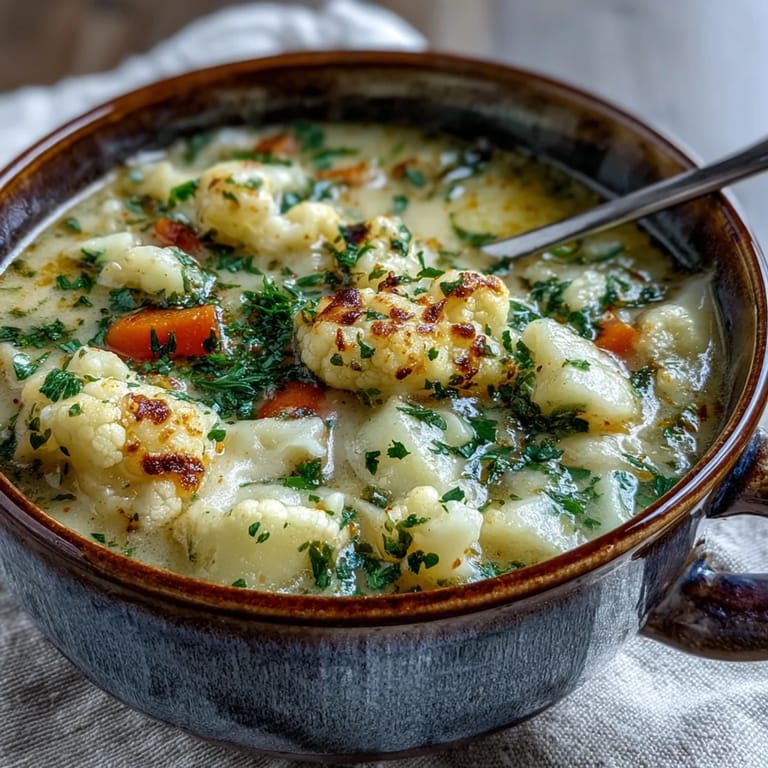
- Use an immersion blender to partially blend the soup, leaving some chunky vegetables for bite. If you don't have one, scoop out a few cups, blend them in a regular blender, and stir them back in.
- Finish with cheese:
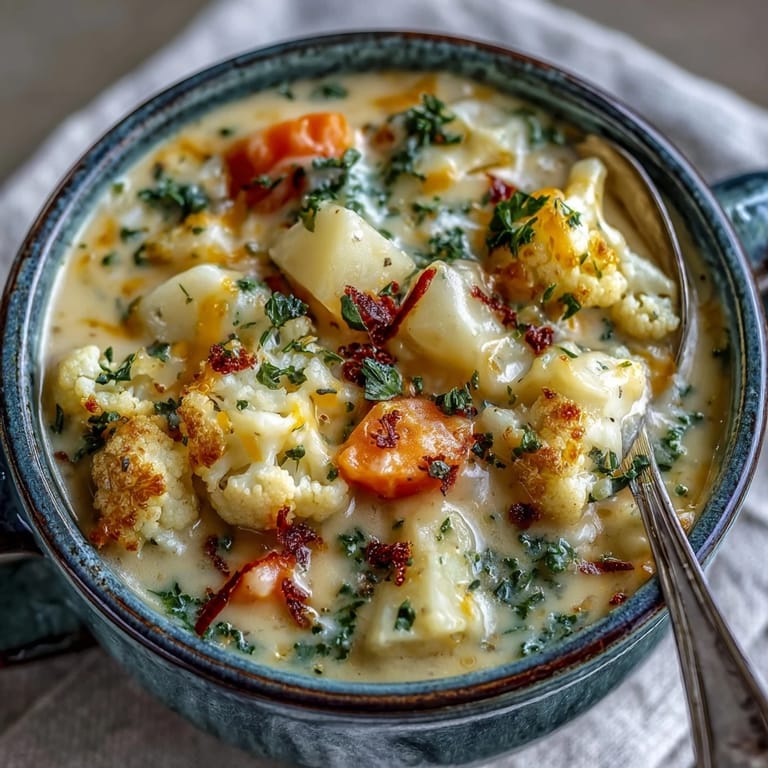
- Stir in the grated cheddar until it melts completely and the chowder turns glossy and rich. Taste it and add more salt or pepper if needed.
- Serve it warm:
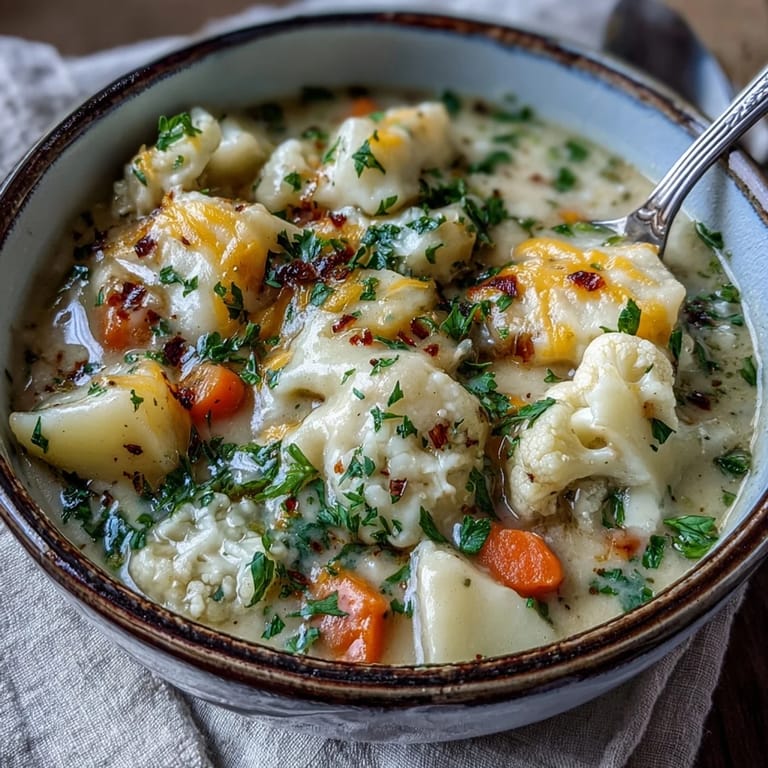
- Ladle the chowder into bowls and top with fresh parsley, extra cheese, or a pinch of red pepper flakes if you like a little heat.
 Save to Pinterest
 One rainy Sunday, I made a double batch of this and froze half for later. When I pulled it out a few weeks later on a night I didn't feel like cooking, it tasted just as good, maybe better. I sat on the couch with my bowl and a book, and it felt like a hug from my past self. That's the kind of recipe this is, the kind that takes care of you even when you didn't know you needed it.
Making It Your Own
This chowder is forgiving and adaptable, which is part of why I love it. If you want more protein, stir in a can of drained white beans or chickpeas near the end. For a vegan version, swap the butter for olive oil, use plant-based milk, and skip the cheese or use a vegan alternative. I've even added a handful of frozen corn or peas when I wanted extra color and sweetness. The base is sturdy enough to handle whatever you throw at it, so don't be afraid to experiment.
Serving Suggestions
I almost always serve this with a hunk of crusty bread for dipping, because there's something about mopping up the creamy broth that feels essential. A simple side salad with a sharp vinaigrette balances the richness nicely. If you're feeling fancy, a glass of crisp Sauvignon Blanc cuts through the creaminess and makes the whole meal feel a little more special. Leftovers reheat beautifully on the stovetop with a splash of extra broth or milk to loosen it up.
Storage and Reheating
This chowder keeps well in the fridge for up to four days in an airtight container. When you reheat it, do it gently over low heat and stir in a little extra milk or broth because it tends to thicken as it sits. I've also frozen it successfully, though the texture can change slightly when thawed, so I usually blend it again briefly to bring it back together. Just remember to cool it completely before freezing, and it'll be ready whenever you need a quick, comforting meal.
- Label your containers with the date so you remember when you made it.
- Freeze in individual portions for easy grab-and-go lunches.
- Thaw overnight in the fridge for the best texture when reheating.
 Save to Pinterest
 This chowder has become one of those recipes I turn to when I need something reliable and warm, the kind of dish that never disappoints. I hope it finds a place in your kitchen too, ready to comfort you on cold nights or whenever you need a bowl of something that feels like care.
Recipe FAQs
- → Can I make this chowder vegan?
Yes, substitute the butter with olive oil, use unsweetened plant-based milk instead of dairy milk, and either omit the cheese or use vegan cheese alternatives for a fully plant-based version.
- → How do I achieve the best creamy texture?
Use an immersion blender to partially blend the chowder, leaving some vegetable chunks intact. This creates a thick, creamy base while maintaining pleasant texture variation throughout.
- → Can I prepare this chowder ahead of time?
Yes, this chowder stores well in the refrigerator for up to 3 days. Reheat gently on the stovetop, adding a splash of milk or broth if it thickens too much during storage.
- → What can I add for extra protein?
Stir in cooked white beans, chickpeas, or cannellini beans during the final simmering stage. These legumes complement the vegetables and add substantial plant-based protein.
- → Is this chowder gluten-free?
It can be made gluten-free by using a gluten-free flour blend instead of all-purpose flour and ensuring your vegetable broth is certified gluten-free.
- → What wine pairs well with cauliflower chowder?
A crisp Sauvignon Blanc complements the creamy texture and vegetable flavors beautifully. Alternatively, try a light Chardonnay or Pinot Grigio for equally delicious pairing.