 Save to Pinterest
 On a drizzly Tuesday night, my friend texted asking if I could whip up something warm and vegan for her surprise dinner party. I rummaged through my pantry and realized I had everything for this coconut curry ramen, and honestly, it felt like the universe was helping. That bowl changed everything about how I cook for others now, because watching someone's face light up when they taste that first spoonful of creamy, spiced broth is something I chase in the kitchen constantly. The way the coconut milk swirls into those curry spices still makes me smile.
I made this for my mom last winter when she was feeling run down, and she sat at the counter watching the mushrooms soften in that golden broth, breathing in the steam like it was medicine. She said it reminded her of street food we'd had in Thailand years ago, except better because I made it. That moment taught me that food isn't just sustenance, it's connection, especially when you put care into choosing ingredients and timing each step right.
Ingredients
- Coconut oil: Use it as your fat base because it adds a subtle sweetness that complements the curry without overpowering it.
- Yellow onion: The foundation of your flavor, so don't skip the step of cooking it until it's truly soft and translucent.
- Garlic and fresh ginger: These two together create that warm, grounding note that makes people close their eyes when they taste it.
- Red curry paste: Buy the good vegan kind and toast it briefly with the spices, which deepens the flavor considerably.
- Ground turmeric: This isn't just for color, it adds an earthy warmth that brings the whole bowl together.
- Vegetable broth: Use a quality broth or make your own, because this is the backbone of your entire bowl.
- Full-fat coconut milk: Don't even think about using lite here, the creaminess is essential to the soul of this dish.
- Soy sauce or tamari: This adds umami depth that makes you wonder what the secret is.
- Maple syrup: Just a teaspoon balances the savory and curry spice with a whisper of sweetness.
- Sesame oil: A small amount at the end transforms the entire broth into something fragrant and sophisticated.
- Cremini or shiitake mushrooms: These hold their texture in the hot broth and add meaty substance to every bite.
- Baby bok choy: Add it late so it stays crisp and bright, a textural contrast that matters.
- Ramen noodles: Check that they're vegan, and cook them separately so they don't absorb all the broth.
- Carrot, scallions, and garnishes: These finishing touches add freshness and prevent the bowl from feeling heavy.
Tired of Takeout? 🥡
Get 10 meals you can make faster than delivery arrives. Seriously.
One email. No spam. Unsubscribe anytime.
Instructions
- Warm your oil and build the base:
- Heat coconut oil in your large pot over medium heat and add the chopped onion, letting it sit and soften for those crucial 3 to 4 minutes. You'll know it's ready when it's become translucent and smells sweet, which is when you add the garlic and ginger and stir constantly for just one minute until your kitchen fills with that familiar aromatic warmth.
- Toast your spices:
- Stir in the red curry paste and turmeric, cooking for about one minute while everything mingles together and deepens in color. This step is where the magic starts because you're not just adding ingredients, you're waking them up.
- Create your broth:
- Pour in your vegetable broth and coconut milk, then add the soy sauce, maple syrup, and sesame oil, stirring until everything is combined. Bring this to a gentle simmer, not a rolling boil, because you want to coax out the flavors rather than blast them away.
- Simmer the mushrooms:
- Add your sliced mushrooms and let them soften in the broth for 8 to 10 minutes, which is the perfect amount of time to start your noodles cooking in a separate pot. By the time the mushrooms are tender, your noodles should be almost ready too.
- Cook your noodles separately:
- Follow your package instructions exactly because noodles have their own timing, and overcooked ramen is a sad thing. Drain them well so they don't dilute your carefully crafted broth.
- Finish your vegetables:
- Stir the bok choy and carrots into the simmering broth and cook for just 2 to 3 minutes so the bok choy wilts but stays bright green and has a slight bite to it. Taste and adjust your salt and pepper now, because this is your last chance to get the seasoning right.
- Assemble your bowls:
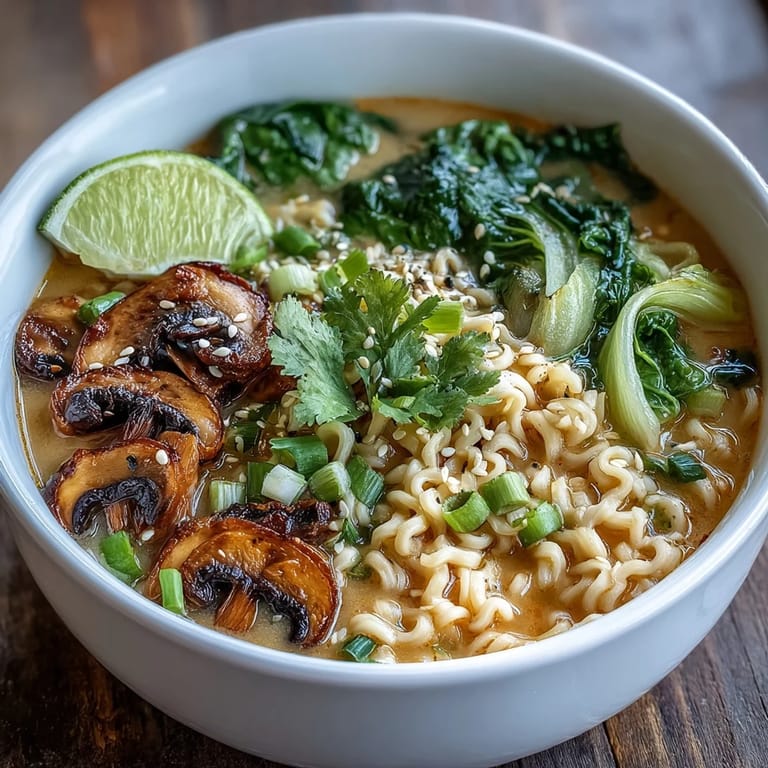
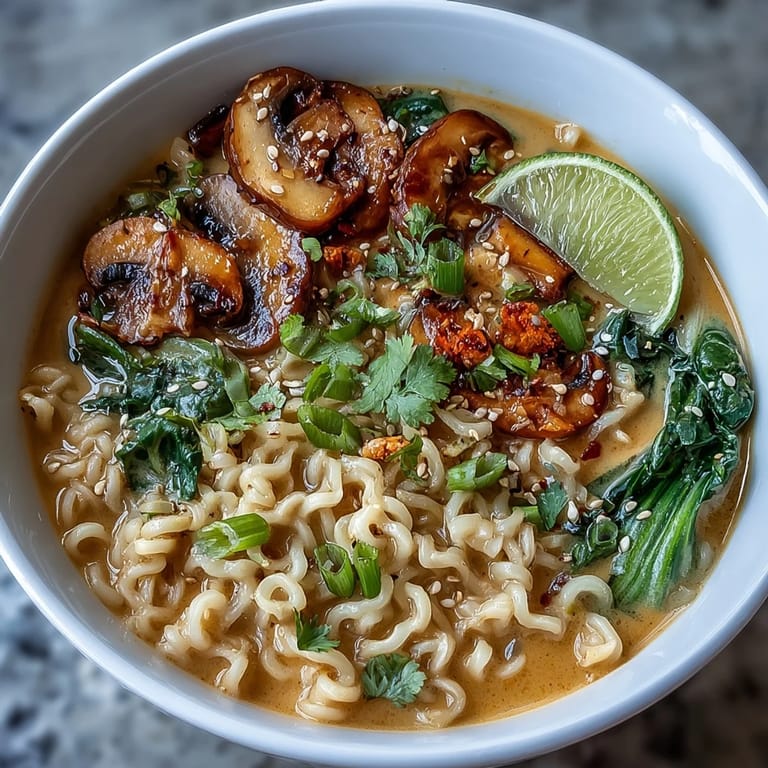
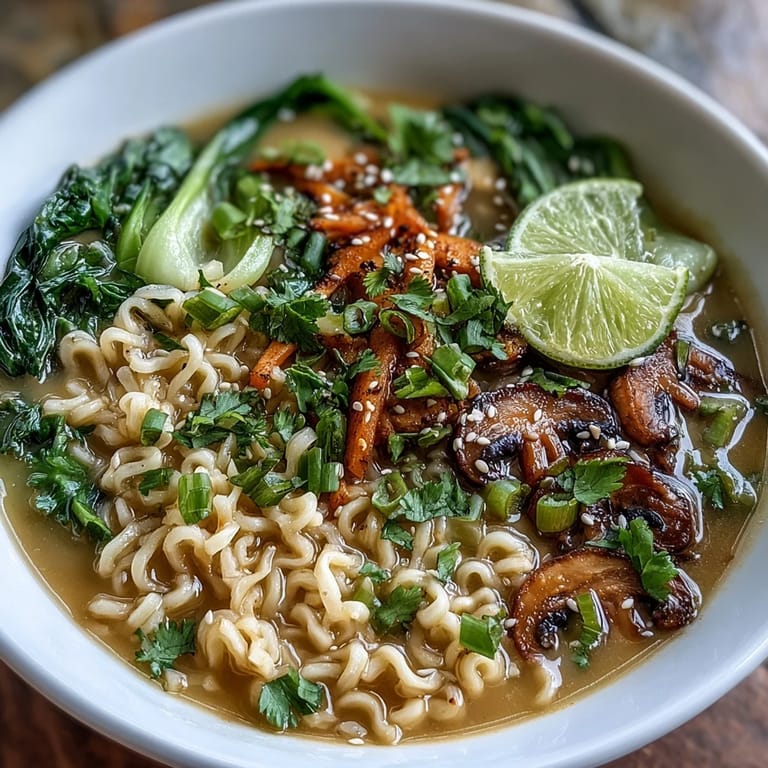
- Divide your cooked noodles among serving bowls and ladle that gorgeous golden broth and all those tender vegetables right over top. The noodles will soak up the flavors while you plate everything, so work efficiently here.
- Garnish with intention:
- Scatter scallions, sesame seeds, fresh cilantro, and a few slices of red chili over each bowl, then serve with lime wedges on the side. Let people squeeze their own lime because that's when they get to control the final flavor hit and make it their own.
 Save to Pinterest
 There's a quiet moment in my kitchen right after I finish this recipe, usually standing at the counter with a small bowl of broth before I serve it, just breathing in and appreciating the alchemy of simple ingredients becoming something extraordinary. That pause reminds me why I cook.
Playing with Spice Levels
The first time I made this, I was nervous about the curry paste amount because I'd never worked with it before, so I actually tasted a tiny bit on my finger first. Turns out that was wise because the heat builds as you cook, especially with turmeric in there adding its own warmth. Now I start with less and taste as I go, letting people add chili at the table if they want more heat. This approach means everyone gets to customize their bowl without me guessing about anyone's spice tolerance.
The Mushroom Question
I used to wonder why the mushrooms mattered so much in this recipe, but then I made it with just bok choy and carrots one night and the bowl felt flat. Mushrooms bring this umami richness that makes the whole thing feel substantial and satisfying, almost meaty in a way that makes you forget you're eating vegan. Cremini or shiitake both work beautifully, but shiitake feels more luxurious and has a deeper flavor that I reach for when I'm making this for someone special.
Noodle Strategy and Broth Balance
Cooking noodles separately sounds like an extra step, but it prevents your broth from becoming thick and starchy, which happened the first time I made this and threw everything in one pot. The broth stays silky and light when you keep the noodles separate, and then you control exactly how much liquid ends up in each bowl based on how you layer things. This is also where you get to be intentional about the final presentation, making sure each bowl looks like something worth sitting down to enjoy.
- Always check your noodles for vegan certification because some brands use egg despite being called ramen.
- If you prefer less broth, cook your noodles just slightly under the package time so they finish cooking in the hot broth when you pour it.
- Save the noodle cooking water because you can use it to thin out your broth if it ever becomes too concentrated.
 Save to Pinterest
 This bowl has become my answer to almost any question about what to cook, because it satisfies on every level while making people feel genuinely cared for. There's something about serving a warm, fragrant, creamy bowl of noodles that says more than words ever could.
Recipe FAQs
- → What type of mushrooms work best in this dish?
Cremini or shiitake mushrooms provide a rich umami flavor and firm texture that complements the creamy curry broth well.
- → Can I use different greens instead of bok choy?
Yes, spinach or kale are great alternatives that will soften quickly and absorb the curry flavors nicely.
- → How spicy is the coconut curry broth?
The broth has moderate heat from red curry paste and optional chili slices, but you can adjust spice levels based on your preference.
- → Is it necessary to use coconut oil for cooking?
Coconut oil adds a subtle richness that complements the coconut milk, but you can substitute with any neutral oil if needed.
- → Can this dish be made gluten-free?
Absolutely, use gluten-free tamari instead of soy sauce and gluten-free ramen noodles to keep it free of gluten.