 Save to Pinterest
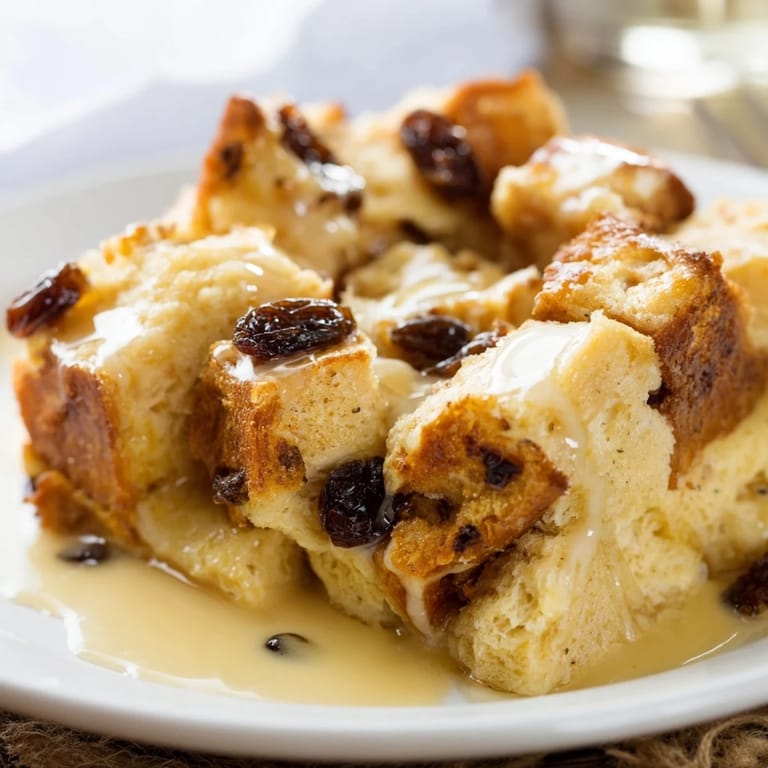
 There's something about a rainy Sunday that makes me want to bake bread pudding. Years ago, I had a half-loaf of brioche sitting on my counter, getting harder by the day, when my neighbor mentioned she'd just made the most incredible custard-soaked dessert. I'd never thought to rescue stale bread that way, but the idea stuck. Now, whenever I have leftover bread, I automatically think of turning it into something warm and comforting. It's become my go-to way to use up what would otherwise be tossed, and honestly, it tastes better than anything intentionally planned.
I made this for a dinner party once when I realized an hour before guests arrived that I hadn't planned dessert. I frantically cubed some day-old bread, threw together the custard, and slid it in the oven while we ate the main course. When I brought out individual servings with that silky sauce, one friend asked where I'd gotten it. The look on her face when I told her it started as bread about to become croutons was priceless.
Ingredients
- Stale bread, cubed (6 cups): French bread or brioche work beautifully because they have structure that won't fall apart when soaked, and their subtle sweetness complements the custard.
- Raisins (1 cup): These plump up as they soak, giving you pockets of sweetness throughout, but don't hesitate to swap them for dried cranberries, chopped dates, or even chocolate chips if that's what you have.
- Whole milk (2 cups) and heavy cream (1 cup): Together they create a custard that's rich but not overwhelming, with the milk keeping it from being too heavy.
- Eggs (4 large): These are what transform the liquid into something that sets into a tender, almost pudding-like crumb.
- Granulated sugar (3/4 cup): Start here, but taste the custard before baking if you like things sweeter or less sweet.
- Vanilla extract (2 tsp): This is what makes people ask what that incredible smell is coming from your kitchen.
- Cinnamon (1/2 tsp) and nutmeg (1/4 tsp): These spices whisper rather than shout, creating warmth and depth without overpowering.
- Salt (1/4 tsp) and melted butter (2 tbsp): Salt brightens everything and the butter adds richness and helps the bread absorb the custard more evenly.
Tired of Takeout? 🥡
Get 10 meals you can make faster than delivery arrives. Seriously.
One email. No spam. Unsubscribe anytime.
Instructions
- Prepare Your Stage:
- Preheat your oven to 350°F and butter a 9x13 inch baking dish generously. You want it slick enough that the pudding releases cleanly.
- Assemble the Bread and Raisins:
- Scatter your bread cubes into the dish, then sprinkle the raisins evenly over them. Don't worry about perfect distribution—the custard will find all the gaps.
- Mix the Custard:
- Whisk together the milk, cream, eggs, sugar, vanilla, cinnamon, nutmeg, salt, and melted butter in a large bowl until the mixture is smooth and pale. Take your time with this step so the eggs are fully incorporated.
- Soak the Bread:
- Pour the custard slowly and evenly over the bread, then gently press the cubes down with your hands or a spoon so they can really drink it all in. Let it sit for 10 minutes while the bread absorbs the liquid.
- Bake Until Golden:
- Slide the dish into the oven and bake for 40 to 45 minutes until the top is puffed and golden brown and a knife inserted in the center comes out clean. The pudding should jiggle slightly in the very center when you shake the pan.
- Make the Sauce Simultaneously:
- While the pudding bakes, combine the cream, sugar, and butter in a small saucepan over medium heat. Stir occasionally until the sugar dissolves and the mixture just begins to simmer, then remove from heat and stir in the vanilla and a pinch of salt.
- Finish and Serve:
- Let the pudding rest for a few minutes if you can bear to wait, then serve it warm in bowls with that silky sauce poured generously over top.
 Save to Pinterest
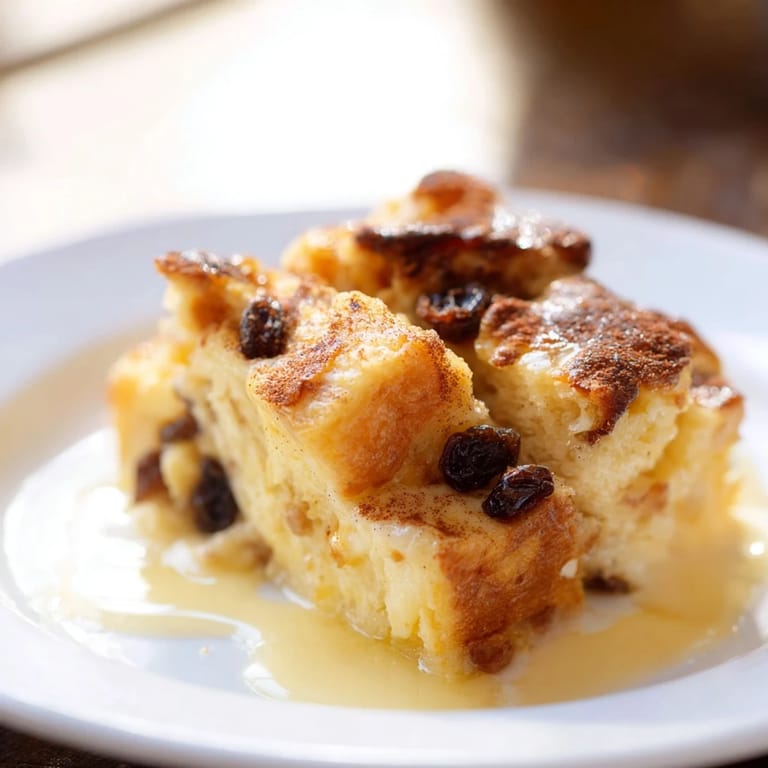
 There's a moment when you pull this from the oven and the kitchen fills with vanilla and cinnamon and buttery warmth, and you remember why you love cooking. When you spoon it into bowls and watch that sauce pool around the golden cubes, it stops being just a way to use up bread and becomes something people will ask you to make again.
Why Stale Bread Is Your Secret Weapon
Most of us throw away stale bread without thinking twice, but bakers and smart cooks have long known it's treasure. Stale bread has a denser crumb that actually absorbs liquid beautifully without disintegrating, unlike fresh bread which becomes waterlogged and mushy. When you cube it and bake it in custard, those firm pieces hold their shape and create a tender, almost cake-like texture that feels intentional. This is why bread pudding was born as a way to rescue bread—it's not a compromise, it's an upgrade.
The Science of Custard and Soaking
The custard is what makes this dish sing, and understanding it helps you troubleshoot if something goes wrong. When you whisk eggs with milk and cream, you're creating an emulsion that will set as it bakes, trapping the bread in a tender, creamy matrix. The 10-minute soak before baking is crucial because it allows the bread to absorb the custard evenly, so you don't end up with a crispy top and soggy bottom. If you skip the soak or rush it, the bread won't have time to drink up the liquid and you'll end up with a soupy pudding or a bread layer that never quite integrates.
Flavor Variations and Personal Touches
Once you understand the basic technique, this recipe becomes endlessly adaptable to your mood and what's in your pantry. A splash of bourbon or rum stirred into the custard adds a sophisticated warmth, though skip it if you're feeding kids. Dried cranberries bring tartness, chopped dates add chewiness, and chocolate chips create little pockets of richness. Some cooks add a grating of fresh nutmeg on top before baking for a visual and aromatic flourish, while others use brown sugar instead of white for deeper caramel notes. The vanilla sauce can be made richer with a splash of bourbon, or more delicate with a squeeze of fresh lemon juice—trust your instincts and taste as you go.
- Experiment with different spice blends like a pinch of cardamom or ginger for unexpected depth.
- Leftover pudding reheats gently in a low oven or covered in the microwave without drying out.
- Make the sauce ahead if you're serving guests—it reheats perfectly and frees up your stove space.
 Save to Pinterest
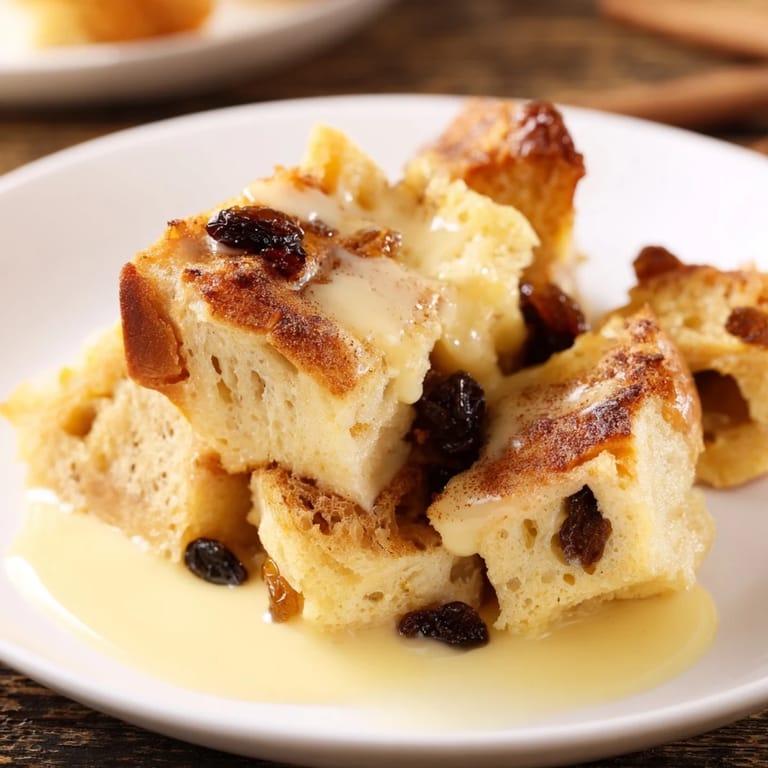
 Bread pudding is one of those dishes that asks you to slow down and trust the process, and it rewards you with something deeply satisfying. Make it whenever you need comfort, whenever you have stale bread, or whenever you want to feel like you've made something special out of something ordinary.
Recipe FAQs
- → What type of bread works best?
Stale French bread or brioche provides a sturdy texture that absorbs custard well without becoming too soggy.
- → Can I substitute raisins with other ingredients?
Yes, dried cranberries, chopped dates, or chocolate chips make excellent alternatives to add variety.
- → How long should the custard soak into the bread?
Allow the bread cubes to rest in the custard mixture for about 10 minutes to fully absorb the flavors.
- → What is the best way to serve this dessert?
Serve warm with a creamy vanilla sauce drizzled on top for added richness and moisture.
- → Can leftover pudding be reheated?
Leftovers reheat well in either an oven or microwave; heat gently to maintain texture.